About This Product Review
Product specifications tell you what an espresso machine offers. They reveal less about how reliably it brews, how easy it is to use, or how much cleaning and upkeep it requires during regular use.
To assess those questions, five experienced home coffee drinkers tested the AMZCHEF CM1626 across three households over seven weeks. We combined regular use with repeat measurements of brewing time, beverage yield, and serving temperature, then weighed the results against the machine's features, price, and ownership considerations.
Quick Verdict: AMZCHEF CM1626 Espresso Machine

The AMZCHEF CM1626 brings an integrated grinder, touchscreen presets, a manual steam wand, hot-water dispensing, and a rapid Cold Brew mode into one semi-automatic machine. Our five reviewers consistently enjoyed the coffee it made.
Key takeaways from our testing:
- ☕ Enjoyable, repeatable espresso: All three households found a satisfying preparation routine with relatively little dialing-in; grinder setting 8 became our preferred choice.
- ⏱️ Straightforward daily use: The machine signaled readiness in about 30 seconds, while a finished coffee drink took approximately three and a half minutes to prepare in our timed routine.
- ⚠️ Generous preset servings: At our tested doses, the one- and two-cup programs produced longer brew ratios than the conventional 1:2 starting point for concentrated espresso.
- 🌡️ Preheating makes a difference: The ready indicator does not mean the entire brewing system is warm; extra water-only cycles helped produce hotter espresso.
At $299.99, the CM1626 offers an appealing range of equipment and functions, particularly for buyers who want an integrated grinder. Sale pricing can strengthen that value further.
Plumosity Rating: 4.4 / 5
Excellent
A capable all-in-one choice for home coffee drinkers who value convenience and consistently enjoyable results, with simple adjustments to shot volume and preheating for those who prefer more concentrated or hotter espresso.
About AMZCHEF
AMZCHEF began with slow juicers and has expanded into coffee equipment and other kitchen appliances. Its range now includes espresso machines, integrated-grinder models, standalone grinders, milk frothers, blenders, cooktops, and range hoods, with an emphasis on accessible, multifunctional products.

Product Overview & Specifications
The AMZCHEF CM1626 combines fresh-bean grinding, portafilter brewing, and manual milk steaming in one semi-automatic machine. Users still grind, dose, tamp, and control their preparations, but the integrated equipment reduces the need for separate appliances.

| AMZCHEF CM1626 Specifications | |
|---|---|
| Machine type | Semi-automatic espresso machine with integrated grinder |
| Grinder | Built-in grinder; advertised with 44 settings |
| Brewing temperature selections | 190°F, 194°F, 197°F, 201°F |
| Brewing programs | Single-cup and double-cup presets |
| Display & controls | Touchscreen |
| Milk preparation | Manual steam wand |
| Cold Brew function | Dedicated rapid Cold Brew program |
| Hot-water dispensing | Yes |
| Water tank | Removable; capacity 60 oz |
| Published dimensions | 12.5 × 10.82 × 13.38 in. (D × W × H) |
| Published weight | Approximately 13.9 lb |
| Warranty | AMZCHEF provides a one-year manufacturer warranty; confirm applicable terms before purchase. |
Specifications reflect manufacturer materials and our review documentation. Confirm current specifications, included accessories, and warranty coverage for the exact package and retailer before purchasing.
Unboxing & First Impressions
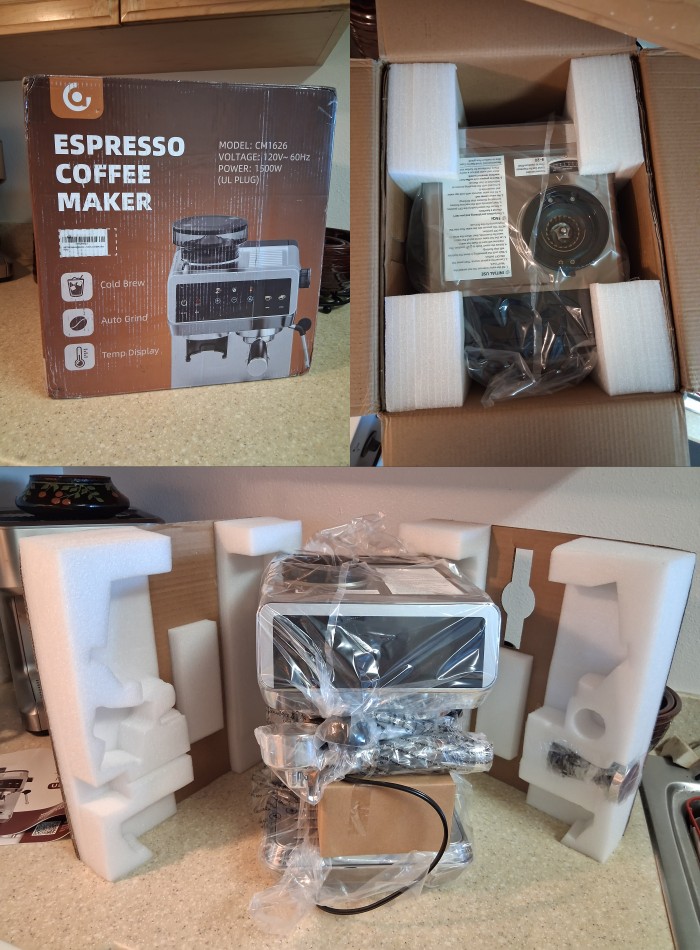
Our review unit arrived undamaged, protected by plastic wrapping and fitted foam supports. The packaging kept the components secure, and unpacking took only a couple of minutes.
We laid out the machine, accessories, and documentation before assembly. The package contained the essentials for espresso preparation, along with basic dosing and cleaning tools.
Our review package included:
- AMZCHEF CM1626 espresso machine
- Removable bean hopper with lid
- Portafilter
- One-cup and two-cup filter baskets
- Metal tamper with a wood-style handle
- Plastic dosing funnel and measuring scoop
- Small cleaning brush
- User manual and Quick Start Guide
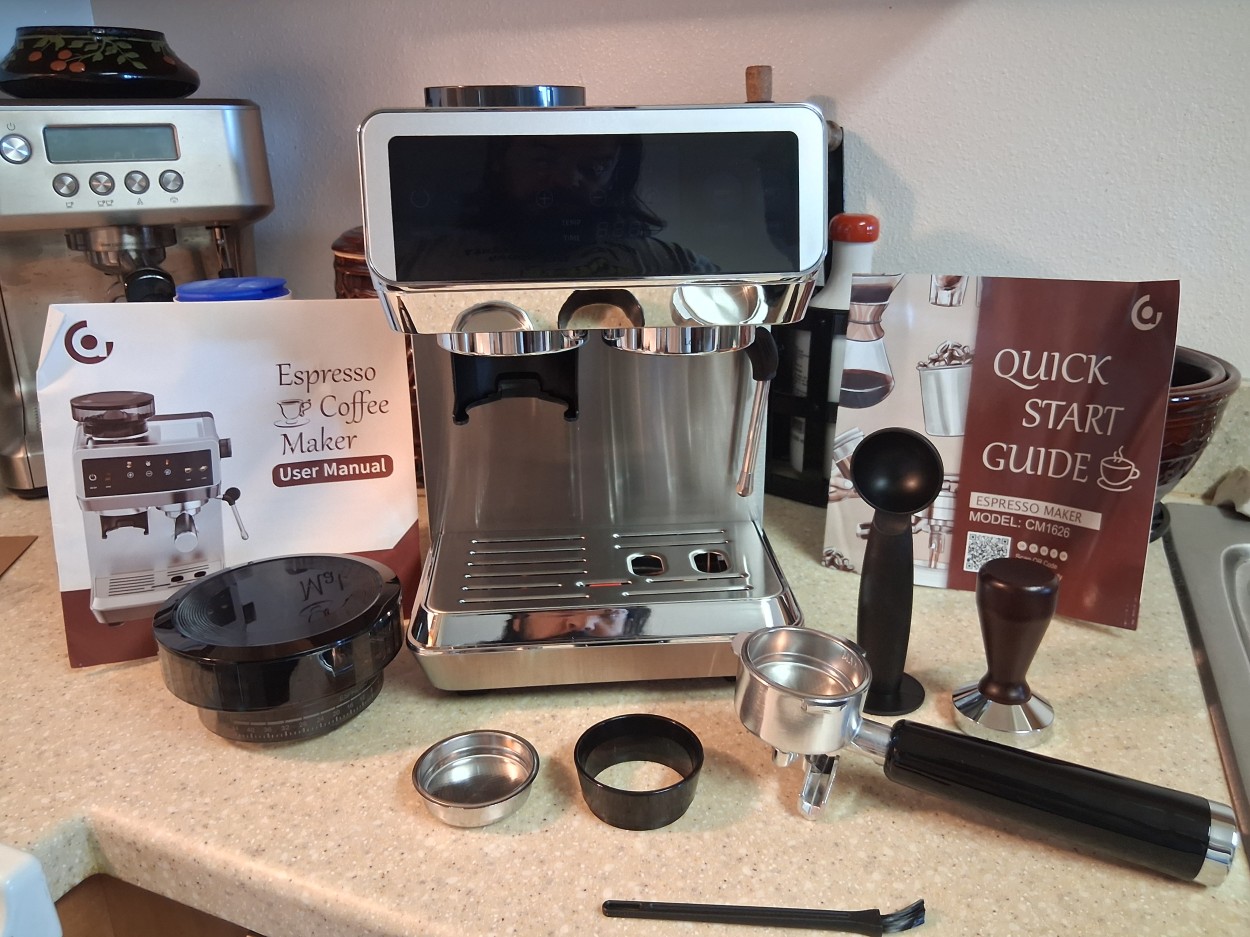
Accessory quality varied. The tamper stood out, with a substantial metal base and solid handle that felt superior to the lightweight tampers included with some entry-level machines. The portafilter also felt sturdy and well-built, with filter baskets that fit securely yet were easy to remove. The plastic dosing funnel, measuring scoop, and cleaning brush were basic but functional.
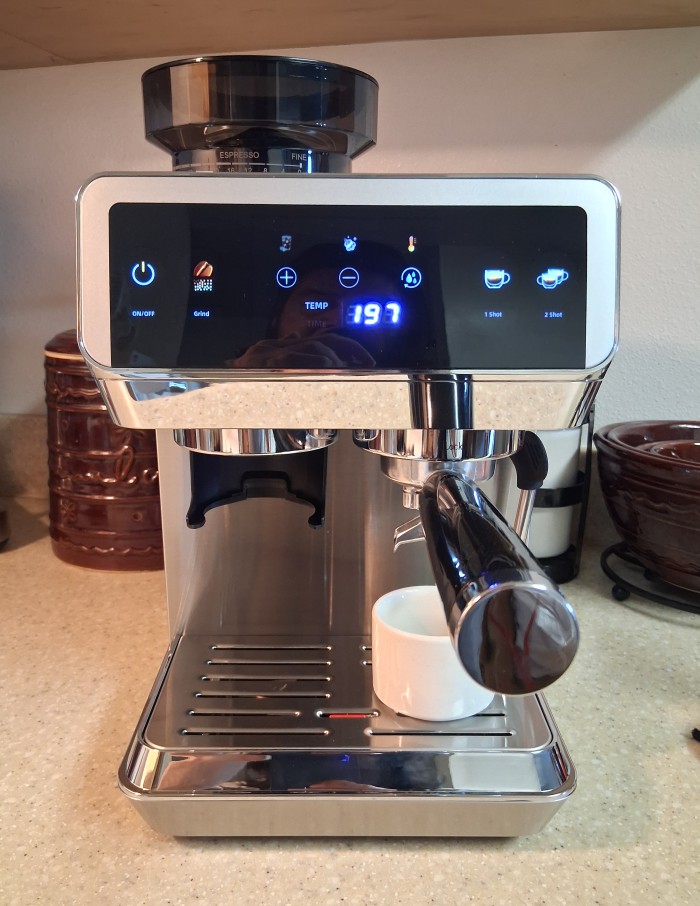
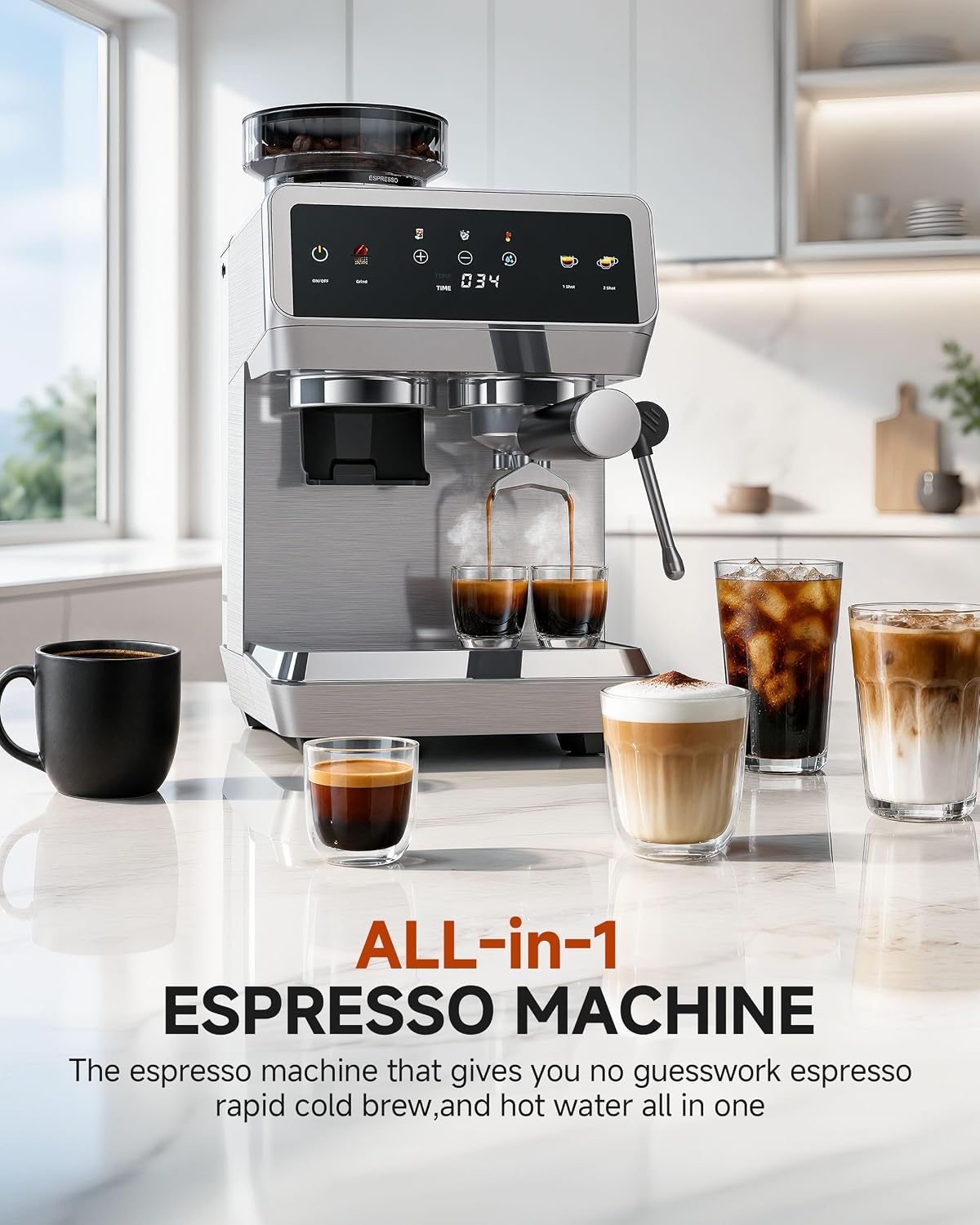
Once assembled, the CM1626 made a strong first impression. Its reflective stainless-steel exterior, prominent group head, substantial portafilter, and side-mounted steam wand give it the look of a compact café machine, while the illuminated touchscreen adds a modern touch.
Plumosity's Hands-On Product Review
A closer look at the CM1626's real-world performance, strengths, and limitations.
Over seven weeks, the CM1626 spent two weeks in each of three households before returning to the first for a final week of repeat measurements and verification. Five experienced home coffee drinkers—not professional baristas—participated in the testing.
Our evaluation centered on one question: Can the CM1626 consistently produce enjoyable espresso without making preparation unnecessarily complicated? We examined drink quality and repeatability alongside preparation time, ease of use, and maintenance.
Our hands-on testing focused on:
- Espresso Performance: Flavor, body, consistency, coffee dose, brewing time, and beverage yield.
- Temperature Control: Brewing settings, measured serving temperatures, and the effects of preheating.
- Integrated Grinder: Grind adjustment, preparation time, ease of use, and reliability.
- Milk & Other Drinks: Milk steaming and texture, Cold Brew functionality, and hot-water dispensing.
- Workflow & Ownership: Startup, cleaning, noise, vibration, ergonomics, and build quality.
Testing Methodology & Key Results
Reviewers prepared espresso, milk-based drinks, Cold Brew-style iced coffee, and hot water for tea and instant coffee. During the final week, we repeated measurements of brewing time, coffee dose, finished beverage weight, and serving temperature to supplement our observations. The following results reflect our review unit and testing conditions; performance may vary between machines and preparations.
Preparation & Brewing Times
Startup and individual operations were quick, but preparing a finished espresso required more than the machine's active brewing time.
| Task | Approximate Time |
|---|---|
| Machine startup / ready state | 30 sec |
| Grinding coffee beans | 7 sec |
| One-cup brewing program | 15 sec |
| Two-cup brewing program | 27 sec |
| Milk steaming (optional) | 45 sec |
| Total drink preparation time | 3 min 30 sec |
Times are approximate. The total preparation time of approximately 3 minutes and 30 seconds includes the complete process, from plugging in the machine and gathering coffee beans through grinding, dosing, tamping, water-only preheating, brewing, and frothing cream.
Measured Drink Temperatures
Serving temperatures varied considerably with preheating. Espresso became noticeably hotter as the brewing system warmed, while the Cold Brew function produced coffee that needed additional chilling for iced drinks.
| Measurement | Observed Temperature |
|---|---|
| Espresso after startup, without additional preheating | 135–155°F |
| Espresso with warmed brewing system | 170–185°F |
| Milk after steaming | 150–155°F |
| Cold Brew output using room-temperature water | ~105°F |
Temperatures were measured in the finished drinks, not inside the brewing system. Results depend on starting conditions, preheating, and preparation methods.
Espresso Performance
The CM1626 consistently produced espresso that all five reviewers enjoyed. Establishing a satisfying preparation routine required relatively little experimentation, and once we settled on our preferred settings, repeat preparations rarely needed further adjustments. The resulting coffee had a strength our reviewers found neither overpowering nor too weak.
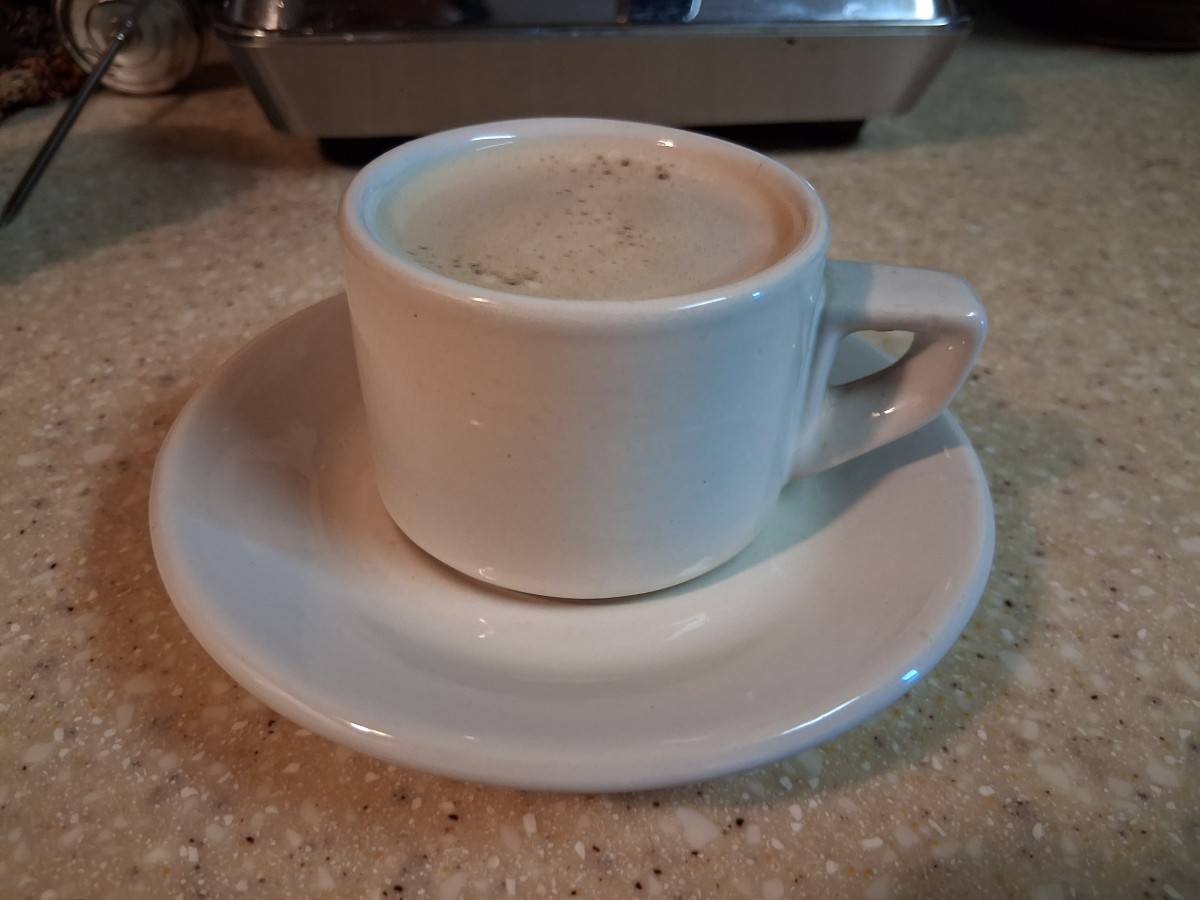
This approachable, repeatable performance was one of the machine's greatest strengths. However, our controlled measurements revealed that its preset programs produced considerably more coffee than conventional concentrated espresso recipes. Understanding that distinction helps explain both the machine's capabilities and how owners can adjust their results to suit their preferences.
Controlled Dose & Beverage Yield Testing
To evaluate the CM1626's preset brewing programs, we paired the one-cup filter basket with the one-cup program and the two-cup basket with the two-cup program. Using finely ground coffee and the highest selectable brewing-temperature setting of 201°F, we measured coffee dose, brewing time, and finished beverage weight.
| Measurement | One-Cup | Two-Cup |
|---|---|---|
| Coffee dose | 6 g | 12 g |
| Average beverage yield | 32.5 g | 74.5 g |
| Approx. program time | 15 sec | 27 sec |
| Brew ratio | 1:5.42 | 1:6.21 |
Measurement note: Coffee dose, beverage weight, and brewing time allow us to calculate brew ratios, but not actual extraction yield. Determining the percentage of soluble coffee material extracted from the grounds requires additional measurements, including total dissolved solids obtained with an appropriate coffee refractometer.
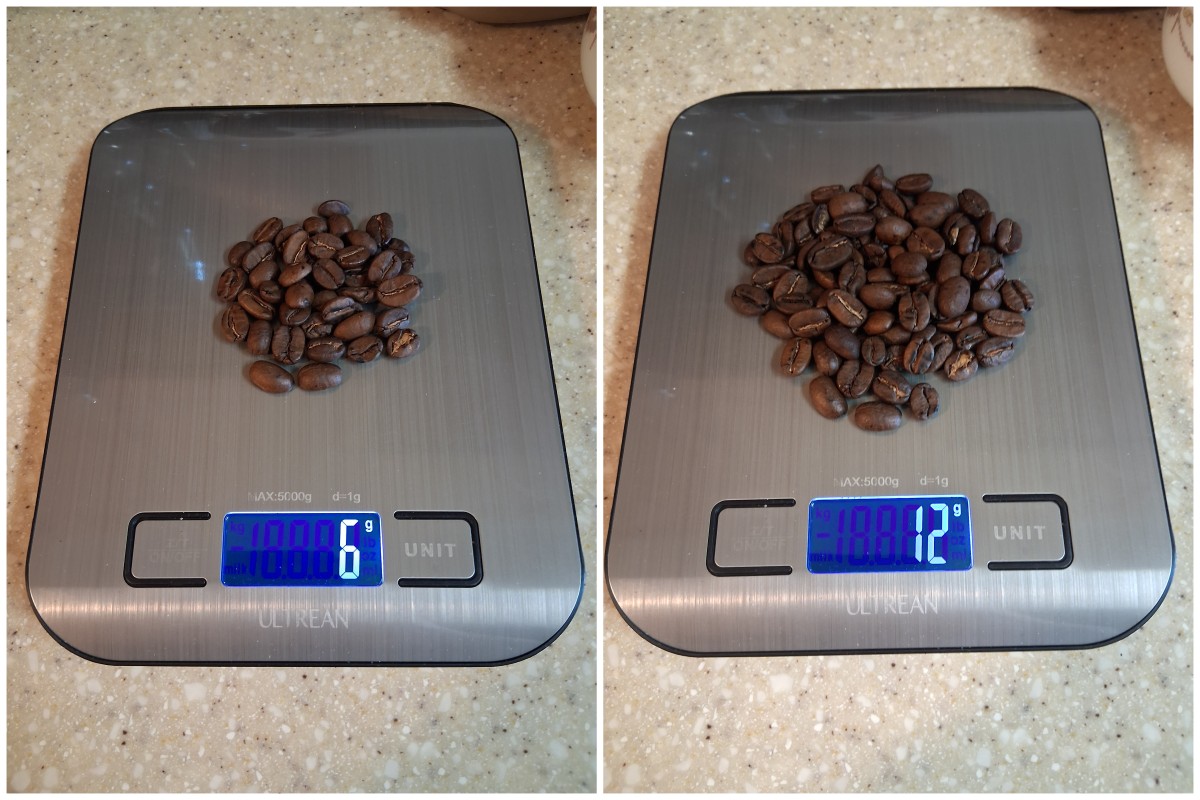
For context, a common starting point for concentrated espresso is a 1:2 brew ratio, meaning two grams of finished espresso for every gram of ground coffee. At our tested doses, the CM1626 produced considerably higher ratios of 1:5.42 and 1:6.21, resulting in longer, more generously sized servings than conventional concentrated espresso.
Both filter baskets could accommodate slightly larger doses: up to 7 g for the one-cup basket and 14 g for the two-cup basket. Increasing the doses could bring the ratios closer to the conventional benchmark if beverage yields remained similar. However, we did not measure outputs at these higher doses, so our reported ratios apply only to the 6 g and 12 g preparations.
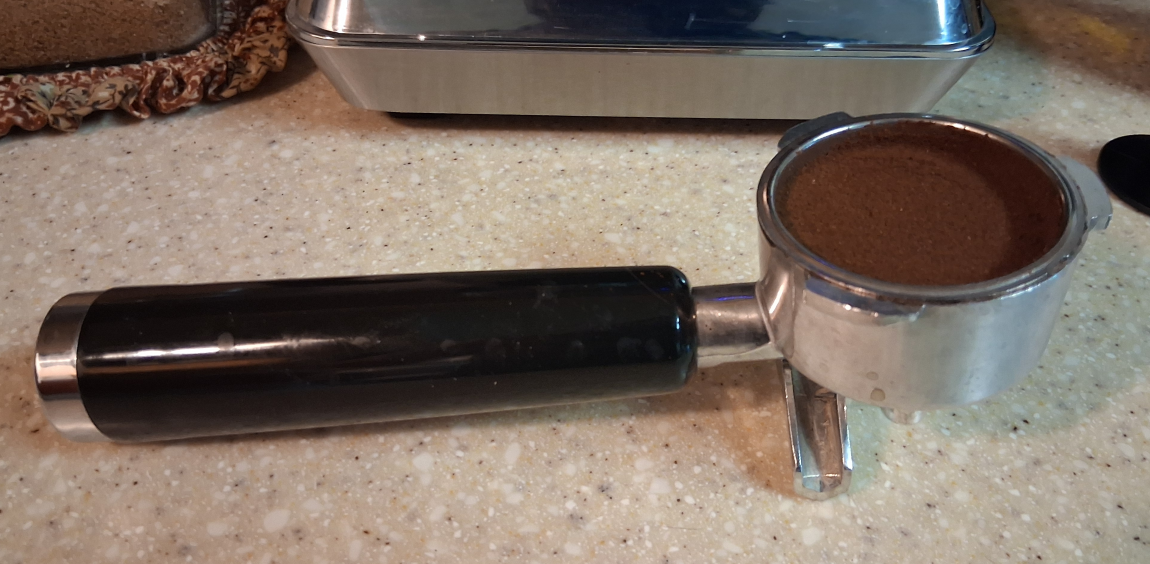
The two-cup program's approximately 27-second brewing time falls within the commonly cited 25–30-second espresso range. However, brewing time alone does not determine the result; coffee dose and finished beverage weight are equally important.
In our limited matched tests, finished beverage weights varied by approximately 1 g between repeated preparations, an encouraging indication of consistency under our testing conditions. Results may differ with other beans, grind settings, and preparation methods.
Our Reviewers' Preferred Preparation
Interestingly, our reviewers preferred a different basket-and-program combination. Their favorite preparation used 6 g of ground coffee in the one-cup filter basket, grinder setting 8, and a selected brewing temperature of 201°F. They also ran two water-only double-cup cycles to preheat the machine before brewing with the two-cup program.
Ultimately, the CM1626 satisfied our reviewers despite producing longer brew ratios in our matched tests. Buyers who prefer shorter, more concentrated espresso should experiment with their preparation and monitor finished beverage weight rather than relying solely on the preset cup settings.
Brewing Temperature & Preheating
The CM1626 signals that it is ready to brew approximately 30 seconds after startup, when the touchscreen stops flashing. However, our testing showed that this electronic ready state does not necessarily mean the brewing system and portafilter are fully heated.
Some of our earliest espresso preparations produced finished beverage temperatures as low as 135–140°F, even with the machine set to its maximum 201°F brewing-temperature setting. Rather than assume the machine was operating too cold, we investigated how serving temperatures changed as the system warmed through successive brewing cycles.
| Run | Selected Setting | Measured Cup Temperature |
|---|---|---|
| 1 | 201°F | ~155°F |
| 2 | 190°F | ~165°F |
| 3 | 194°F | ~175°F |
| 4 | 197°F | ~180°F |
| 5 | 201°F | ~185°F |
| 6 | 190°F | ~170°F |
The most revealing comparison came between the first and fifth runs. Both used the 201°F setting, yet the finished espresso measured approximately 155°F initially and 185°F later—a difference of 30°F. The increasingly warm brewing system appears to have played a substantial role in the temperature of the finished drink.
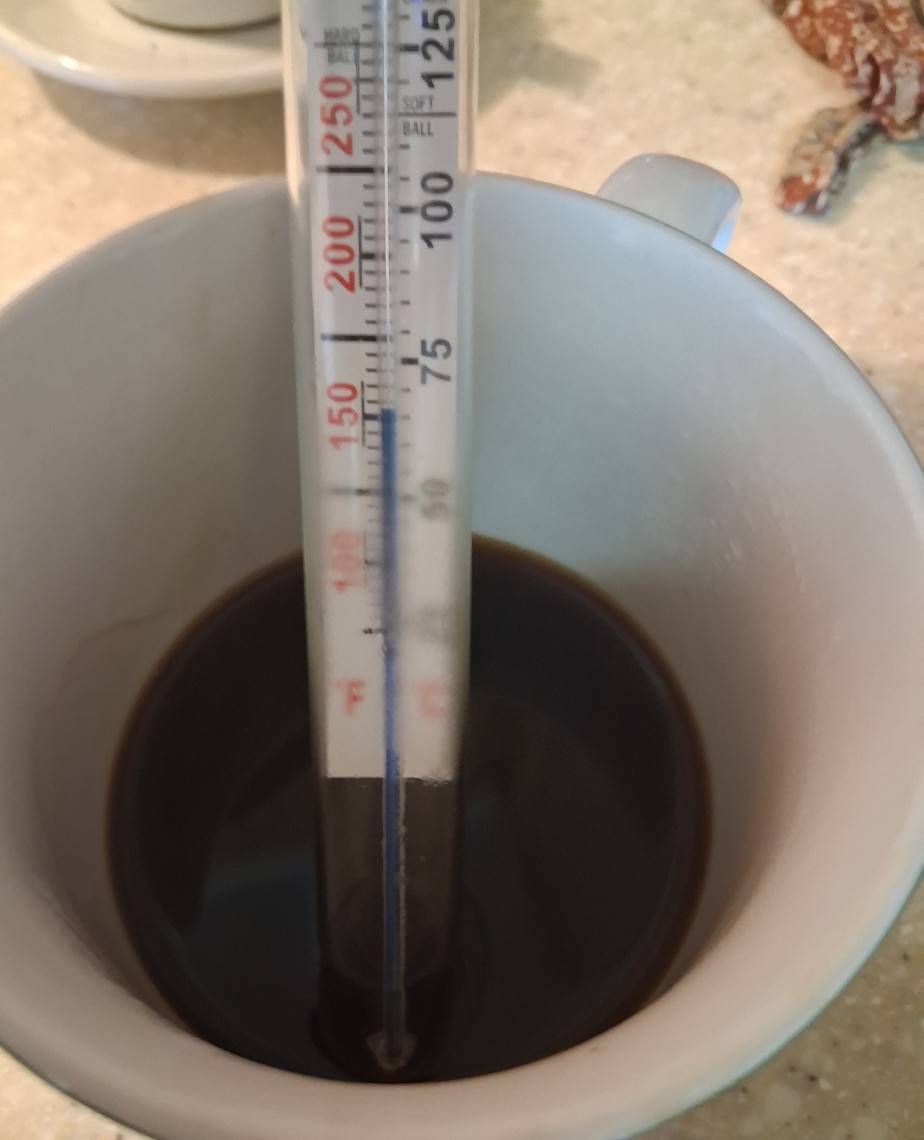
Because the runs were sequential and included different selected temperatures, these measurements cannot establish the machine's precise brewing-temperature accuracy. They do, however, show why a selected brewing temperature should not be confused with the temperature of the finished espresso.
The practical takeaway is that ready to brew does not necessarily mean fully preheated. The CM1626 can begin brewing quickly, but allowing the system to warm further can make a substantial difference in serving temperature. For hotter espresso, we recommend running water-only cycles before brewing.
Integrated Grinder Performance
The CM1626's integrated grinder dispenses freshly ground coffee directly into the portafilter, eliminating the need for a separate appliance. With 44 grind settings, it offers considerable flexibility, although only part of that range is intended for espresso.
The grinder dial identifies settings 8–20 as the espresso range, while the Quick Start Guide describes settings 0–7 as too fine and 21–44 as too coarse for espresso.
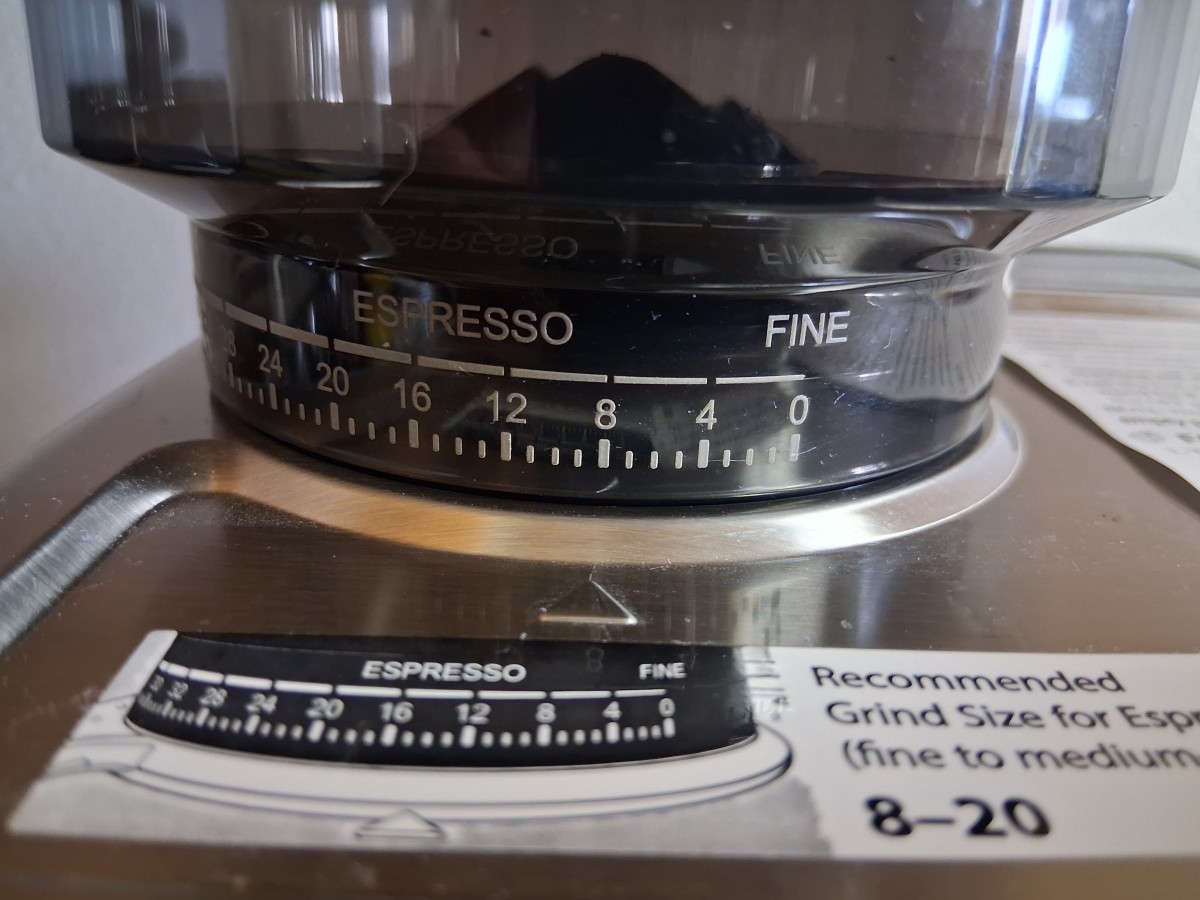
We began at setting 8 and experimented with different grind sizes throughout the review. Settings 8–12 produced satisfying espresso with our selected beans. Setting 8 consistently suited our reviewers' preferences, and once established, further adjustments were rarely necessary.
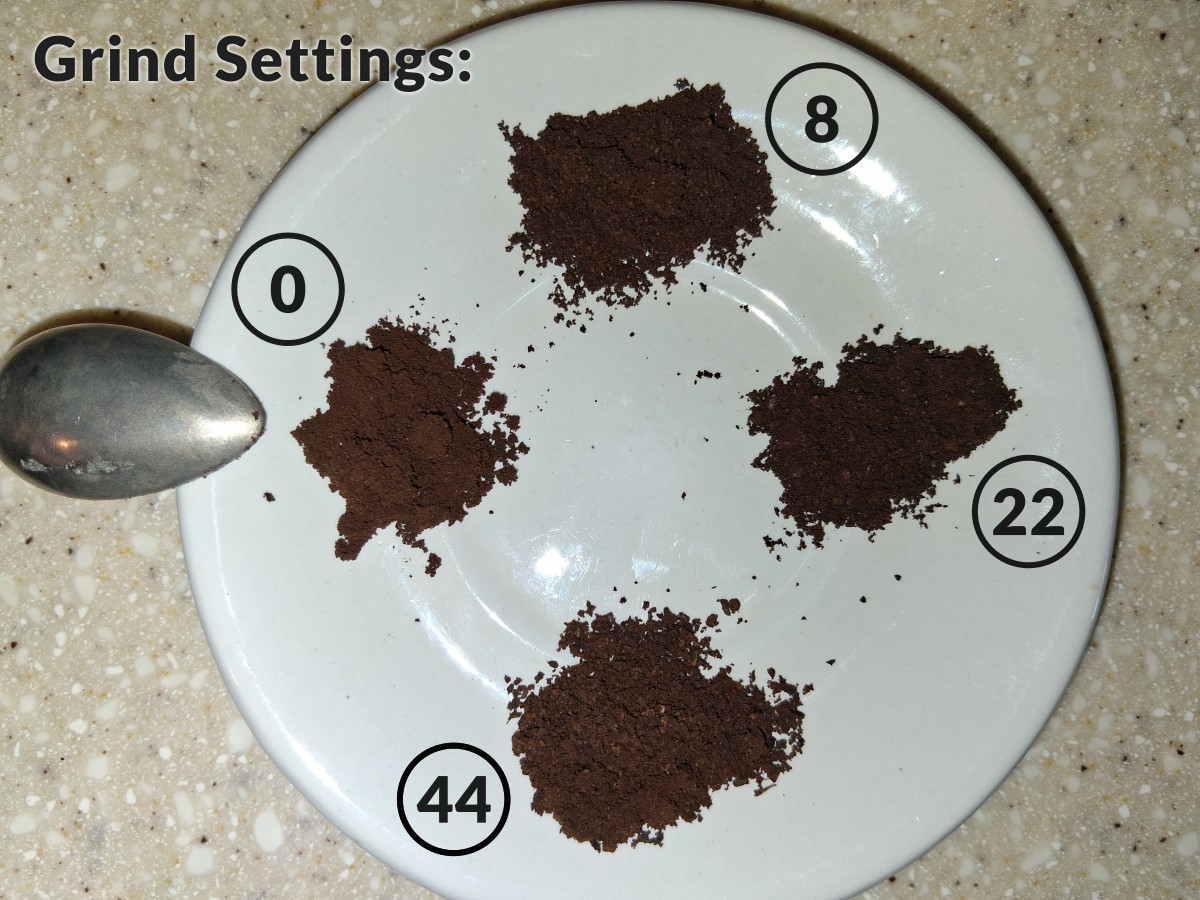
The grinder operated reliably, with no reported failures. Its practical strength was the flexibility to accommodate different preferences while making it easy to maintain a familiar preparation routine. The ideal setting will depend on the coffee beans and desired results. Our testing did not include laboratory particle-size analysis or long-term wear evaluation.
Milk Steaming
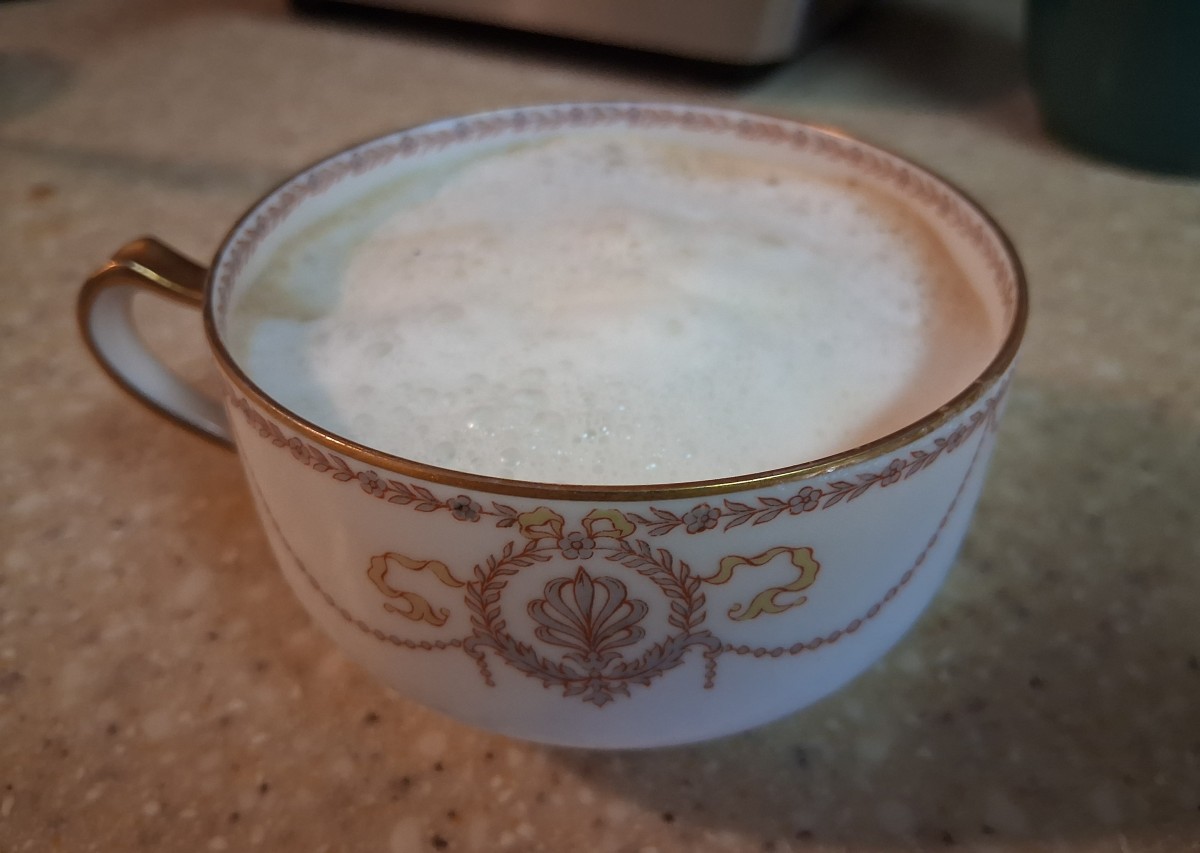
The CM1626's manual steam wand heated and frothed milk effectively throughout testing. In a representative session, steaming took approximately 45 seconds, bringing the milk to around 150–155°F. The resulting texture worked well for the cappuccinos and lattes our reviewers prepared, while the steam operation seemed quieter than on several machines they had previously used.
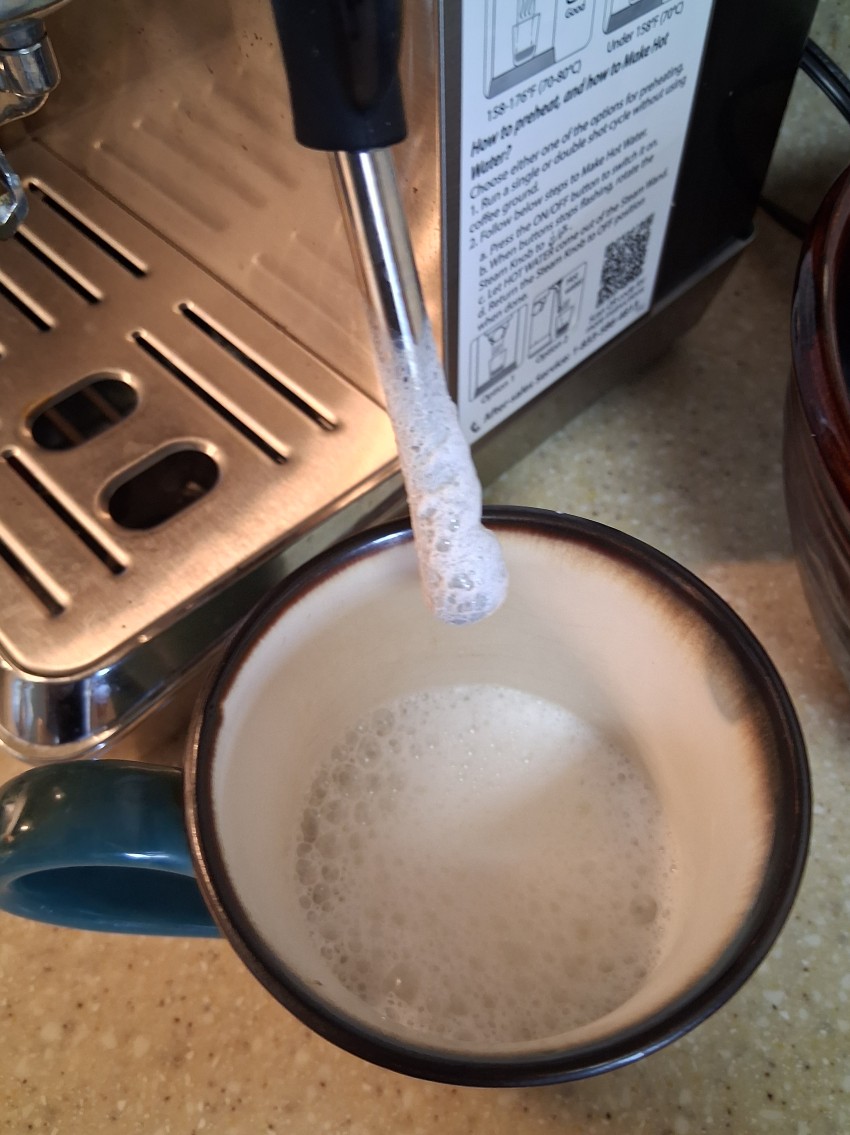
The wand provided enough control for everyday milk-based drinks, although achieving a particular texture still requires practice. Our reviewers were comfortable with the process, but beginners should expect some experimentation with positioning and steaming technique.
We also noticed a small amount of water emerging from the wand before a steady flow of steam developed. Briefly purging the wand before steaming prevented that initial water from entering the milk. Wiping and purging the wand immediately after use became a simple part of our regular cleaning routine.
Overall, the CM1626's milk-steaming performance was consistent and effective. It allowed our reviewers to prepare cappuccinos and lattes with satisfactory texture and temperature.
Cold Brew Mode
The CM1626 includes a dedicated Cold Brew function, although the name deserves some clarification. Using room-temperature water in the reservoir, our finished coffee measured approximately 105°F. The machine therefore did not dispense a cold beverage or replicate traditional cold brew, which involves steeping coffee grounds in cool water for several hours.
Instead, the function provides a quick way to prepare coffee for iced drinks. Our reviewers enjoyed the results once chilled, and the warm coffee had one practical advantage: granulated sugar dissolved easily before adding refrigerated cream and ice.
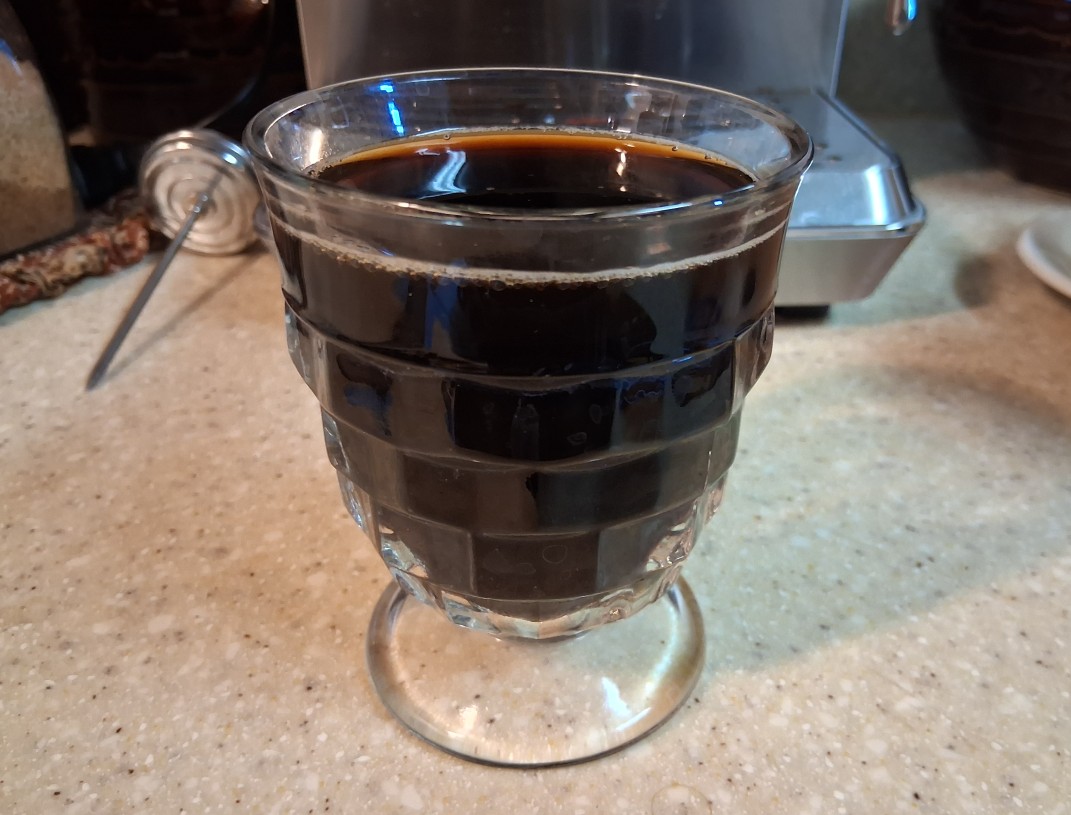
Our preferred approach was to add refrigerated half-and-half before pouring the coffee over ice. This helped cool the drink before the ice was added, reducing immediate melting. It's a simple preparation adjustment, but an important distinction for buyers: the Cold Brew program produces coffee intended for chilling, not a ready-to-drink cold beverage.
Hot-Water Function
The CM1626's hot-water function proved useful for preparing tea and instant coffee. Filling a cup took approximately one minute, with the dispensed water measuring around 175°F.
This temperature is suitable for steeping many green teas but falls below the hotter water generally recommended for black tea and certain other varieties. Tea enthusiasts who prefer precise steeping temperatures may find the function limiting, particularly for teas that require near-boiling water.
The feature was especially appreciated by one reviewer who prefers instant coffee over brewed coffee. Having hot water available directly from the machine made preparing a quick cup convenient, without the need to heat water on the stove.
Everyday Workflow
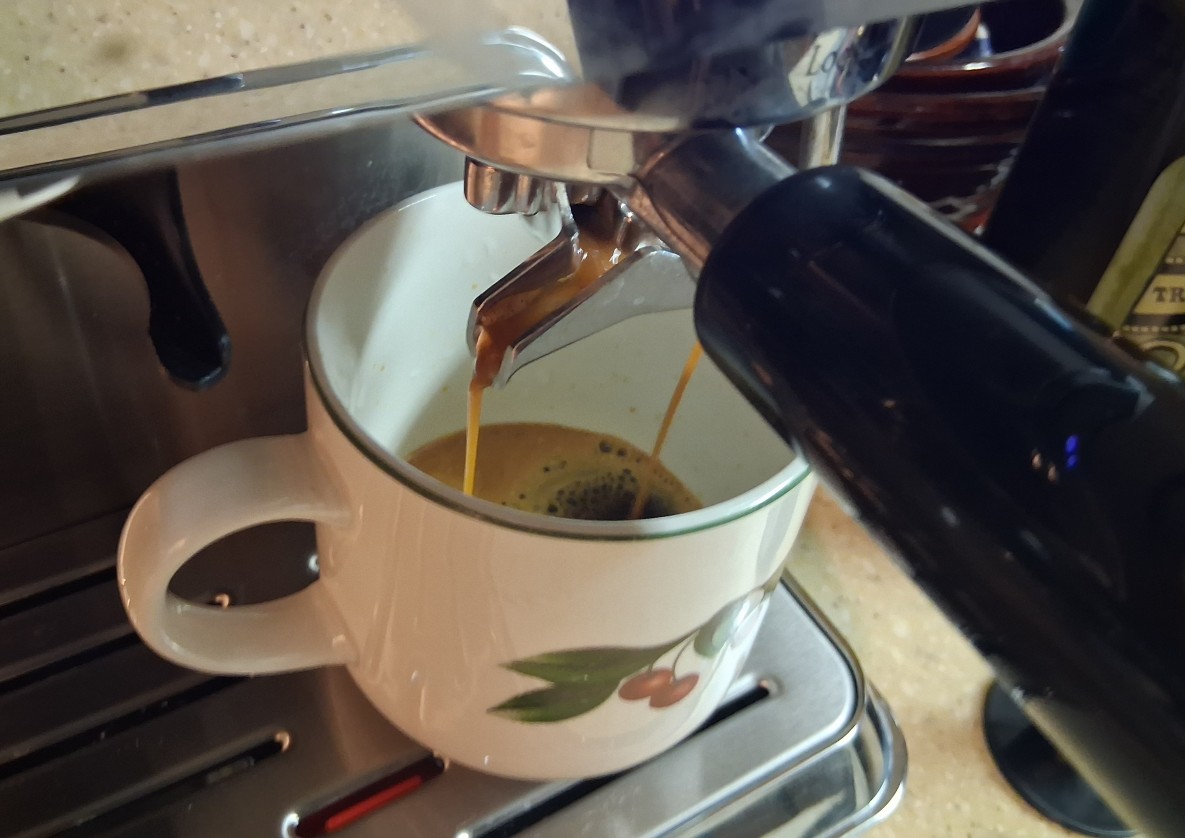
The CM1626 combines the convenience of an integrated grinder with the hands-on process of making espresso. Grinding directly into the portafilter, dosing and tamping the coffee, securing the portafilter, and selecting a brewing program quickly became familiar steps for our reviewers. The touchscreen was intuitive, and having the grinder built into the machine eliminated the need to manage separate equipment.
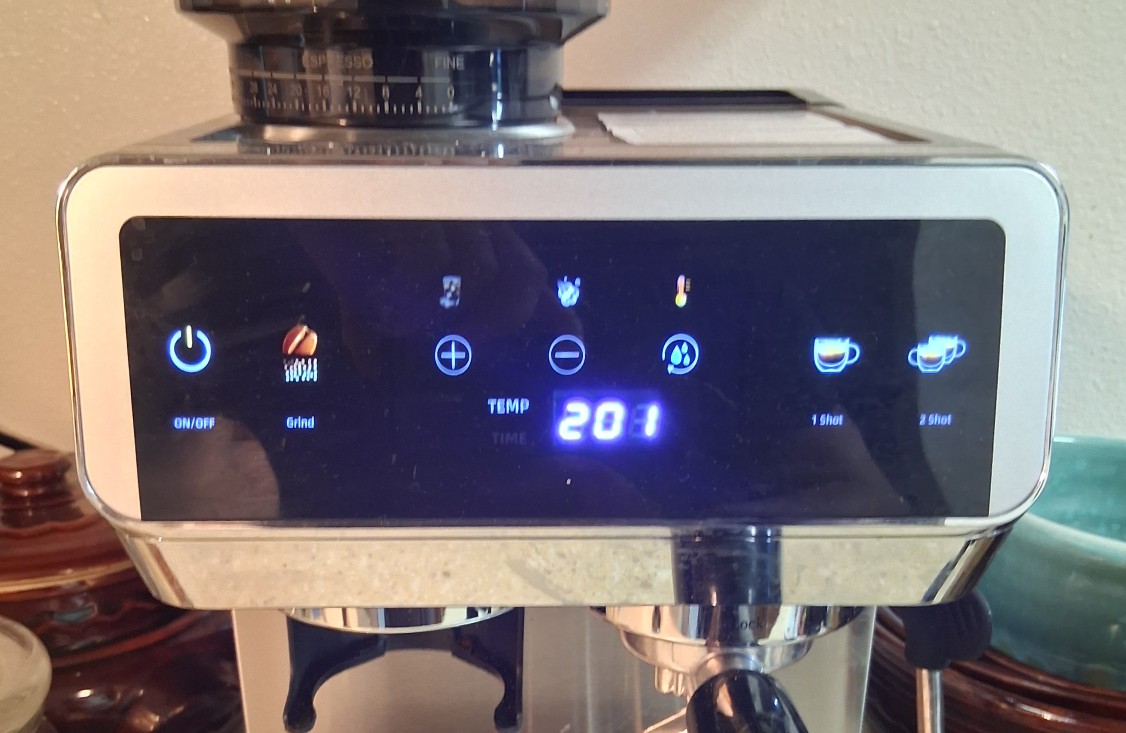
What stood out was how easily the preparation process became repeatable. Once reviewers established their preferred settings, they could produce consistently enjoyable coffee without frequent adjustments or complicated procedures. The CM1626 still demands some attention and technique, but its integrated design and accessible controls make semi-automatic espresso preparation approachable.
Cleaning & Maintenance
Routine cleaning remained manageable throughout seven weeks of testing. After brewing, reviewers discarded used grounds, rinsed the filter basket and portafilter, wiped away splashes, and emptied the drip tray as needed. Milk preparation required an additional step: wiping and purging the steam wand immediately after use.
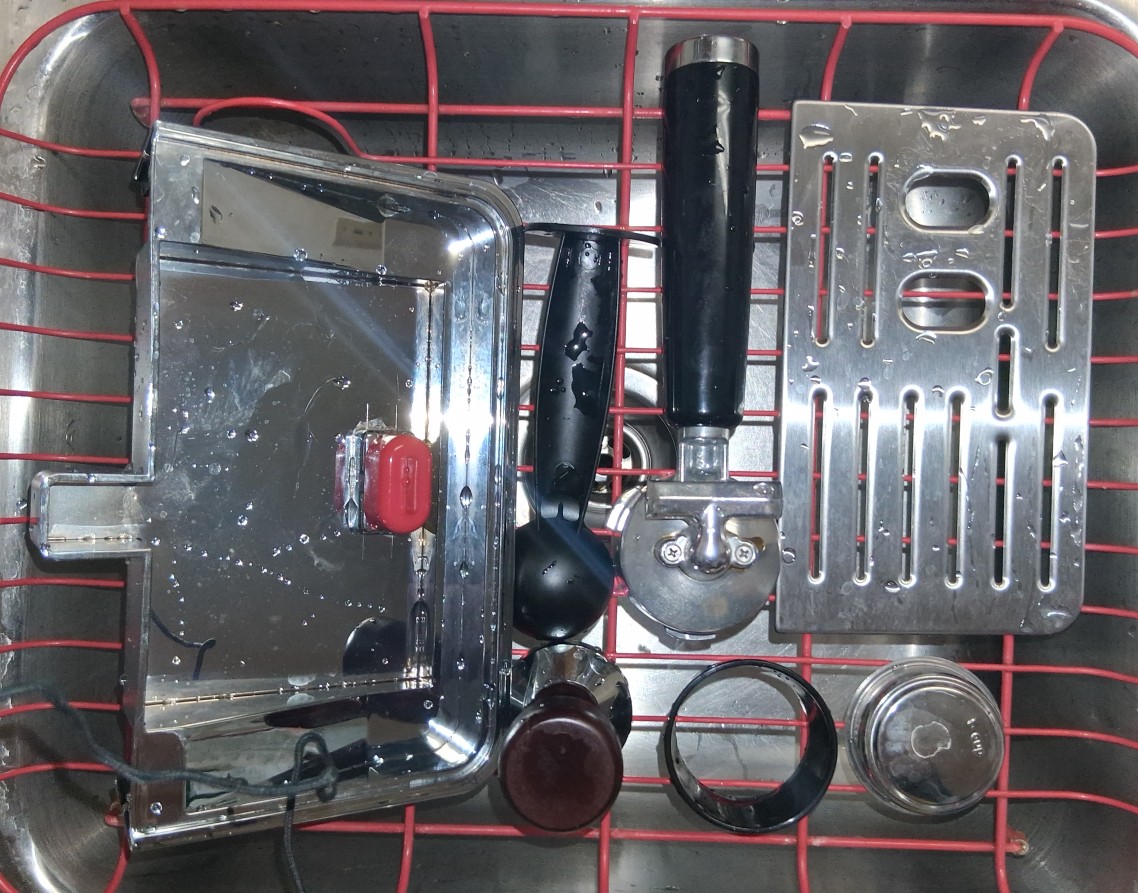
One particularly convenient detail was how easily the filter baskets could be removed from the portafilter, simplifying both basket changes and cleaning. Overall, none of the three households found routine upkeep especially demanding.
Longer-term maintenance, including descaling, should follow AMZCHEF's instructions and account for local water conditions. Our assessment reflects seven weeks of regular use rather than long-term maintenance or servicing requirements.
Noise, Vibration & Ergonomics
During the CM1626's first couple of uses, operation was noticeably louder, with enough vibration to move an espresso cup resting on the machine. This behavior disappeared after the initial runs and did not recur throughout our seven-week review. We suspect it was related to air being expelled from the brewing system during initial priming.
Under normal operating conditions, noise and vibration were comparable to other home espresso machines our reviewers had used. The grinder and brewing pump produced typical operating sounds, while milk steaming was relatively quiet. Steam-wand positioning occasionally affected noise levels, but nothing we considered excessive or disruptive.
Ergonomically, the accessible touchscreen, integrated grinder, and easily removable components made the CM1626 comfortable to operate and maintain.
How We Evaluate Home Espresso Machines
A good home espresso machine should do more than offer an impressive list of features. It should produce enjoyable coffee consistently, provide enough control to accommodate personal preferences, and fit comfortably into everyday routines.
Plumosity evaluates espresso machines using ten weighted criteria scored on a five-point scale. Espresso performance, consistency, grinder performance, and milk steaming collectively account for 63% of the overall rating. The remaining 37% considers ease of use, construction, cleaning, features, ownership confidence, and value.
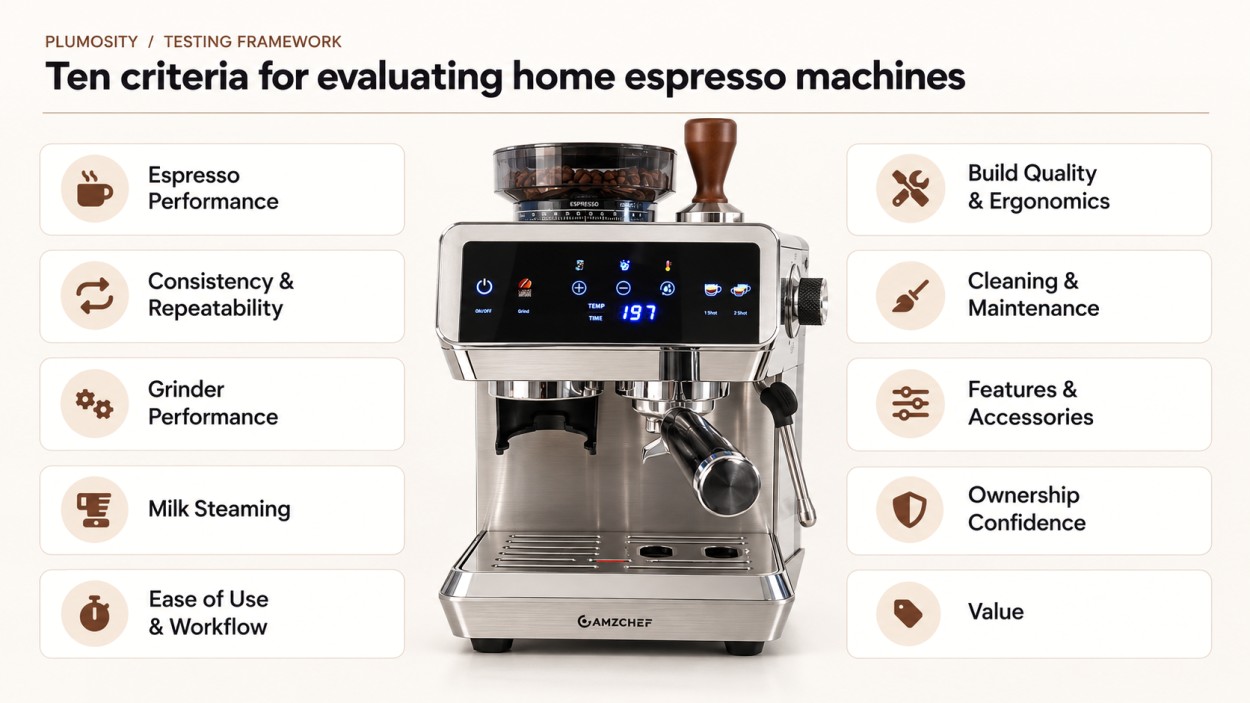
This approach places greater emphasis on actual brewing performance and repeatability than on supplementary functions. Scores reflect our hands-on observations, measured results, and ownership considerations. These are editorial assessments rather than laboratory certifications.
Scoring Breakdown
The CM1626 earned an overall 4.4/5 — Excellent rating. Consistency and ease of use received the highest scores, followed closely by grinder performance. Our assessment also accounted for the machine's longer preset brew ratios, preheating requirements, construction, and the limitations of evaluating long-term ownership over seven weeks.
| Category | Weight | Score | Weighted |
|---|---|---|---|
| Espresso Performance | 22% | 4.3 | 0.946 |
| Consistency & Repeatability | 13% | 4.6 | 0.598 |
| Grinder Performance | 15% | 4.5 | 0.675 |
| Milk Steaming | 13% | 4.3 | 0.559 |
| Ease of Use & Workflow | 10% | 4.6 | 0.460 |
| Build Quality & Ergonomics | 8% | 4.2 | 0.336 |
| Cleaning & Maintenance | 6% | 4.4 | 0.264 |
| Features & Accessories | 4% | 4.2 | 0.168 |
| Ownership Confidence | 4% | 4.3 | 0.172 |
| Value (assessed at $299.99) | 5% | 4.2 | 0.210 |
| Overall | 100% | 4.4 / 5 | 4.388 / 5 |
Weighted contribution equals category score multiplied by its percentage weight. The combined score of 4.388/5 is rounded to the published 4.4/5 rating.
Taken together, these scores reflect the CM1626's strengths as a complete espresso-making system rather than any single standout feature. Its overall performance, balanced against the limitations identified during testing, forms the basis of our final verdict.
Final Verdict
Across seven weeks and three households, the AMZCHEF CM1626 consistently produced coffee all five reviewers enjoyed. Its integrated grinder, intuitive controls, effective milk steaming, and manageable maintenance made preparation convenient, with consistency and ease of use standing out.
At our tested doses, the preset programs produced longer brew ratios than conventional concentrated espresso, while additional preheating improved serving temperature. Neither diminished reviewer satisfaction.
The machine operated without functional failures, and the grinder proved dependable. Some lightweight components and basic accessories reflected its affordable construction, while long-term durability remains unverified.
Plumosity's final rating: 4.4/5 — Excellent. The CM1626 is a compelling all-in-one choice for home coffee drinkers who value consistently enjoyable espresso, hands-on preparation, and the convenience of integrated equipment.
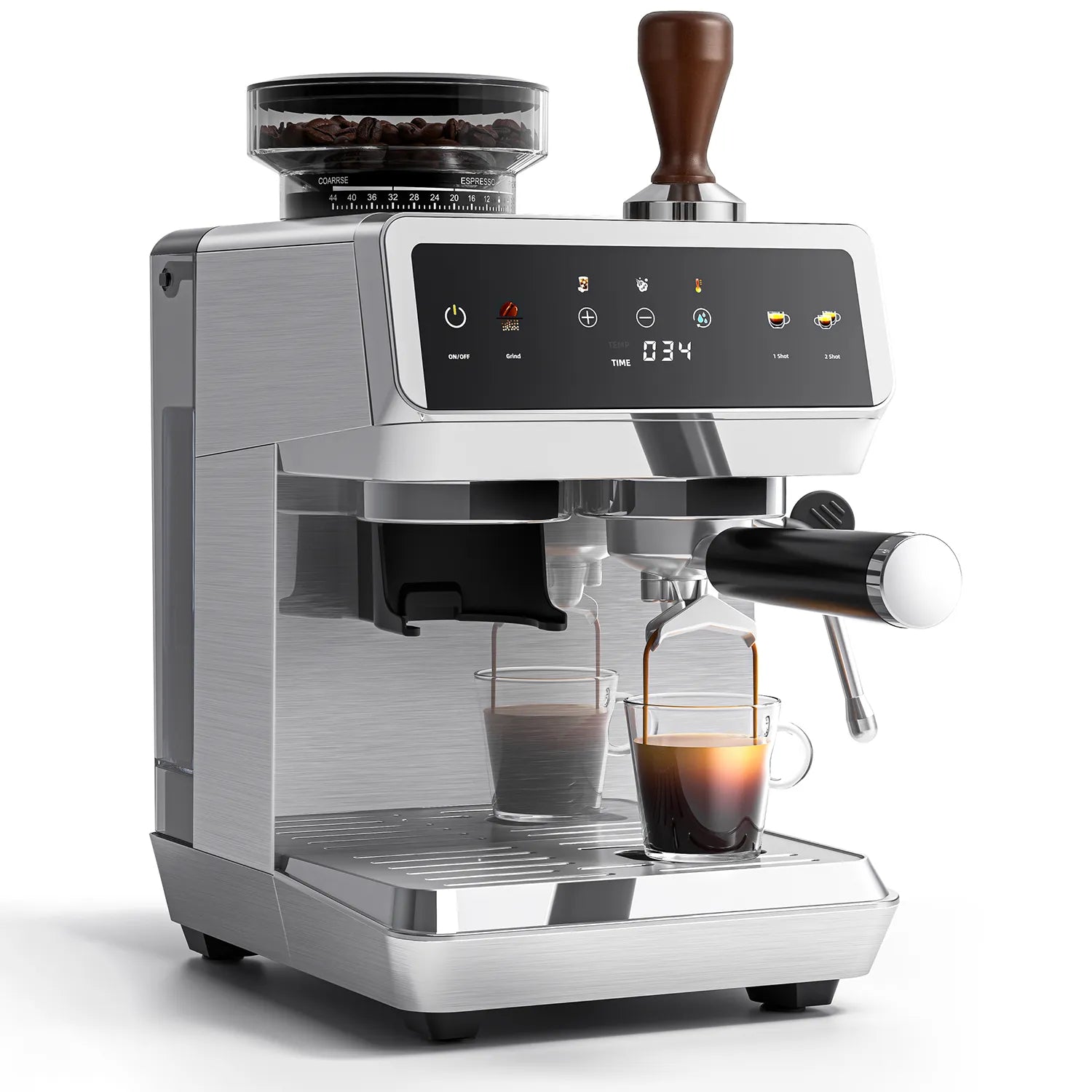
AMZCHEF CM1626 Espresso Machine
PLUMOSITY RATING
4.4/5 — Excellent
A capable all-in-one espresso machine with an integrated grinder, intuitive controls, and versatile brewing options for consistently enjoyable results.
VIEW ON AMAZONAMZCHEF CM1626 vs. Alternatives
At $299.99, the CM1626 competes with both integrated-grinder machines and espresso-focused models that require separate grinding equipment. To put its features and value in context, we compared its published specifications with three alternatives: the CASABREWS ULTRA, GEVI ECMI0, and Breville Bambino.
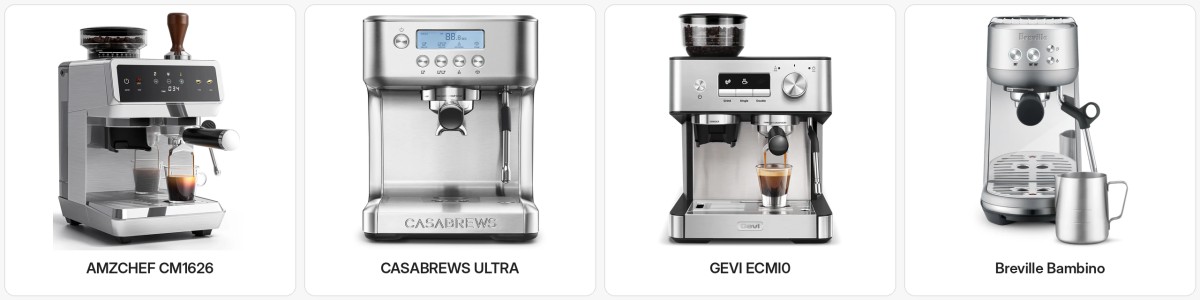
| Machine | Grinder | What Stands Out | Main Consideration |
|---|---|---|---|
| AMZCHEF CM1626 | Built in; 44 settings | Integrated grinder, four temperature selections, touchscreen, and Cold Brew mode | Long preset beverage ratios at our tested doses; additional preheating improves serving temperature |
| CASABREWS ULTRA | No | 58 mm portafilter, adjustable brewing temperature, and manual steaming | Separate grinder required for freshly ground whole-bean espresso |
| GEVI ECMI0 | Built in; 30 settings | Integrated grinder, 58 mm brewing system, and manual steam wand | Adjustment capabilities, and included accessories |
| Breville Bambino | No | Compact espresso-focused design, 54 mm portafilter, and rapid startup | Separate grinder needed; fewer integrated functions |
The CASABREWS ULTRA and Breville Bambino deserve consideration from buyers who already own a suitable grinder or prefer to select one independently. Both place greater emphasis on the brewing machine itself rather than integrating grinding equipment.
The GEVI ECMI0 is a more direct all-in-one alternative, pairing an integrated grinder with its own espresso-brewing hardware. Buyers comparing it with the CM1626 should consider grinder adjustment, portafilter design, included accessories, warranty terms, and total purchase price.
These are specification-based comparisons, not performance rankings. However, you can learn more about the Casabrews ULTRA espresso machine in our hands-on review.
Value & Ownership Trade-Offs
The CM1626's greatest value lies in its versatility. At $299.99, it combines an integrated grinder, adjustable brewing temperatures, touchscreen controls, manual milk steaming, hot-water dispensing, and a rapid Cold Brew-style program. For buyers without existing espresso equipment, this all-in-one approach offers meaningful value and convenience.
There are trade-offs. At our tested doses, the preset programs produced longer brew ratios than conventional concentrated espresso, while hotter servings required additional preheating. Some lightweight components and plastic accessories also contrasted with the polished exterior. Buyers seeking professional-grade extraction control may prefer a higher-end machine.
The CM1626 performed well, without functional failures throughout seven weeks of testing. AMZCHEF offers a one-year manufacturer warranty, though long-term durability and warranty-service quality remain unverified.
Our 4.2/5 Value score reflects the CM1626's strengths and limitations at its regular $299.99 price. At discounted promotional prices below $250, it offers exceptional value.
Pros & Cons
Pros
- Enjoyable, repeatable espresso across three households
- Integrated grinder with a broad adjustment range
- Quick electronic startup and manageable daily preparation
- Effective milk steaming with comparatively subdued noise
- Useful options for iced coffee and hot-water dispensing
- Straightforward cleaning and easily removable filter baskets
- Attractive stainless-steel design and substantial included tamper
- One-year manufacturer warranty
Cons
- Preset programs produced long brew ratios at our tested coffee doses
- Initial espresso can be cooler without additional preheating
- Cold Brew mode dispenses warm coffee that requires chilling
- Some components and accessories feel relatively basic
- Long-term durability remains unverified
Who Should—or Shouldn't—Buy It?
Who Should Buy the CM1626?
The CM1626 is well suited to home coffee drinkers moving beyond pods or basic coffee makers who want to explore freshly ground espresso. Its integrated grinder and intuitive controls make semi-automatic preparation approachable without investing in separate equipment.
It's also a versatile choice for households that enjoy cappuccinos, lattes, iced coffee, and hot-water drinks. Buyers who appreciate hands-on preparation, all-in-one convenience, and consistently satisfying results without pursuing specialized espresso techniques will find plenty to like.
Who Should Skip It?
Buyers seeking fully automated grinding, tamping, brewing, and milk preparation should consider a superautomatic machine. The CM1626 requires manual dosing, tamping, and milk steaming.
Espresso enthusiasts seeking precise extraction control and concentrated specialty-style shots may prefer a dedicated machine and grinder. The CM1626's generous preset beverage yields require additional adjustments to achieve shorter shots.
Buyers who already own a capable grinder should also consider espresso-focused machines. The CM1626's all-in-one convenience offers the greatest benefit to those who need its integrated grinder.
Buying Guide: Price, Warranty & Accessories
Price & Value
The AMZCHEF CM1626's standard $299.99 price served as the basis for Plumosity's 4.2/5 Value score. At promotional sale pricing below $250, the machine offers exceptional value.
Before purchasing, compare retailer pricing, included accessories, and warranty coverage. The lowest advertised price isn't necessarily the best deal if package contents or purchase protections differ.
Warranty: Verify the Purchase Channel
AMZCHEF offers a one-year manufacturer warranty.
Review AMZCHEF's warranty terms, complete any required registration, and retain proof of purchase. We did not test the warranty-claim process, so service quality remains unverified.
Included Accessories
Our review package included the bean hopper, portafilter, two filter baskets, tamper, dosing funnel, measuring scoop, cleaning brush, and documentation. Confirm the exact package contents before ordering.
Additional Accessories Worth Considering
Three useful additions to consider for coffee preparation, milk steaming, and ongoing maintenance:

Precision Coffee Scale
RENPHO Calibarista
A rechargeable coffee scale with 0.1 g precision, a built-in timer, and espresso-specific controls for accurately measuring coffee doses, beverage yields, and brewing times.
VIEW COFFEE SCALE
Milk-Frothing Pitcher
CASABREWS CASMP350
A 350 ml stainless-steel pitcher with a precision pouring spout, ideal for steaming milk and preparing cappuccinos and lattes.
VIEW MILK PITCHER
Coffee Machine Descaler
CASABREWS
Cleaning and descaling tablets designed to help remove buildup during periodic maintenance. Verify compatibility with AMZCHEF's care instructions before use.
VIEW DESCALERConclusion
The AMZCHEF CM1626 offers a compelling balance of performance, convenience, and versatility for home coffee drinkers interested in freshly ground espresso. Its integrated design simplifies the setup, while adjustable settings allow users to refine their preparation to suit individual tastes.
Buyers seeking full automation or greater control over specialty espresso extraction may prefer a different setup. For those who enjoy hands-on preparation, the CM1626 makes it easy to establish a satisfying, repeatable coffee-making routine.
Disclaimer:
This review was conducted by Plumosity's Product Review Team following seven weeks of hands-on testing with the AMZCHEF CM1626 Espresso Machine, involving five experienced home coffee drinkers across three households.
Our findings combine real-world use, firsthand observations, and repeat measurements. Results reflect our review unit and testing conditions; individual experiences may vary. Long-term durability and warranty-service performance were not independently evaluated.
Some links in this article are affiliate links, meaning Plumosity may earn a commission—at no additional cost to you—if purchases are made through them.
We value your trust and remain committed to honest, practical, and transparent product reviews that help readers make informed purchasing decisions.
Frequently Asked Questions
Does the CM1626 make real espresso?
Yes. The CM1626 is a pump-driven espresso machine with a portafilter brewing system. However, at our tested doses, its preset programs produced longer brew ratios than the conventional 1:2 starting point for concentrated espresso. For shorter, stronger shots, experiment with your preparation and monitor finished beverage weight.
Why is the espresso sometimes cooler than expected?
The CM1626 signals readiness in approximately 30 seconds, even though the brewing system and portafilter may still be warming. Our tests showed that additional water-only preheating cycles substantially improved serving temperature.
Is the Cold Brew mode actually cold?
No. Using room-temperature reservoir water, the finished coffee measured approximately 105°F. The function offers a quick way to prepare coffee for iced drinks but does not replicate traditionally steeped cold brew.
Do I need a separate grinder or milk pitcher?
The CM1626 includes a built-in grinder, eliminating the need for a separate one. Our review package lacked a milk-frothing pitcher, although AMZCHEF lists one among its accessories. Verify the exact package contents before purchasing.
Can I calculate extraction yield from beverage weight?
No. Coffee dose and finished beverage weight determine brew ratio, not extraction yield. Measuring the percentage of soluble material extracted requires additional data, including total dissolved solids measured with a coffee refractometer.
How long is the warranty?
AMZCHEF offers a one-year manufacturer warranty.