Which At-Home Hair Removal Device Should You Choose?
Shopping for an at-home “laser hair removal” device means sorting through products that use different technologies, work on different skin and hair combinations, and require very different treatment schedules.
Most products sold as at-home “laser hair removal” devices are not actually lasers—they use IPL, or intense pulsed light. Skin tone and hair color can determine whether a device is suitable for you at all, while treatment schedules range from occasional sessions to weeks of frequent use. Specifications such as joules, flash counts, cooling systems, and power levels matter, but they do not necessarily tell you which device best fits your needs or routine.
The most important question is not:
Which device has the best specs?
It is:
Which device is suitable for your skin and hair, can deliver meaningful hair reduction, and fits a routine you will realistically complete?
That is how Plumosity evaluated these devices:
Compatibility → Effectiveness → Adherence → Ownership
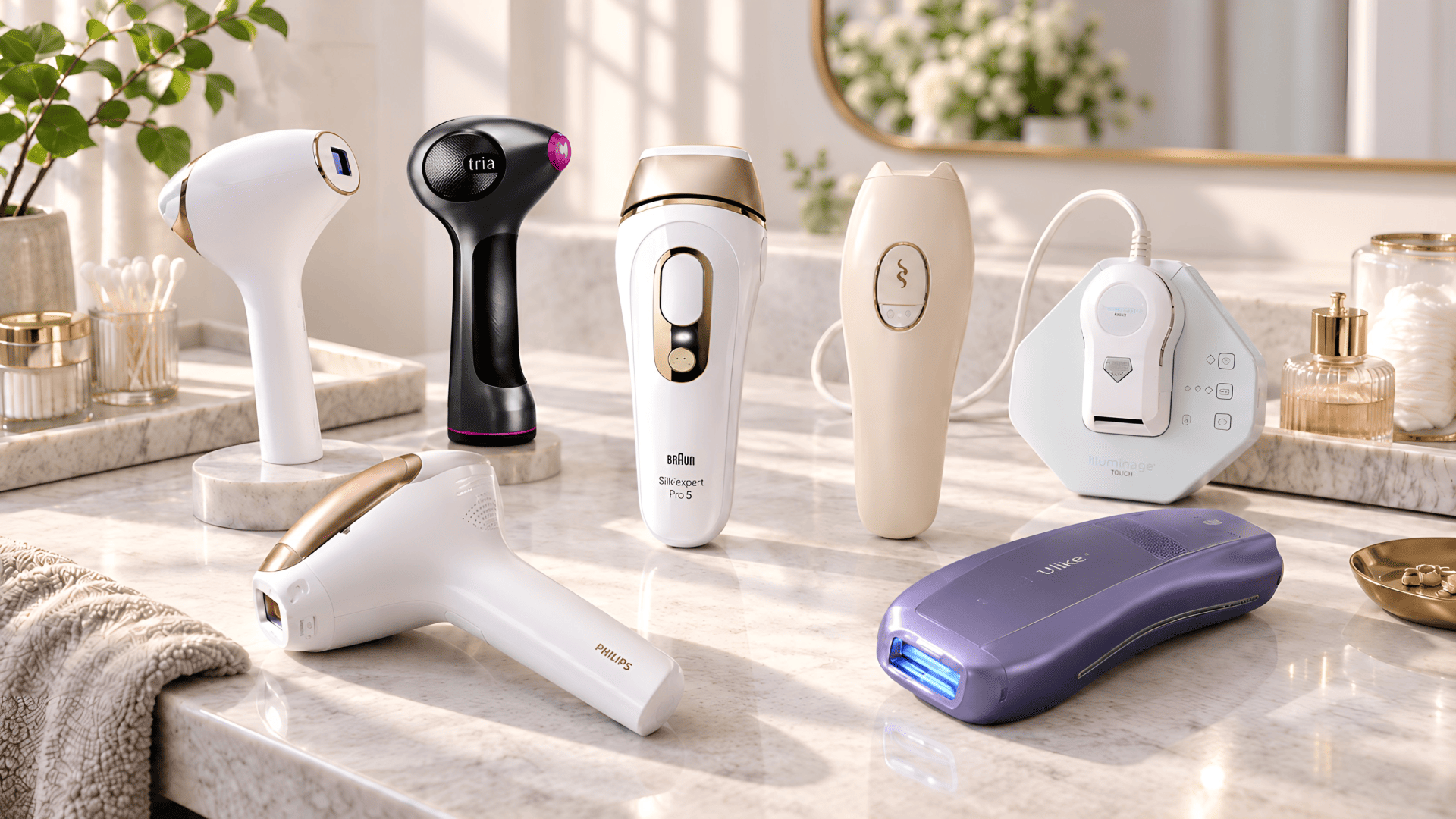
For most eligible IPL shoppers, our top choice is the Philips Lumea 9000 Series. It combines a mature IPL platform with dedicated treatment attachments, skin-tone guidance, and a relatively light initial schedule: only four treatments, spaced two weeks apart, before moving to monthly touch-ups.
The Braun Silk·expert Pro 5 is the better choice when fast individual sessions matter most. Ulike Air 10 stands out for cooling and coarse hair. SmoothSkin Pure Adapt provides a strong value option. And for shoppers who specifically want a true at-home diode laser rather than IPL, we prefer the Tria 4X 2nd Gen.
But none of these products is right for everyone—and for some shoppers, the best choice is not to buy an at-home IPL or laser at all.
The Short Answer: Which At-Home IPL or Laser Should You Buy?
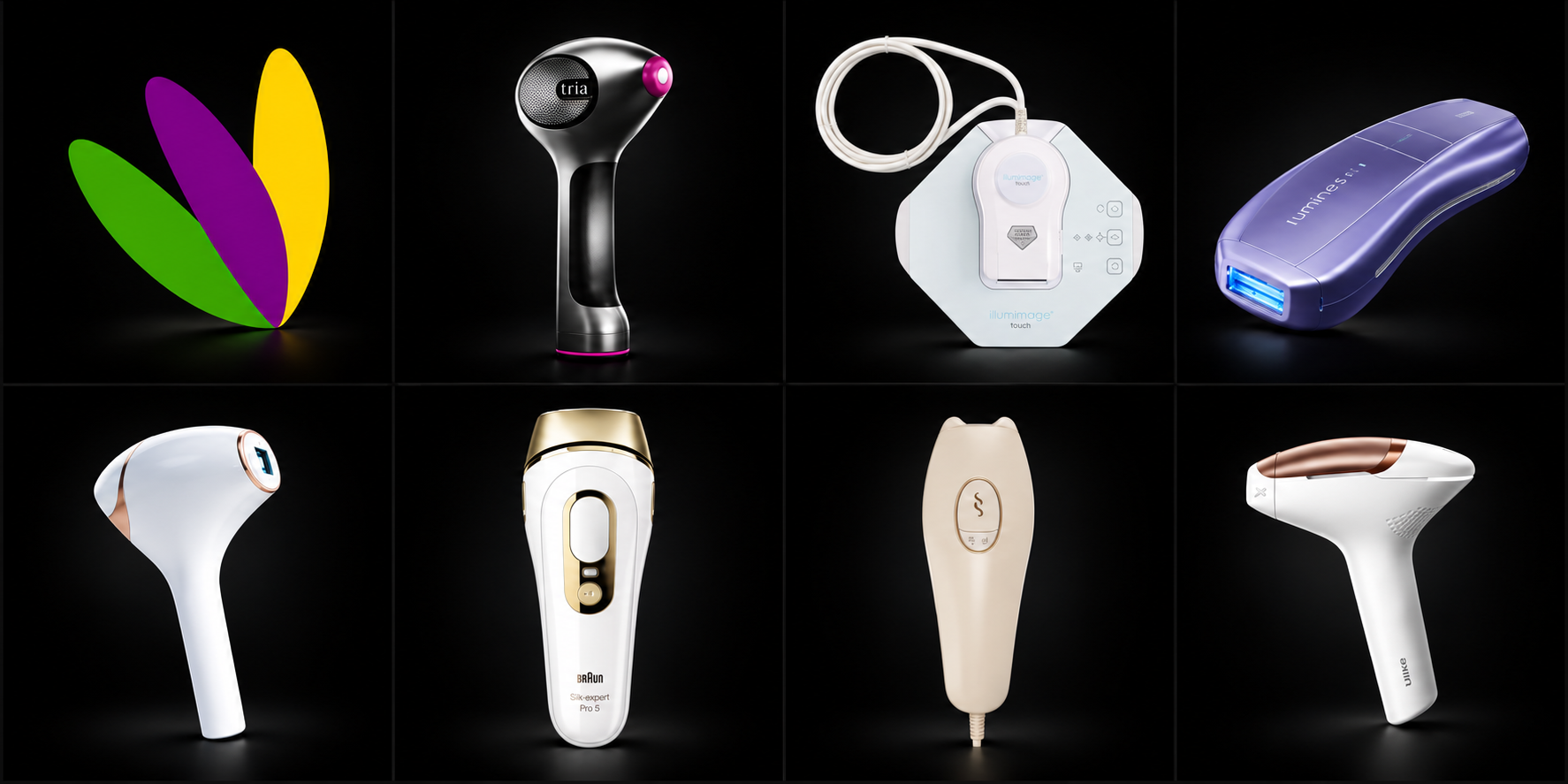
| If Your Priority or Situation Is... | Our Pick | Why It Stands Out | Biggest Tradeoff |
|---|---|---|---|
| Best balance for most eligible IPL shoppers | Philips Lumea 9000 Series Check Price → |
Only four initial treatments, strong area-specific usability, mature IPL platform | No active cooling |
| Fast IPL sessions for larger areas | Braun Silk·expert Pro 5 Check Price → |
Very rapid flashing, glide treatment, automatic skin adjustment | More frequent initial treatments than Philips |
| Comfort and coarse hair | Ulike Air 10 Check Price → |
Sapphire cooling and a stubborn/coarse-hair mode | Frequent early treatment schedule |
| Strong value without bargain-device compromises | SmoothSkin Pure Adapt Check Price → |
Automatic skin adjustment, established IPL engineering, about $349 | No active cooling; 12-week initial course |
| True laser, especially for smaller areas | Tria 4X 2nd Gen Check Price → |
Genuine 810-nm diode laser with an established product history | Slow for large areas |
| Fitzpatrick V–VI skin + dark hair | Iluminage Touch 4Ever Check Price → |
Broader documented compatibility than mainstream IPL | Older platform and thinner current ownership evidence |
| Deeper skin + specifically want a true laser | Epilaser 980 Check Price → |
980-nm laser and FDA-cleared darker-skin platform | $995, intensive regimen, and less-direct long-term outcome evidence |
| Very light blonde, red, gray, or white hair | Consider alternatives | Most conventional IPL and laser systems rely on targetable pigment | Electrolysis may make more sense |
Important: If your skin tone or hair color falls outside a device's stated compatibility range, remove that device from consideration regardless of how well it performs for somebody else.
Will At-Home IPL or Laser Hair Removal Work for You?
Before comparing brands, determine whether light-based hair removal makes sense for your skin, hair, and intended treatment areas.
Hair Color Comes First
Conventional IPL and laser hair-removal systems primarily rely on pigment in the hair to absorb light and convert it into heat.
That makes darker hair easier to target than hair with very little pigment.
Generally Stronger Candidates
- ✅ Black hair
- ✅ Dark brown hair
- ✅ Medium brown hair
- ✅ Some darker blonde hair, depending on the device
Generally Poor Candidates
- ⚠️ Very light blonde hair
- ⚠️ Red hair
- ⚠️ Gray hair
- ⚠️ White hair
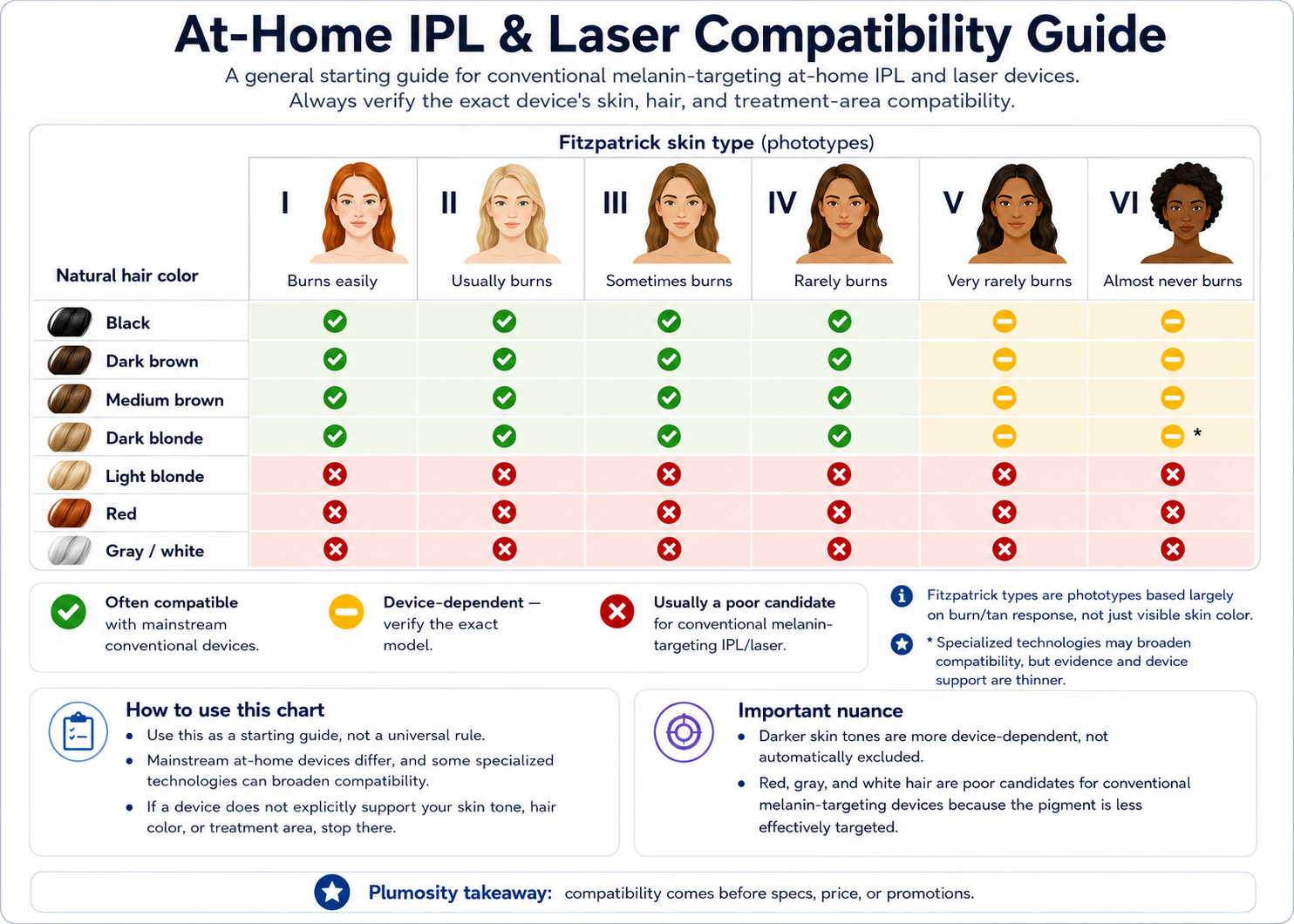
Mayo Clinic notes that darker hair generally responds best to laser treatment, while blonde, white, gray, and red hair typically respond less effectively because they contain less—or a different type of—targetable pigment. The American Academy of Dermatology similarly warns that conventional laser hair removal does not effectively target blonde, white, gray, or red hair.
That does not mean every product has exactly the same compatibility range. Some systems combine technologies to broaden whom they can treat.
But broader compatibility claims should be evaluated based on the specific device, its technology, and the evidence supporting those claims.
Skin Tone Is a Compatibility Gate
Skin tone matters because melanin in the skin can also absorb light energy intended to target pigment in the hair.
With many conventional IPL and laser systems, darker skin can therefore absorb more treatment energy, narrowing the margin between heating the hair follicle and overheating the surrounding skin.
This does not mean people with darker skin cannot use at-home light-based hair removal. It means device compatibility matters more, because wavelength, energy delivery, skin-tone sensing, and built-in safeguards can affect both suitability and risk.
For darker skin tones, the device should explicitly state that your skin tone is supported rather than relying on a general claim that IPL or laser hair removal works across a broad range of users.
Compatibility Is Pass or Fail
If the device does not explicitly support your skin tone, its other advantages no longer matter. Cooling, apps, flash counts, power settings, and discounts do not compensate for incompatibility.
Treatment Area Matters Too
Devices also differ in where they are intended to be used.
- Legs
- Arms
- Underarms
- Bikini line
- Stomach
- Chest
- Back
- Selected facial areas
Manufacturers can also differ in what they mean by “bikini,” “intimate,” or “facial” treatment.
Philips, for example, provides separate body, face, bikini, and underarm attachments with the current U.S. Lumea 9000 BRI984/03. Its facial attachment is intended for areas such as the upper lip, chin, and jawline.
Tria permits treatment on areas including legs, arms, armpits, bikini line, and certain female/fine facial hair, while explicitly excluding genital areas, nipples, and thicker facial hair.
Do not assume permission to use one device somewhere means another device can be used there too.
Who Should Skip an At-Home IPL or Laser?
- Your natural hair color falls outside the device's effective range.
- Your skin tone is not explicitly supported.
- Your intended treatment area is excluded.
- You have a contraindication listed by the manufacturer.
- You are unlikely to follow the required treatment schedule.
- You expect every treated hair to disappear permanently.
- Professional laser or electrolysis better fits your situation.
Light-based treatment can also reduce existing hormonally driven hair without treating the underlying cause, meaning new hair may continue developing.
Sometimes the most useful recommendation is simple: don't buy an at-home device if it is not suitable for your skin, hair, treatment area, or routine.
Sources: Mayo Clinic: Laser Hair Removal · American Academy of Dermatology · Philips Lumea 9000 · Tria 4X
IPL vs. Laser Hair Removal at Home
IPL and laser both use light energy to interfere with hair growth, but they deliver that light differently.
IPL uses a broad spectrum of light. A laser uses a narrower, focused wavelength.
| IPL | True At-Home Laser | |
|---|---|---|
| Light | Broad spectrum | Focused wavelength |
| Home-device availability | Very common | Relatively rare |
| Treatment area per pulse | Usually larger | Usually smaller |
| Large-area speed | Generally faster | Usually slower |
| Precision | Lower | Higher |
| Skin compatibility | Device-specific | Device-specific |
| Hair compatibility | Device-specific | Device-specific |
| Comfort | Device-specific | Device-specific |
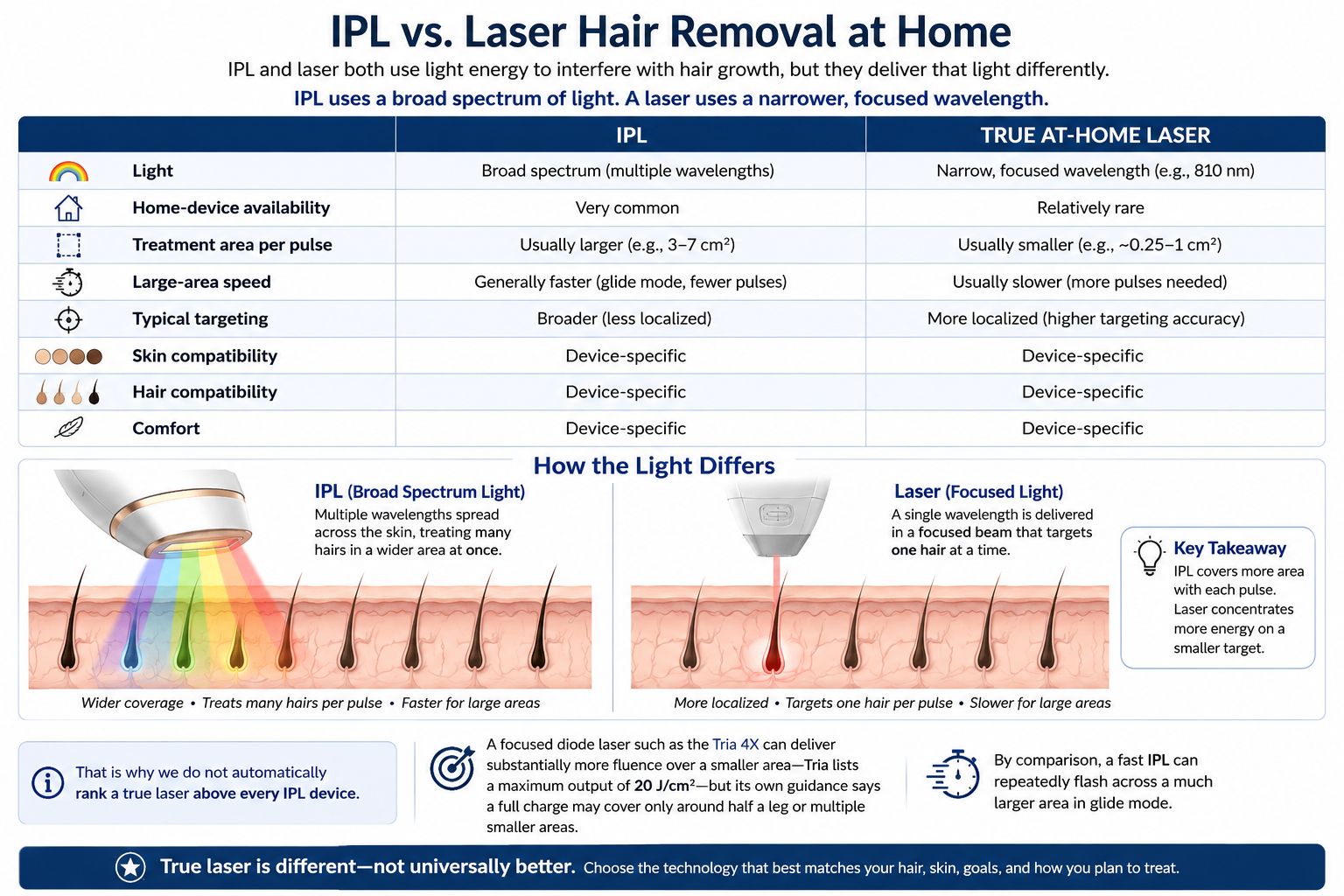
That is why we do not automatically rank a true laser above every IPL device.
A focused diode laser such as the Tria 4X can deliver substantially more fluence over a smaller area—Tria lists a maximum output of 20 J/cm²—but its own guidance says a full charge may cover only around half a leg or multiple smaller areas.
By comparison, a fast IPL can repeatedly flash across a much larger area in glide mode.
True laser is different—not universally better.
What Makes a Good At-Home Hair Removal Device?
We evaluate at-home IPL and laser devices through four layers.
1. Compatibility
Non-negotiable.
The device must clearly support your skin tone, hair color, intended treatment area, and relevant safety requirements.
2. Effectiveness
Does the evidence support the promise?
We look beyond headline percentages to the treatment protocol, study design, measured outcome, and length of follow-up.
3. Adherence
Can you realistically complete the regimen?
Treatment frequency, session length, cooling, coverage, ergonomics, and automation can matter as much as flashy specifications.
4. Ownership
Is it worth living with?
Price, warranty, return policy, reliability, lifespan, support, and product maturity all affect the real value.
Effectiveness Claims Need Context
Hair-reduction marketing often highlights impressive percentages while leaving out the details needed to interpret them.
A useful effectiveness claim should answer:
- How much hair reduction?
- After how many treatments?
- Over what period?
- On which body area?
- How many people were studied?
- Was the outcome based on measured hair counts or self-assessment?
- Was the study independent or manufacturer-sponsored?
- Was maintenance included?
- How long were results followed?
“Up to 95% hair reduction” means very little without that context.
We therefore give more weight to identifiable clinical methods, regulatory evidence, published studies, and credible independent testing than to an isolated percentage on a product page.
We also distinguish evidence of effectiveness from evidence of safety or regulatory suitability. An FDA 510(k) clearance tells us about regulatory status and labeled intended use. It does not automatically prove that one cleared device removes more hair than another.
Which Specifications Actually Matter?
| Specification | What It Can Tell You | What It Does Not Prove |
|---|---|---|
| J/cm² / fluence | Energy delivered over an area | Which device will remove the most hair overall |
| Total joules | Total energy in a pulse or burst | Direct equivalence to J/cm² or superior efficacy |
| Cooling | Potential comfort advantage | Better hair reduction by itself |
| Flash count | Expected lamp/device longevity | Treatment effectiveness |
| Intensity levels | Adjustability | Greater maximum effectiveness |
| Skin-tone sensing | Potential safety and usability advantage | That the device supports every skin tone |
| Apps | Potential tracking or coverage guidance | Better results unless the features improve actual use |
| “Unlimited flashes” | Long expected lifespan | Superior hair reduction |
| FDA clearance | Regulatory status and labeled intended use | That it is more effective than every competing device |
The specification we care about most is not necessarily the largest number. It is the one that meaningfully changes the treatment experience or the evidence behind the recommendation.
The Treatment Commitment Most Buyers Miss
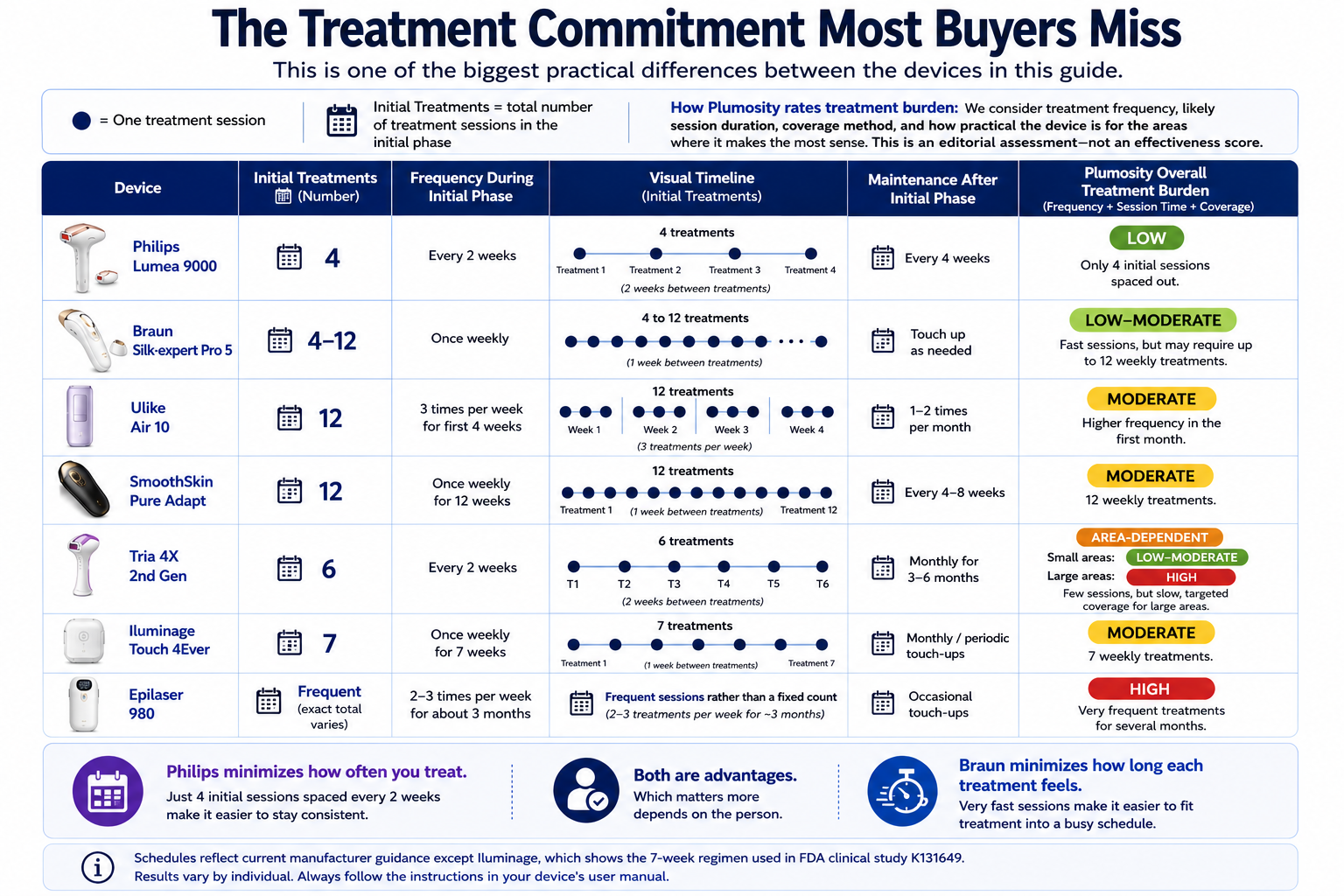
This is one of the biggest practical differences between the devices in this guide.
| Device | Initial Treatment Schedule | Session Style | Plumosity Treatment-Burden Assessment |
|---|---|---|---|
| Philips Lumea 9000 | Every 2 weeks × 4 treatments | Moderate full-body sessions | Low |
| Braun Silk·expert Pro 5 | Weekly × 4–12 weeks | Very fast IPL sessions | Low–Moderate |
| Ulike Air 10 | 3× weekly for first 4 weeks | Comfortable, cooled IPL | Moderate |
| SmoothSkin Pure Adapt | Weekly × 12 weeks | Fast full-body IPL | Moderate |
| Tria 4X 2nd Gen | Every 2 weeks × 6, then monthly top-ups | Slow, targeted laser treatment | Moderate for small areas / High for large areas |
| Iluminage Touch 4Ever | 7 weekly treatments in the underlying clinical regimen | Broad-area treatment | Moderate |
| Epilaser 980 | 2–3× weekly for about 3 months | Targeted laser treatment | High |
How Plumosity rates treatment burden: We consider treatment frequency, likely session duration, coverage method, and how practical the device is for the areas where it makes the most sense. This is an editorial assessment—not an effectiveness score.
Philips vs. Braun: Two Different Ways to Reduce Treatment Burden
Philips and Braun show why treatment burden is about more than session count alone. Philips reduces how often you need to treat, while Braun focuses on making each individual treatment faster and easier to fit into your routine.

Philips Minimizes How Often You Treat
4 initial treatments
Every 2 weeks
Philips asks you to complete far fewer initial treatment sessions than most devices in this guide. That can be a major advantage if remembering and repeating treatments is more likely to derail your routine than the length of each individual session.
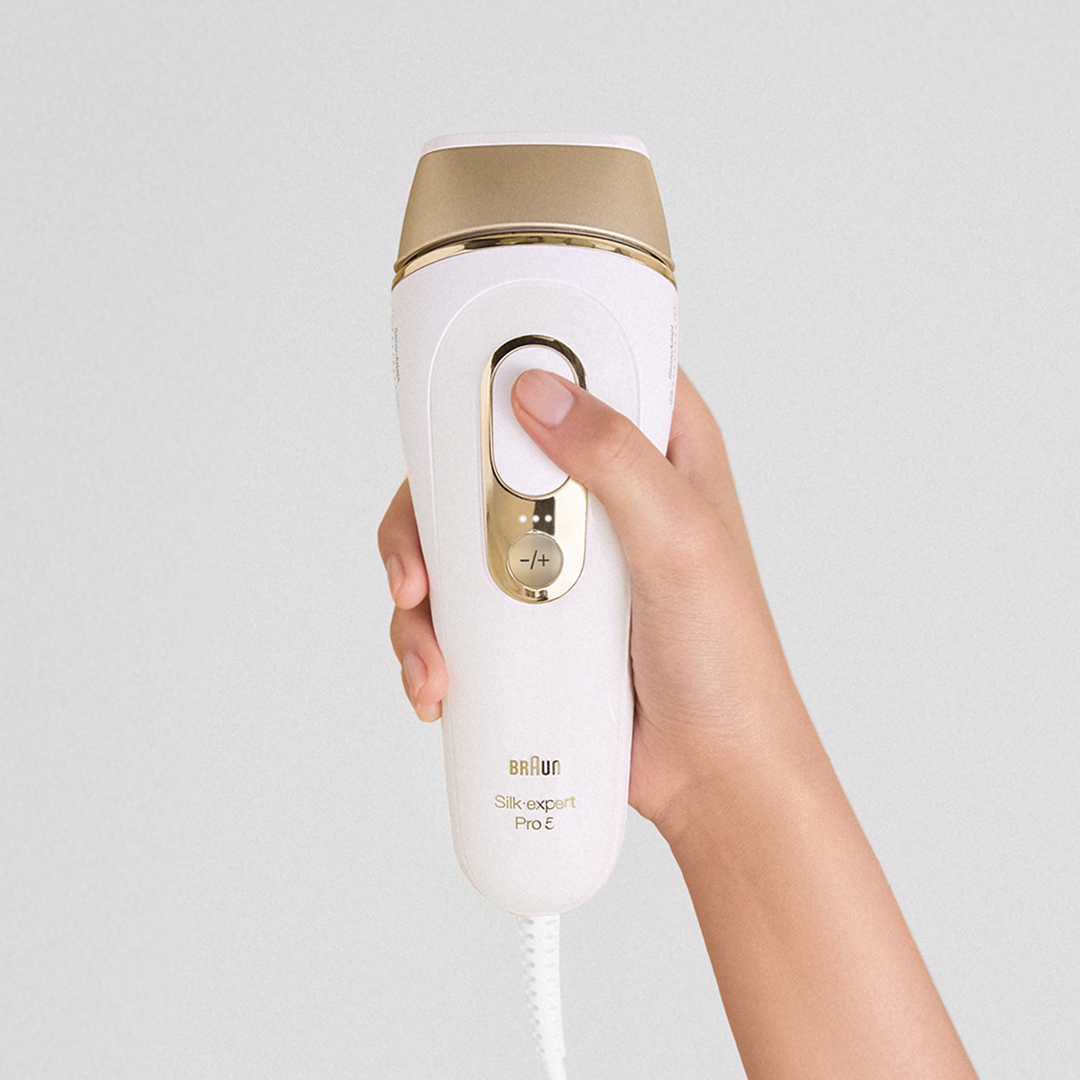
Braun Minimizes How Long Each Treatment Feels
4–12 initial treatments
Once weekly
Braun may require more treatment sessions, but its rapid flash rate and glide-style treatment make individual large-area sessions especially fast. That can be the better fit if short weekly routines are easier for you to maintain than fewer, potentially longer sessions.
Neither approach is automatically better. Philips reduces how often you treat, while Braun reduces how long each treatment feels. The better choice depends on which kind of commitment is easier for you to maintain.
How Plumosity Chose These Devices
This is a research-based buying guide, not a hands-on Plumosity product review.
Unless specifically stated otherwise, Plumosity has not personally tested the products below.
We prioritized different sources for different questions:
- Official manuals and manufacturer documentation: skin/hair compatibility, treatment areas, schedules, and technical specifications.
- FDA records and regulatory submissions: clearance status, intended use, safety/performance testing, and certain clinical evidence.
- Published or regulatory clinical studies: effectiveness claims where available.
- Credible independent hands-on testing: treatment comfort, speed, usability, and comparative experience.
- Broader owner feedback: recurring reliability, support, and ownership patterns.
Affiliate availability does not determine whether a product earns a recommendation.
What Our Confidence Levels Mean
High
Mature product or platform, strong primary documentation, and substantial supporting evidence or ownership history.
Moderate–High
Strong fundamentals with somewhat thinner long-term, independent, or current-model evidence.
Moderate
Important or promising option with meaningful limitations in evidence, product lineage, ownership history, or current-market clarity.
What We Eliminated
We also evaluated additional devices and models from Braun, SmoothSkin, Nood, JOVS, Dreame, CurrentBody, Silk'n, and others.
Some are good products. They did not earn separate primary recommendations when another device solved the same consumer problem with stronger evidence, clearer differentiation, a more mature ownership record, or fewer uncertainties. The goal was not to create enough awards for every recognizable brand—it was to find the smallest group of products that meaningfully covers the major buying decisions.
Best for Most Eligible IPL Buyers: Philips Lumea 9000 Series

Best For
Eligible IPL shoppers who want the strongest overall balance of usability, treatment-area versatility, evidence, and low routine burden.
Skip If
Active cooling or the absolute fastest individual sessions matter most.
| Technology | IPL |
|---|---|
| Hair Compatibility | Naturally dark blonde through black |
| Skin Compatibility | Fair through medium brown |
| Initial Schedule | Every 2 weeks × 4 treatments |
| Maintenance | About monthly |
| Attachments | Body, face, bikini, underarm |
| Skin Guidance | SmartSkin |
| Active Cooling | No |
| Advertised Time | About 11 minutes for both lower legs |
| FDA Status | K243453 |
| Warranty | Up to 5 years |
| Return Period | 90 days |
| MSRP / List Price | $579.95 |
Why It Wins
Philips asks relatively little from the user while still providing a mature, versatile IPL system.
Only four initial treatments.
That is considerably easier to complete than a weekly 12-treatment course or a regimen requiring several sessions per week.
The dedicated attachments also make the Lumea 9000 unusually flexible across major treatment areas without relying on one generic head.
Good Housekeeping's July 2026 Beauty Lab comparison independently selected the Lumea 9000 as its Best Overall device. Testers found it easy to use, versatile, and consistent, although bikini-area use was somewhat trickier than treatment across larger areas.
What the Evidence Means
Philips Lumea IPL received FDA 510(k) clearance under K243453 in February 2025. Its labeled indication includes permanent reduction in hair regrowth, defined as a long-term stable reduction measured at 6, 9, and 12 months after completion of the treatment regimen.
That does not prove Philips will outperform every competing IPL. What it does provide is a clear regulatory indication extending beyond a short-term “results in two weeks” marketing claim.
What you're giving up: There is no active cooling, and Braun remains the stronger option if your main priority is making each individual full-body session as fast as possible.
Sources: Philips treatment schedule · FDA K243453 · Good Housekeeping testing
Best for Fast IPL Treatments: Braun Silk·expert Pro 5
Best For
Eligible IPL shoppers treating larger areas who prioritize fast sessions and automatic skin adjustment.
Skip If
You would rather minimize how many initial treatments you need to complete.
| Technology | IPL |
|---|---|
| Initial Schedule | Weekly × 4–12 weeks |
| Maintenance | As needed |
| Advertised Full-Body Time | About 10 minutes |
| Automatic Skin Adjustment | Yes |
| Glide Treatment | Yes |
| Active Cooling | No |
| Heads | Vary by bundle |
| FDA Status | K190354 |
| MSRP / List Price | $469.99 for PL5347 |
Why It Wins
Braun's advantage is speed.
The Pro 5 flashes rapidly, supports glide treatment, and continually reads skin tone to adapt the treatment output.
Good Housekeeping's 2026 testing named it the Fastest IPL Hair Removal Device, with testers specifically praising the short time between flashes.
For someone treating legs or other broad areas, that can matter a lot.
Philips vs. Braun: The Real Decision
Philips minimizes how often you treat.
Braun minimizes how long each session takes.
If short weekly sessions sound easier than less-frequent but potentially longer sessions, choose Braun.
If remembering to repeat treatments is the bigger barrier, Philips probably makes more sense.
What you're giving up: The initial regimen can require anywhere from four to twelve weekly treatments. There is no active cooling, and Braun's multiple Pro 5 bundles make it easy to pay extra for heads or accessories you may not need.
Consider Braun Skin i·expert Instead If...
Braun's more expensive Skin i·expert adds guided treatment tracking and connected features. Good Housekeeping describes its hardware as largely similar to the Pro 5, with the smart features providing the main differentiation.
That can be worthwhile if you value guided coverage and reminders. For most shoppers, we would still start with the Pro 5 and pay more only if those features solve a real problem for you.

Sources: Braun Pro 5 · FDA K190354 · Good Housekeeping testing
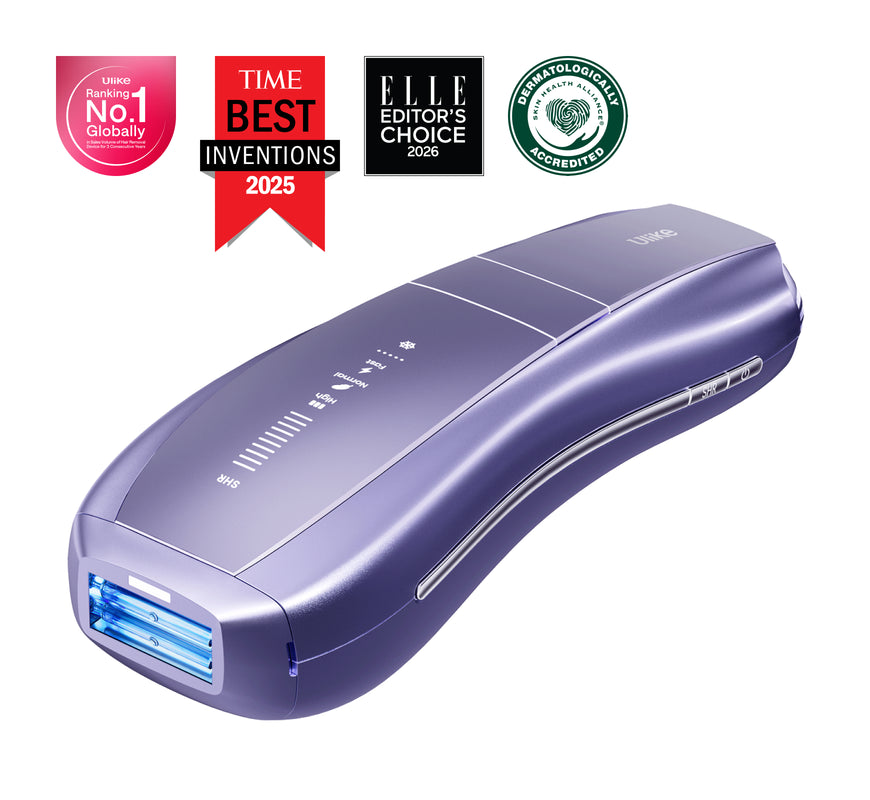
Best for Comfort & Coarse Hair: Ulike Air 10
Best For
Eligible IPL shoppers who are especially concerned about heat, discomfort, or stubborn/coarse hair.
Skip If
You want the least demanding initial schedule or have particularly reactive skin.
| Technology | IPL |
|---|---|
| Cooling | Sapphire contact cooling |
| Automatic Skin Feature | SkinSensor |
| Coarse-Hair Mode | SHR / stubborn-hair mode |
| Glide Mode | Yes |
| Advertised Full-Body Time | About 10 minutes |
| FDA Status | K241998 device family |
| MSRP / List Price | $349 |
| Return Guarantee | 100 days |
Why It Wins
Ulike's strongest advantage is not simply a large energy number.
It is comfort.
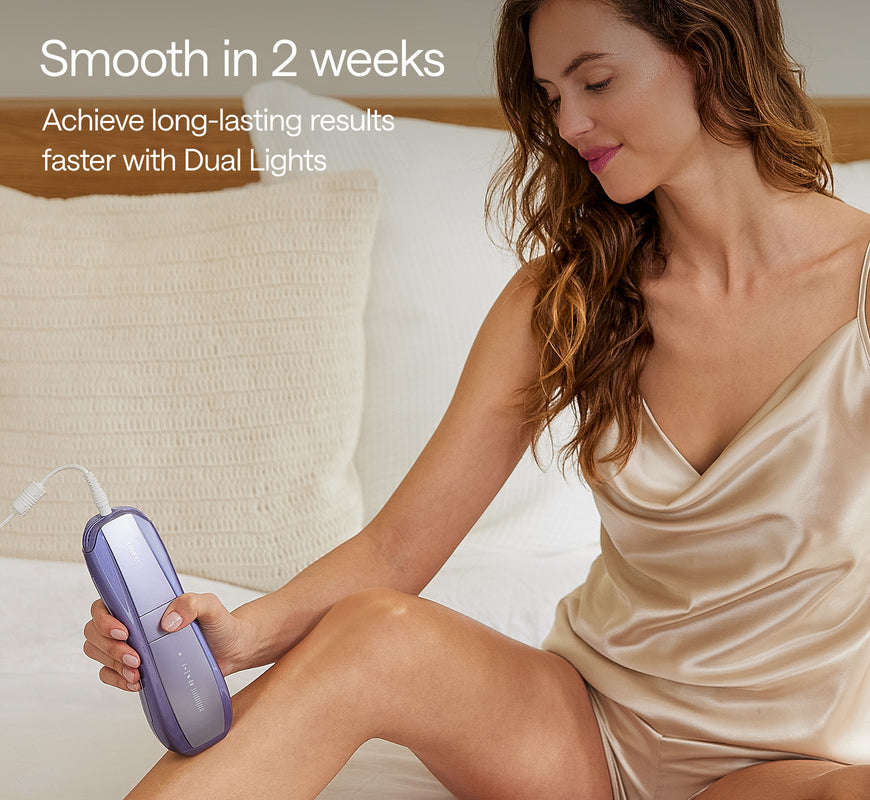
The sapphire contact surface actively cools the treatment area, which can make repeated treatment easier to tolerate—particularly where hair is coarse.
Good Housekeeping selected Air 10 as its Best for Thick Hair in 2026. Its testers specifically praised the cold treatment head, ease of use, and stubborn-hair mode; Air 10 also performed strongly for repeated-use hair reduction in that testing.
What the Cooling Actually Means
Cooling can improve comfort.
It does not directly prove greater hair reduction.
Its value is primarily: comfort → better tolerance → greater likelihood of completing the regimen.
What you're giving up: Ulike currently recommends three treatments per week for the first four weeks, followed by maintenance once or twice monthly.
So the real tradeoff is more comfortable sessions, but more of them. Good Housekeeping also reported irritation in a few testers, which is why strong cooling should not be interpreted as a blanket “best for sensitive skin” recommendation.
Sources: Ulike Air 10 · FDA K241998 · Good Housekeeping testing
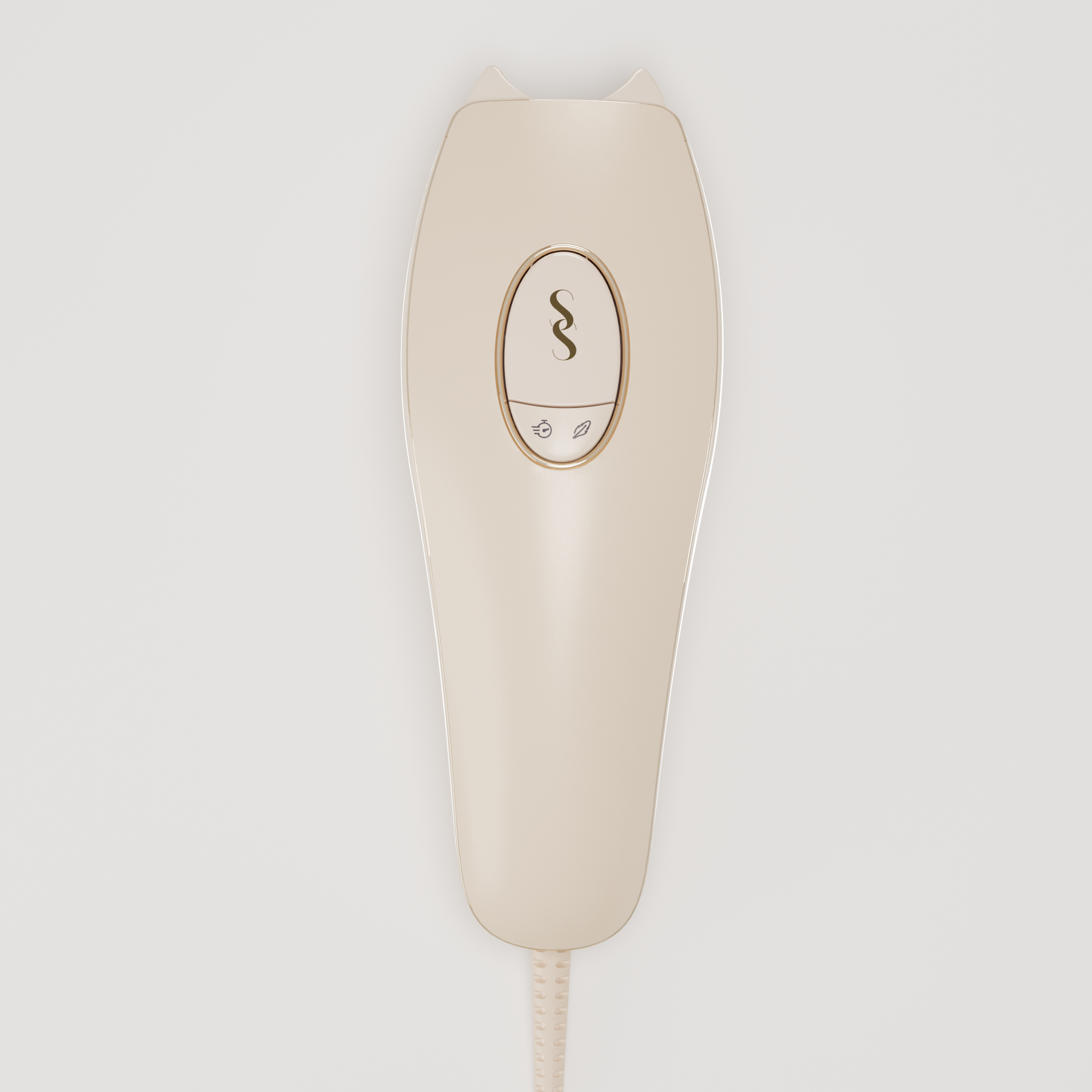
Best Value: SmoothSkin Pure Adapt
Best For
Shoppers who want automatic skin adjustment and strong core IPL features without paying premium-device prices.
Skip If
Cooling or a very light initial regimen is a priority.
| Technology | IPL |
|---|---|
| Maximum Output | Up to 6 J/cm² |
| Initial Schedule | Weekly × 12 weeks |
| Maintenance | Every 4–8 weeks |
| Automatic Skin Adjustment | Yes |
| Intensity Levels | 10 |
| Comfort Modes | 3 |
| Glide Mode | Yes |
| FDA Status | K233782 |
| MSRP / List Price | $379 |
Why It Wins
There are cheaper IPL devices.
Pure Adapt earns our value recommendation because it reaches a price where we stop seeing major compromises in the fundamentals.
- ✅ Automatic skin-tone sensing
- ✅ Multiple comfort settings
- ✅ Glide and stamp treatment
- ✅ Adaptable body contact
- ✅ Mature CyDen IPL engineering
- ✅ Clear FDA regulatory history
Shape's June 2026 testing went even further and selected Pure Adapt as its Best Overall device, citing its automatic skin/body adaptation and roughly 10-minute full-body treatment design.
We do not need to agree with Shape's overall ranking to view that as useful independent support.
Why Not Spend More—or Less?
Spend more on Philips or Braun if fewer treatment events, faster treatment, dedicated attachments, or deeper ownership history justify the difference.
Spend less on a bargain IPL and you may begin sacrificing features we consider important, such as automatic skin sensing, regulatory clarity, or product maturity.
Pure Adapt sits between those two ends.
What you're giving up: There is no active cooling, and the initial regimen requires weekly treatment for twelve weeks.

Sources: SmoothSkin Pure Adapt · FDA K233782 · Shape testing
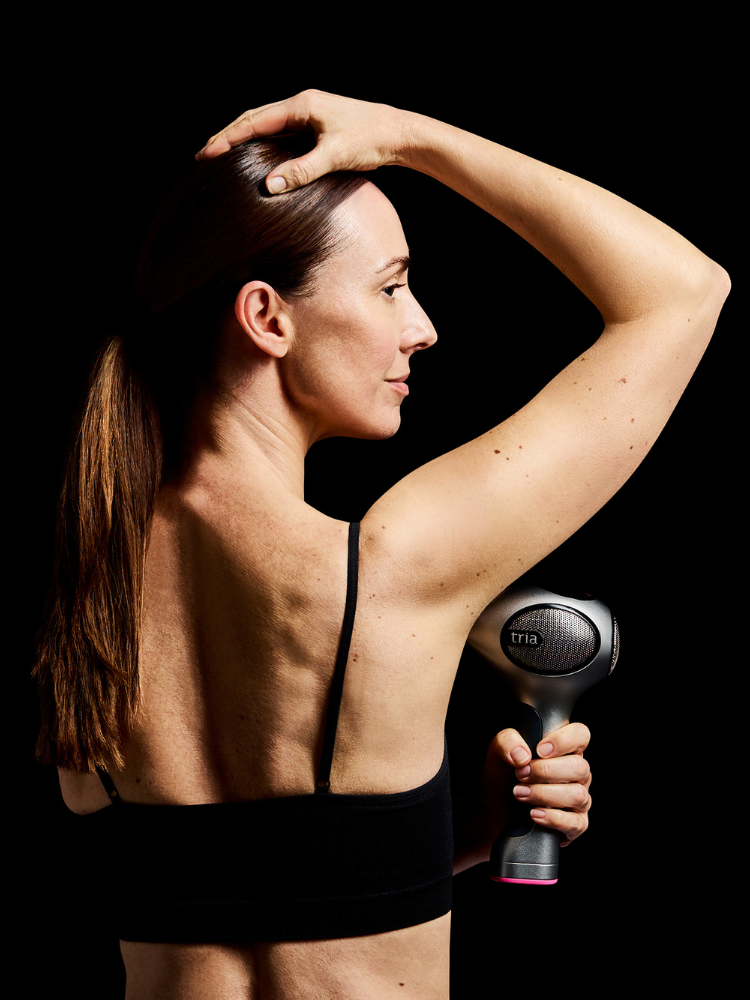
Best Established True At-Home Laser: Tria 4X 2nd Gen

Best For
Compatible shoppers who specifically want true diode-laser technology, especially for smaller targeted areas.
Skip If
Your main goal is treating large areas as quickly as possible.
| Technology | Diode laser |
|---|---|
| Wavelength | 810 nm |
| Maximum Output | Up to 20 J/cm² |
| Skin Compatibility | Fitzpatrick I–IV |
| Hair Compatibility | Naturally light brown or darker |
| Initial Schedule | Every 2 weeks × 6 |
| Follow-Up | Monthly top-ups for 3–6 months |
| FDA Status | FDA-cleared Tria laser platform |
| MSRP / List Price | $599.99 |
| Warranty | 1 year |
Why It Wins
Tria is one of the few established consumer products in this category that is actually a laser rather than IPL.
Its focused 810-nm diode platform gives it a fundamentally different treatment profile from Philips, Braun, Ulike, or SmoothSkin.
For smaller areas, that precision can be a real advantage.
Great Fit
- Underarms
- Bikini line
- Smaller targeted areas
- Compatible facial areas
- Shoppers who specifically want a diode laser
Poor Fit
Someone whose main goal is: “I want both full legs done as quickly as possible.”
Tria says a full charge lasts around 30 minutes and may cover approximately half a leg or several smaller areas.
That tells you more about the ownership experience than the 20 J/cm² number does.
What the Evidence Shows
Tria cites independent clinical studies behind its hair-reduction claims, including an expert-assessed study of 52 participants and a smaller user self-assessment study of 21 participants.
We would not convert those “up to” results into an expectation for every buyer. They do, however, contribute to a deeper evidence and product-history base than most newer true-laser competitors.
What you're giving up: Tria costs more than most IPL devices, is slower on large areas, can feel more intense, has a limited skin/hair compatibility range, and carries only a one-year warranty.
Sources: Tria 4X 2nd Gen · FDA Tria record
Qualified Recommendation for Fitzpatrick V–VI + Dark Hair: Iluminage Touch 4Ever

Best For
Dark-haired Fitzpatrick V–VI shoppers who specifically want an at-home option with broader documented skin-tone compatibility.
Skip If
You want the newest hardware, the cleanest current-model evidence chain, or the deepest current ownership history.
| Technology | IPL + radio frequency |
|---|---|
| MSRP / List Price | $459 |
Iluminage is the recommendation in this guide that requires the most context.
The current Touch 4Ever remains available in the U.S. for about $459 as of September 2026. It uses a combination of IPL and radio frequency.
The reason we take it seriously, however, is not simply its retail claim that it works across all skin tones.
It is the underlying Syneron mē platform's clinical record.
Why It Earns a Qualified Recommendation
FDA submission K131649 describes a medically supervised study involving 87 dark-haired participants across Fitzpatrick I–VI, with 28% of participants in skin types V–VI.
Participants completed seven weekly treatments.
Hair counts were then evaluated through 6, 9, and 12 months, including groups with and without monthly maintenance.
For the broader maintenance group, mean hair reduction at 12 months was 52% across 44 participants and 75 sites.
Among the smaller subgroup of 21 participants who completed every long-term follow-up point, maintenance-treated sites averaged 60% reduction at 12 months.
Important evidence distinction: The study included Fitzpatrick V–VI participants, but those 12-month percentages were reported across the combined study population. We are not claiming Iluminage produced 52% or 60% reduction specifically among V–VI users.
Why Confidence Is Only Moderate
The strongest evidence belongs to the underlying Syneron mē platform rather than a new 2026 clinical trial of Touch 4Ever.
The hardware is comparatively old-fashioned, current owner-review volume is much thinner than Philips, Braun, or Tria, and the strongest historical evidence we examined involved dark-haired participants.
That is why our recommendation is deliberately narrow:
Best-documented at-home option we found for Fitzpatrick V–VI shoppers with dark hair.
Not: best device for everyone with dark skin.
What you're giving up: older, bulkier hardware; thinner modern ownership evidence; and a less-direct current-model evidence chain than our primary winners.
Bottom Line
Iluminage makes the list because it addresses a compatibility problem most mainstream IPL devices do not—and because its underlying platform has unusually useful clinical evidence across Fitzpatrick I–VI.
Check PriceSources: FDA K131649 clinical evidence · Current U.S. listing
Want a True Laser Instead? Epilaser 980 Is Worth Knowing About

| Technology | 980-nm diode laser |
|---|---|
| MSRP / List Price | $995 |
Epilaser 980 is a much more specialized alternative for shoppers with deeper skin who specifically want true laser rather than IPL+RF.
The current 980-nm model sells for about $995 and uses camera-guided SPOT targeting intended to identify individual hairs while avoiding pigmented areas.
Its FDA-cleared Epilaser Pro platform includes an 808-nm variant for Fitzpatrick I–IV and a darker-skin 980-nm variant intended for Fitzpatrick V–VI.
However, current Epilaser consumer materials have used somewhat inconsistent Fitzpatrick wording, so we would verify the exact current labeling supplied with the device before purchase.
Why We Don't Rank It Above Iluminage
Epilaser's FDA submission included a 44-person worst-case safety evaluation across Fitzpatrick I–VI.
It also included a 69-person performance study across I–VI—but that study used simulated treatments to validate the camera and targeting algorithm's ability to identify hairs, skin tone, tattoos, and pigmented areas.
It did not directly follow long-term hair-count reduction from repeated real treatments.
The regimen is also intensive: Epilaser currently recommends treating each target area two to three times per week for about three months before moving to occasional touch-ups.
The tradeoff: more novel true-laser targeting + $995 + a much heavier regimen + less-direct long-term outcome evidence.
Epilaser 980 is a technically interesting true-laser alternative—not our first recommendation for a deeper-skin shopper.
Check PriceSources: Epilaser 980 · FDA K233224
When Should You Skip At-Home Treatment?
A last-stop buying guide also needs to tell you when none of its products makes sense.
Choose Professional Laser If...
- Your skin tone requires more sophisticated laser selection.
- You want faster or more intensive treatment.
- You have extensive or difficult hair growth.
- You prefer professional assessment and treatment.
- You have safety or compatibility concerns.
Consider Electrolysis If...
Your hair has too little targetable pigment for conventional IPL or laser.
- White hair
- Gray hair
- Very light blonde hair
- Red hair
Choose At-Home IPL or Laser If...
- Your skin and hair are clearly compatible.
- Convenience matters.
- You are comfortable following the regimen.
- You want the possibility of lower long-term cost.
- You understand maintenance may still be required.
A trained professional can choose equipment and adjust parameters that fixed consumer devices cannot offer. Mayo Clinic specifically recommends choosing a properly trained healthcare professional and notes that correct technology and settings are particularly important for darker skin.
The American Academy of Dermatology also notes that conventional laser does not effectively target blonde, white, gray, or red hair—one reason electrolysis can make more sense for those shoppers.
Sources: Mayo Clinic · American Academy of Dermatology
What Results Should You Realistically Expect?
At-home IPL and laser can produce substantial long-term reductions in hair growth.
That does not mean every follicle disappears forever.
Successful treatment may look like:
- ✅ Fewer hairs
- ✅ Finer regrowth
- ✅ Slower regrowth
- ✅ Patchier regrowth
- ✅ Longer intervals between shaving
Hair grows in cycles, which is one reason repeated treatment matters.
Results also vary by hair color, skin tone, hair thickness, treatment area, hormones, device, treatment consistency, and maintenance.
Mayo Clinic notes that laser can greatly reduce hair growth, but hair can return over time and follow-up treatments may be needed.
Expect long-term hair reduction with periodic maintenance—not a guarantee that you will never see another hair.
Before Using Any At-Home IPL or Laser Device
Always follow the manual for the exact model you own.
General guidance does not override device-specific instructions.
- Perform the recommended patch or skin test.
- Verify skin- and hair-color compatibility.
- Use only on approved treatment areas.
- Prepare the hair exactly as instructed.
- Follow sun- and tanning-related restrictions.
- Avoid tattoos or excluded pigmented areas.
- Review medication and medical contraindications.
- Do not bypass contact or safety sensors.
- Stop if you experience an unexpected or severe reaction.
Laser hair removal can cause temporary irritation and pigmentation changes; burns, blistering, scarring, and longer-lasting color changes are less common but possible. Risk depends partly on skin color, treatment parameters, and following the relevant instructions.
The reason Plumosity treats compatibility as a pass/fail requirement is not theoretical. It is one of the most important parts of using these devices appropriately.
Final Verdict: Match the Device to Your Skin, Hair & Routine
There is no single at-home hair-removal device we would recommend to every shopper.
For most people who fit conventional IPL skin- and hair-compatibility requirements, Philips Lumea 9000 Series currently offers the strongest overall balance.
Its biggest advantage is not maximum power.
It is how little the initial regimen asks from you: four treatments spaced two weeks apart, combined with dedicated treatment heads and a mature IPL platform.
| If Your Priority Is... | Choose... |
|---|---|
| Best overall balance for an eligible IPL shopper | Philips Lumea 9000 Check Price → |
| Fast individual IPL sessions | Braun Silk·expert Pro 5 Check Price → |
| Cooling and coarse-hair treatment | Ulike Air 10 Check Price → |
| Strong IPL fundamentals around $349 | SmoothSkin Pure Adapt Check Price → |
| Established true diode laser for smaller areas | Tria 4X 2nd Gen Check Price → |
| Fitzpatrick V–VI + dark hair | Iluminage Touch 4Ever — qualified Check Price → |
| Deeper skin + specifically want true laser | Epilaser 980 — highly qualified alternative Check Price → |

If your hair has too little targetable pigment, your skin/hair combination is not clearly supported, or the treatment regimen simply does not make sense for you:
Do not force the purchase.
Professional laser, electrolysis, or a simpler temporary method may be the better decision.
The best at-home hair-removal device is not the one with the biggest energy claim, the most flashes, the strongest cooling, or the largest discount. It's the one that works appropriately for your skin and hair, has credible evidence behind it, and fits a routine you will actually complete.
Frequently Asked Questions About At-Home IPL & Laser Hair Removal
These answers cover common questions about effectiveness, IPL vs. laser, treatment schedules, skin and hair compatibility, safety, and what to expect before buying.
Does at-home laser hair removal really work?
Yes. At-home IPL and laser devices can meaningfully reduce hair growth when the device is appropriate for your skin and hair and you complete the recommended regimen. Results vary, and maintenance is common. Mayo Clinic notes that light-based treatment can greatly reduce hair growth without guaranteeing that hair will never return.
Is IPL the same as laser hair removal?
No. IPL uses a broad spectrum of light, while a laser uses a narrower, focused wavelength. Both can target pigment associated with hair growth, but their treatment areas, energy delivery, compatibility, and treatment experience differ.
Is laser better than IPL?
Not automatically. A true laser can deliver concentrated energy precisely to a smaller area, while IPL typically covers more skin per pulse and can make large-area treatment faster. Which is better depends on your skin, hair, treatment area, and willingness to follow the regimen.
Is at-home IPL permanent?
It is better to think in terms of long-term or permanent hair reduction rather than assuming permanent removal of every hair. Some FDA-cleared home systems are specifically indicated for permanent reduction in hair regrowth, but maintenance may still be needed.
How long does IPL take to work?
It depends on the device and person. Some manufacturers advertise visible changes within the first few weeks, but meaningful results depend on completing the recommended regimen.
Always look at how many treatments occurred during the claimed timeframe. “Results in two weeks” could mean one treatment with one device and several treatments with another.
How often should you use IPL?
Follow the exact schedule for your device. There is no universal IPL schedule.
Philips specifies four treatments two weeks apart. Braun recommends weekly treatment for 4–12 weeks. Ulike recommends three treatments per week during its first four weeks, while SmoothSkin Pure Adapt calls for weekly use for 12 weeks.
Does IPL hurt?
Many people experience warmth, tingling, or brief snapping sensations rather than significant pain, but comfort varies by body area, hair thickness, energy level, device, and individual sensitivity.
Cooling systems can improve comfort, but significant or persistent pain is not something to simply push through.
Can IPL work on dark skin?
Some at-home devices support darker skin tones, but many conventional IPL products do not support the deepest skin tones.
Never use a device outside its specified compatibility range. Professional laser treatment can be appropriate for darker skin when suitable technology and settings are chosen by an experienced provider.
Does IPL work on blonde, red, gray, or white hair?
Most conventional IPL and laser systems perform poorly on very lightly pigmented hair because there is not enough appropriate pigment for the light to target effectively.
Some darker blonde hair falls within certain device compatibility ranges. Very light blonde, red, gray, and white hair are generally much poorer candidates.
Can you use IPL on your face?
Some devices allow treatment on selected facial areas, such as the upper lip, chin, or jawline. Restrictions vary by product.
Never assume “face-safe” means every part of the face is approved.
Can you use IPL on the bikini area?
Many IPL devices permit bikini-line treatment, but exactly which intimate areas are allowed varies by manufacturer.
Check the exact manual. Do not assume “bikini” means the device can be used directly on genital tissue.
Should you shave before IPL or laser hair removal?
Most at-home light-based systems instruct users to remove visible surface hair while leaving the follicle intact, which usually means shaving rather than waxing or plucking.
Follow the preparation instructions for your exact device.
Is at-home IPL as effective as professional laser?
They are not equivalent treatments. Professional laser treatment gives a trained provider access to different laser technologies and individually adjustable parameters.
At-home devices trade some of that capability for convenience, privacy, and potentially lower long-term cost.
Can IPL or laser hair removal cause burns or discoloration?
Yes. Improper use, incompatible skin tones, recent tanning, inappropriate settings, or ignoring treatment instructions can increase the risk of burns or pigmentation changes.
Mayo Clinic lists irritation and skin-color changes among recognized risks and notes that blistering, crusting, scarring, and texture changes can occur less commonly.
Sources: Mayo Clinic · American Academy of Dermatology · FDA K243453