Start With the Problem, Not the Hair Dryer
The right hair dryer depends less on finding one universal “best” model and more on identifying what you need it to do better.
Strong airflow can make a major difference when drying dense hair but may be excessive for fine or easily tangled strands. A diffuser matters enormously when preserving curls but very little when the goal is a sleek round-brush blowout.
The most useful question is:
What do you want your hair dryer to do that your current dryer is not doing well enough?
Maybe you want faster drying, better heat control, a smoother blowout, more defined curls, more stretch, less weight in your hand, or greater styling versatility.
Desired Result → Hair Needs → Ownership
Plumosity compared manufacturer specifications and support documentation with independent product testing, professional evaluations, owner feedback, warranty and maintenance requirements, and how well each dryer solves its intended problem. This is a research-based buying guide, not a claim of firsthand testing on every model. Manufacturer claims are treated as manufacturer claims unless independent evidence supports them.
The Short Answer: Which Hair Dryer Should You Buy?
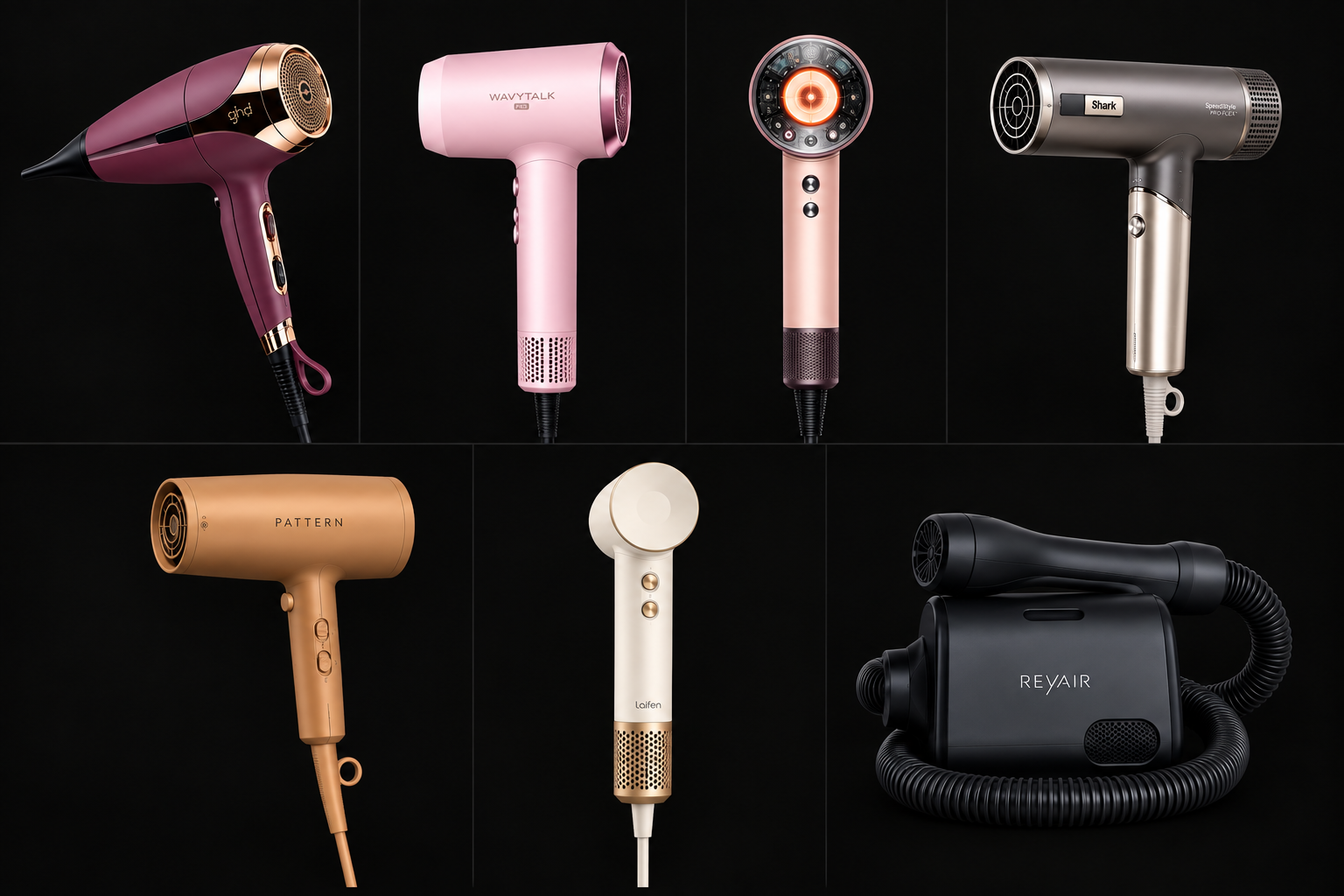
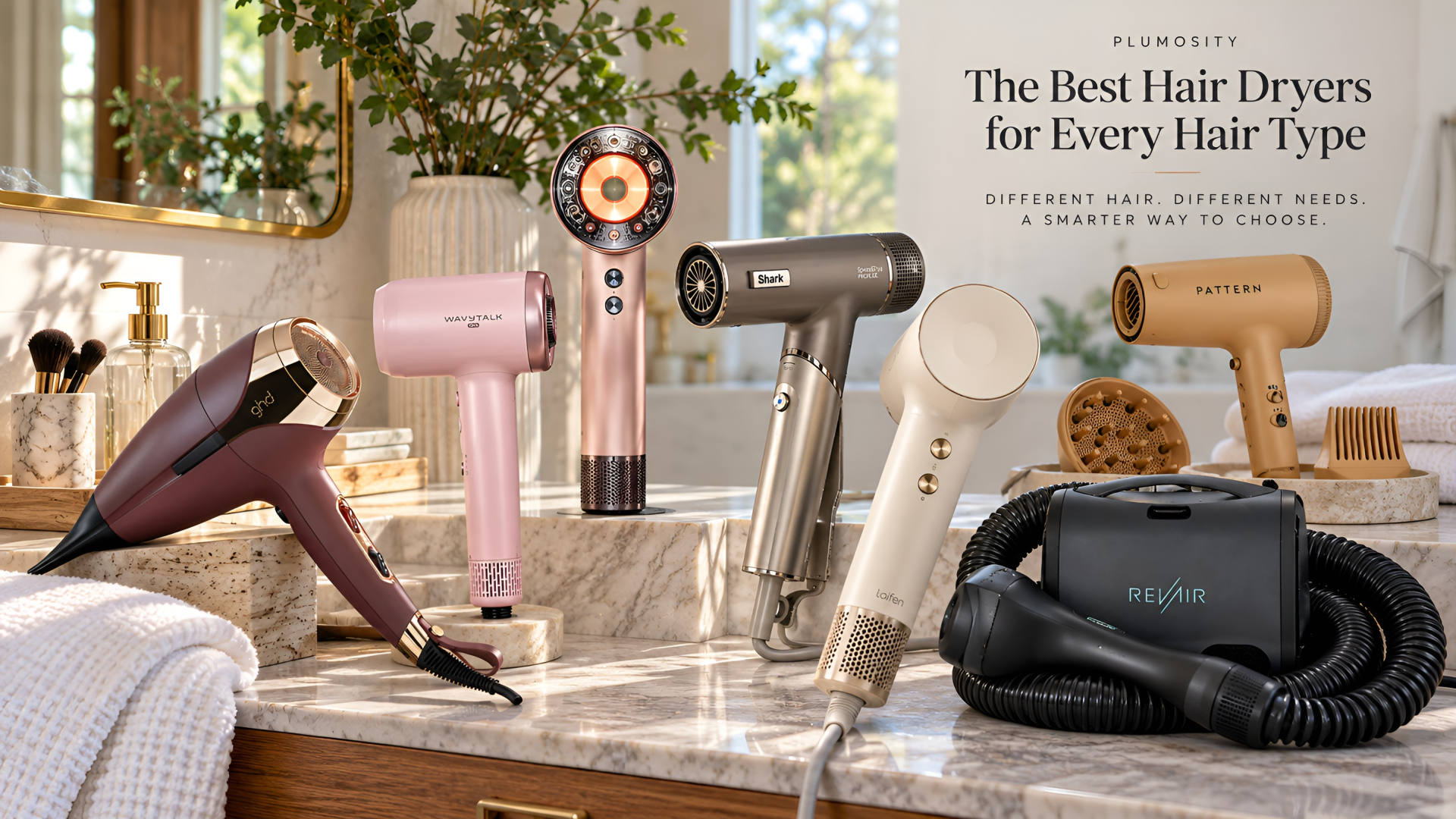
| If Your Main Problem Is... | Our Pick | Why It Stands Out |
|---|---|---|
| Fragile hair, heat concerns, or scalp discomfort | Dyson Supersonic Nural | Advanced automatic heat and scalp-distance management |
| It takes forever to get your hair dry | Wavytalk Turblow Pro | Extremely light, powerful, and difficult to beat for the price |
| Thick or dense hair that you want styled into a smooth blowout | ghd Helios | Concentrated airflow favors controlled section-by-section styling |
| Your current dryer feels bulky or tiring | Laifen Mini | Exceptionally compact and light while still capable of everyday drying |
| You want curls and coils defined | PATTERN Blow Dryer | Texture-focused attachments for diffusing, defining, and styling |
| You want curls and coils substantially stretched | RevAir | Reverse airflow dries while applying controlled tension |
| You want premium styling versatility without Dyson pricing | Shark SpeedStyle Pro Flex | Strong heat management plus a broad attachment system |
What Determines the Right Hair Dryer?
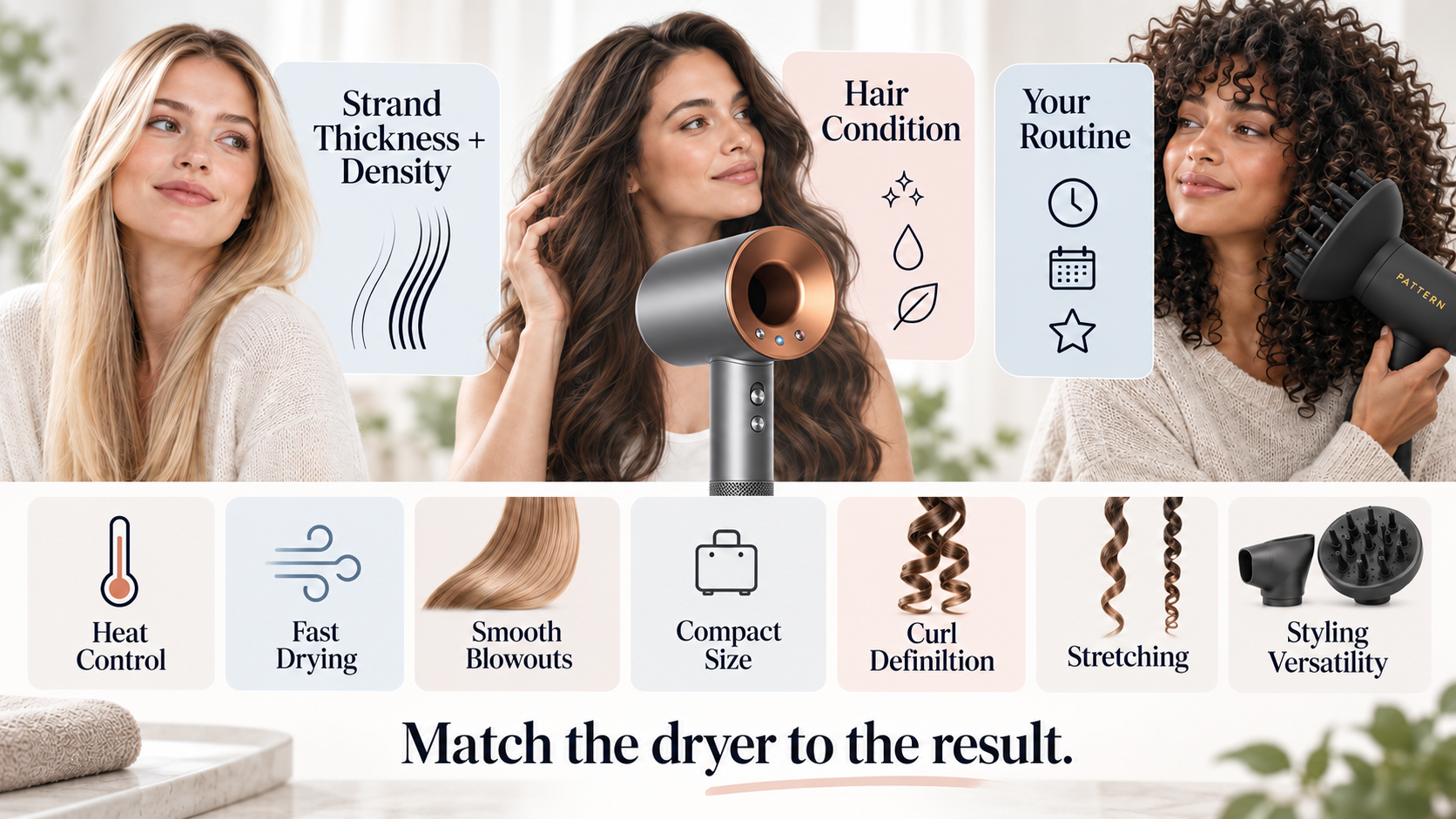
Start with the result you want.
Someone with Type 4 hair who wants defined coils benefits from controlled airflow and a good diffuser. Someone with the same curl pattern who wants substantially stretched hair needs a different tool.
Likewise, fine hair does not automatically point to one dryer. Fine, bleached hair may make temperature control the priority, while fine but very dense hair may make drying efficiency and low weight more important.
Strand Thickness + Density
Someone can have very fine individual strands and still have a great deal of hair. Strong airflow may help with drying efficiency while careful heat control remains important.
Hair Condition
Bleaching, coloring, dryness, fragility, and existing damage all increase the value of controllable heat.
Your Routine
Weight, storage, attachments, maintenance, warranty coverage, and budget can matter as much as an impressive motor specification.
Controlled research on hair tresses has found greater surface damage as drying temperatures increased. That does not mean blow-drying is inherently worse—or better—than air-drying in every situation.
A better rule: Use enough airflow and heat to dry efficiently without exposing your hair to more temperature than the job requires.
Source: Hair shaft damage from heat and drying time of hair dryer
Best for Heat & Scalp Control: Dyson Supersonic Nural

Best for: Fine or fragile hair, color-treated or bleached hair, scalp sensitivity, heat-conscious styling, and people who use several different styling techniques.
The Dyson Supersonic Nural earns its place because of control, not because its premium price automatically makes it faster than less-expensive dryers.
Its Time-of-Flight sensor detects how close the dryer is to the head and adjusts temperature as the dryer moves closer. Scalp Protect mode is designed to reduce excessive heat near the scalp without requiring constant manual changes.
The Nural also provides three airflow settings, four heat settings, attachment recognition, pause detection, and a broad magnetic attachment system covering gentle drying, concentrated smoothing, diffusing, combing, and finishing.
That combination is especially relevant for fine or fragile hair, where the ability to moderate temperature and airflow may matter more than maximum power.
What Does the Dyson Premium Buy?
Not four times the drying speed of a $100 dryer.
- Automatic scalp-distance temperature adjustment
- More sophisticated heat management
- Attachment recognition and remembered settings
- A broad, highly developed styling system
- Premium fit, finish, and control
Someone who simply rough-dries healthy hair and puts the dryer away may gain very little from much of that technology. Someone with fragile hair, scalp sensitivity, or several styling routines has more reason to value it.
The Compromises
The obvious one is price.
The Nural is also relatively heavy compared with newer compact high-speed dryers. At roughly 1.8 pounds, it is substantially heavier than the Wavytalk Turblow Pro or Laifen Mini.
Sources: Dyson Supersonic Nural · Harper's Bazaar fine-hair testing
Best Value for Fast Drying: Wavytalk Turblow Pro
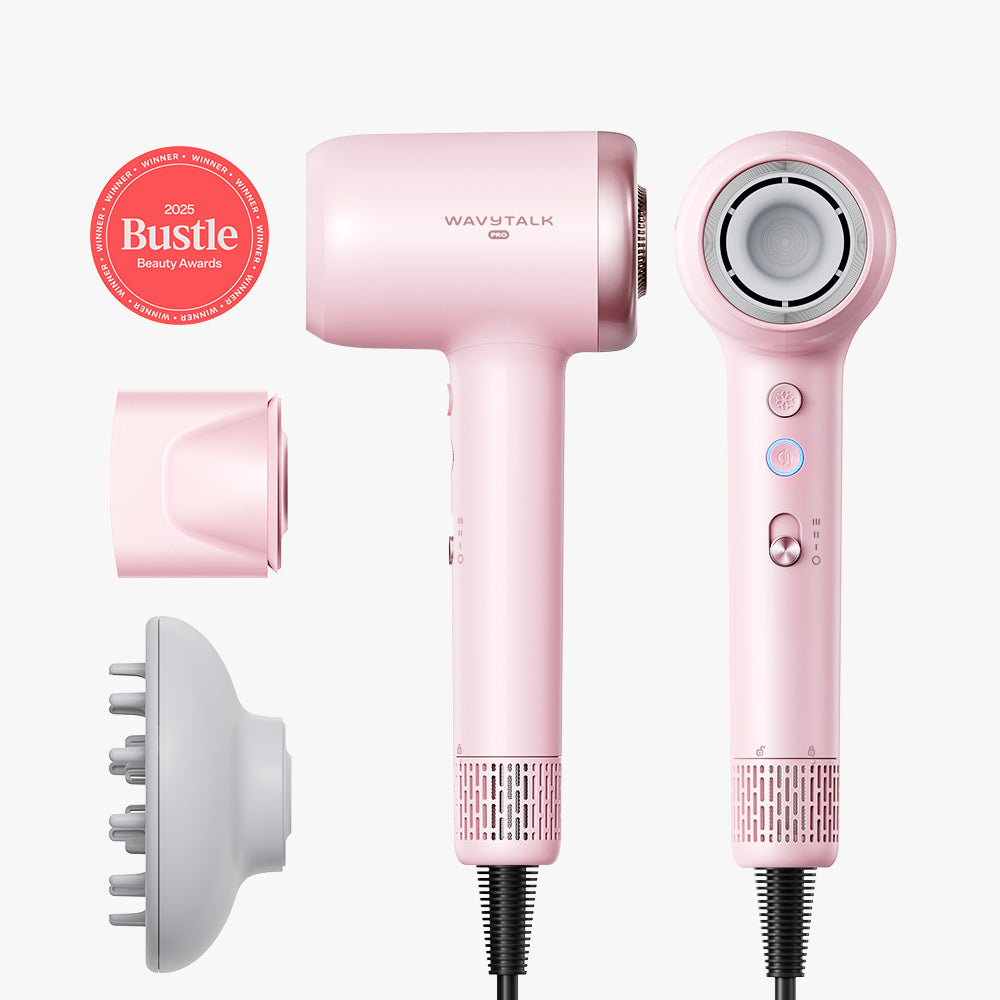
Best for: Thick or dense hair, long hair, fast everyday drying, weak wrists, and shoppers who want strong performance around the $100 level.
The Wavytalk Turblow Pro has a simple advantage: it combines strong airflow with very low weight and an accessible price.
Its 0.86-pound body houses a 1,500W system with three airflow settings, four temperature modes, and magnetic diffuser and concentrator attachments.
Wavytalk also advertises a 110,000-RPM motor, but that number is not why the dryer earns this recommendation. Motor RPM alone does not tell you how quickly hair will dry.
The more important evidence is practical performance.
An independent tester with long, very thick hair reported drying soaking-wet hair in under 10 minutes with the Turblow Pro after normally spending considerably longer on the task. One result cannot predict every person's drying time, but it supports the dryer's strongest use case: moving through a lot of hair efficiently.
It is especially appealing when drying time is the main problem. Long or dense hair benefits most from the combination of strong airflow and low weight, while the included diffuser adds useful versatility.
The Compromises
Strong airflow can be excessive when hair is very fine, fragile, light, or easily tangled. That does not make the dryer unsuitable for fine hair, but it makes the lower airflow settings important.
The best airflow is not always the strongest airflow. It is airflow you can control.
Wavytalk provides a one-year standard warranty and currently offers another year after product registration. Register it soon after purchase rather than waiting until something goes wrong.
Sources: Wavytalk Turblow Pro · Shop TODAY testing
Best for Thick, Dense Hair + Smooth Blowouts: ghd Helios
Best for: Thick or dense hair, long hair, round-brush styling, and polished blowouts.
ghd Helios solves a different problem than Wavytalk.
If a large amount of hair simply needs to become dry quickly, Wavytalk offers the stronger value proposition. If the drying process is also the styling process, Helios becomes more compelling.
Its 1,875W system directs published airflow of up to 75 mph through ghd's contoured concentrator. The objective is focused, directional airflow that can be worked through sections while using a brush.
Independent testing continues to support Helios particularly strongly on thick hair, with testers reporting both fast drying and smooth finished results.
Wavytalk is the speed-and-value choice. ghd Helios is the controlled-blowout choice.
The Compromises
Someone who rarely uses a brush while drying may not benefit enough from what Helios does differently.
Fine or easily tangled hair may also find its concentrated airflow unnecessarily aggressive. Helios is most compelling when focused blowout control—not an elaborate attachment system—is the reason for upgrading.
Sources: ghd Helios · TechRadar testing · Allure testing
Best Compact Everyday Hair Dryer: Laifen Mini
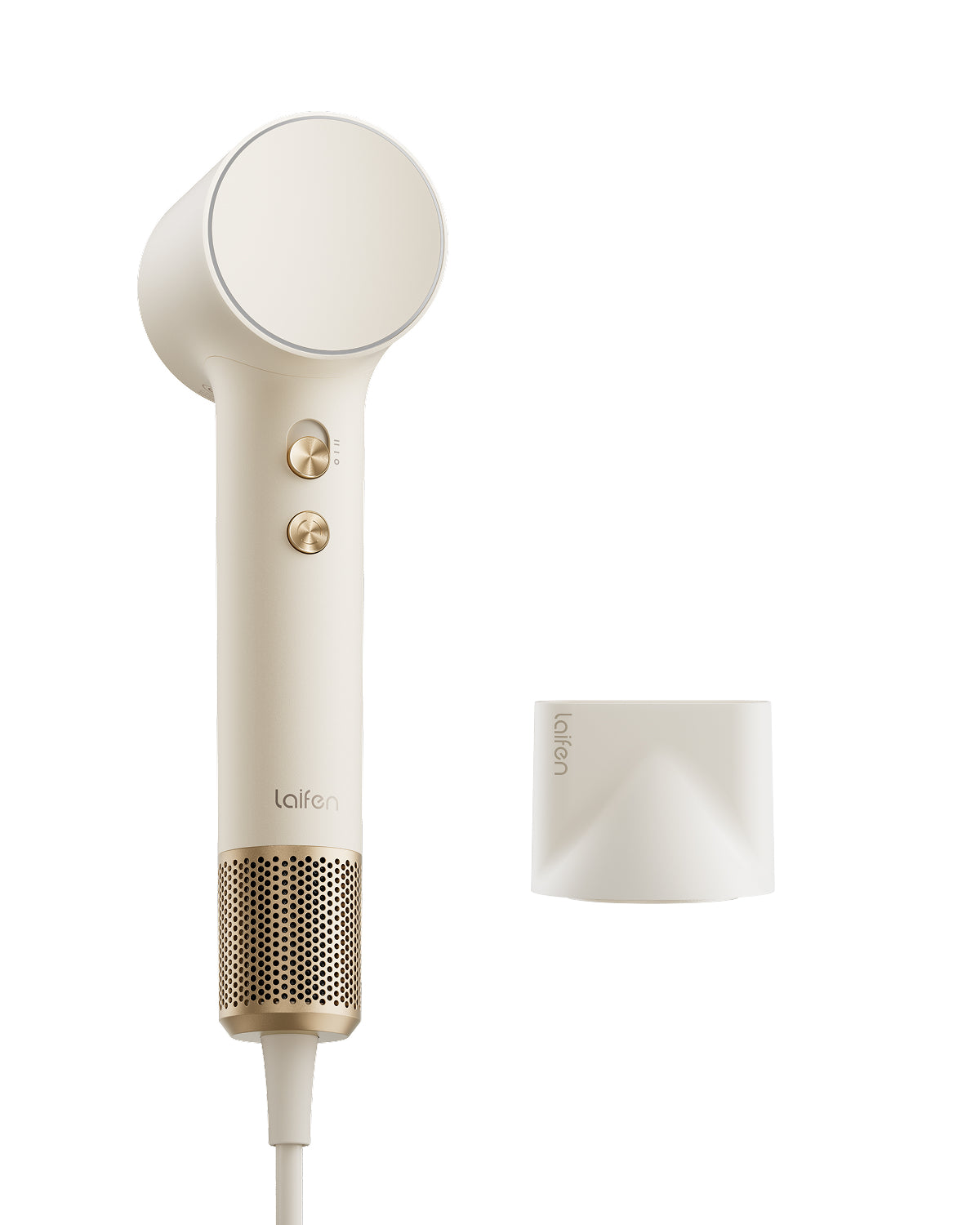
Best for: Small bathrooms, limited storage, weak wrists, gym bags, and anyone who finds full-size dryers cumbersome.
Laifen Mini solves a physical problem rather than inventing another performance category.
At roughly 0.66 pound without the cord, it is substantially lighter than most serious everyday dryers. It also takes up far less room in a drawer or bag.
Despite its size, the Mini still provides two airflow settings, hot, warm, and cold temperatures, and an automatic temperature-cycling mode.
Independent hands-on testing found it capable enough to function as a main dryer rather than merely a secondary compact option. One tester with fine-but-dense, medium-long hair reported reaching roughly 90% dry in about two and a half minutes using the cycling mode.
The Compromises
Its biggest compromise is versatility: there is no compatible diffuser, it offers only two airflow levels, the cord is shorter than many salon-style dryers, and the warranty is one year.
Sources: Laifen Mini · TechRadar testing
Best for Curl & Coil Definition: PATTERN Blow Dryer
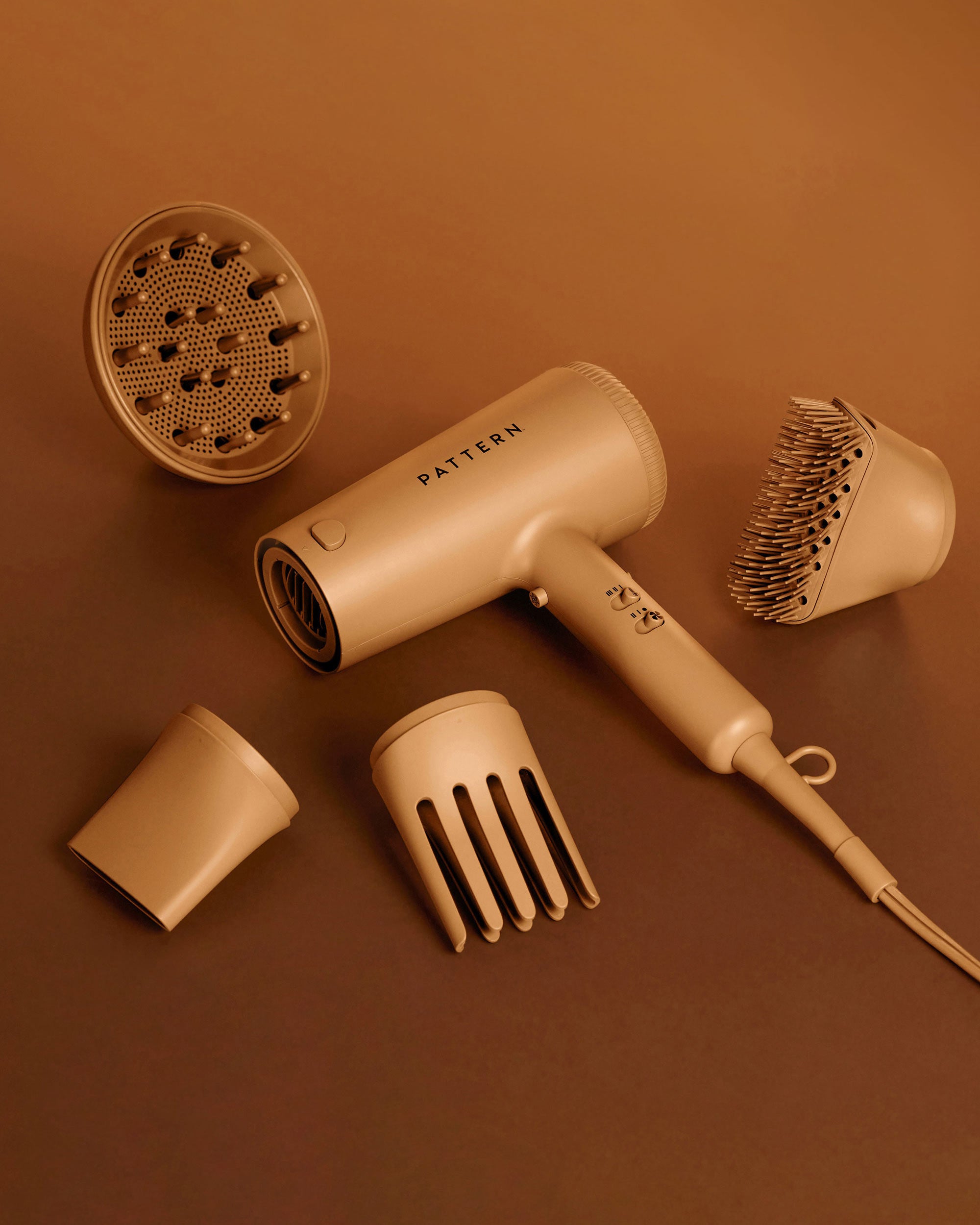
Best for: Curly and coily hair, Type 3 and Type 4 textures, diffusing, curl definition, volume, and varied textured-hair styling.
Many dryers include a diffuser and describe themselves as suitable for curly hair.
PATTERN goes further by building its attachment system around different textured-hair outcomes.
| Attachment | Main Result |
|---|---|
| Diffuser | Preserves and defines curls and coils |
| Wide-tooth comb | Helps stretch while retaining more natural texture |
| Brush | Adds greater tension and smoothing |
| Concentrator | Directs airflow for more conventional styling |
That versatility is why PATTERN earns the recommendation. Someone can move between defined curls, more stretched texture, greater smoothing, and directional styling without turning the dryer into something it was never designed to be.
Why Switchable Ions Matter
PATTERN lets the user switch its ion generator off.
Ionic technology is commonly associated with reducing static and creating a smoother finish, but maximum smoothing is not always the objective. Someone looking for more fullness may prefer less ionization.
PATTERN helps you style your texture. RevAir helps you substantially stretch it.
The Compromises
PATTERN offers only two airflow settings, giving it less airflow adjustment than several dryers in this guide. Its two-year replacement warranty is solid, but product registration is required before submitting a warranty claim.
Sources: PATTERN Blow Dryer · PATTERN dryer FAQs · Allure testing
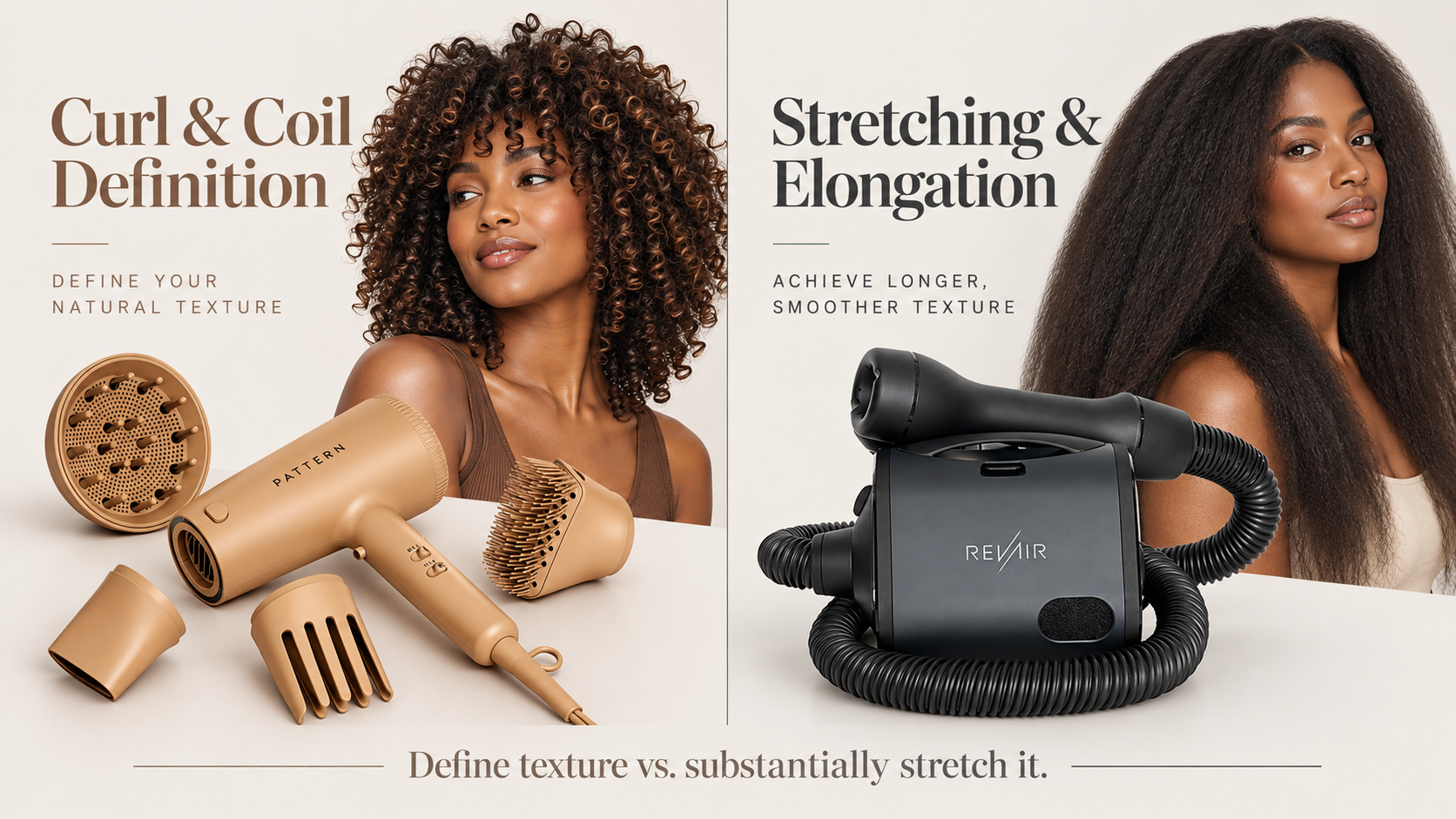
Best for Stretching Curls & Coils: RevAir
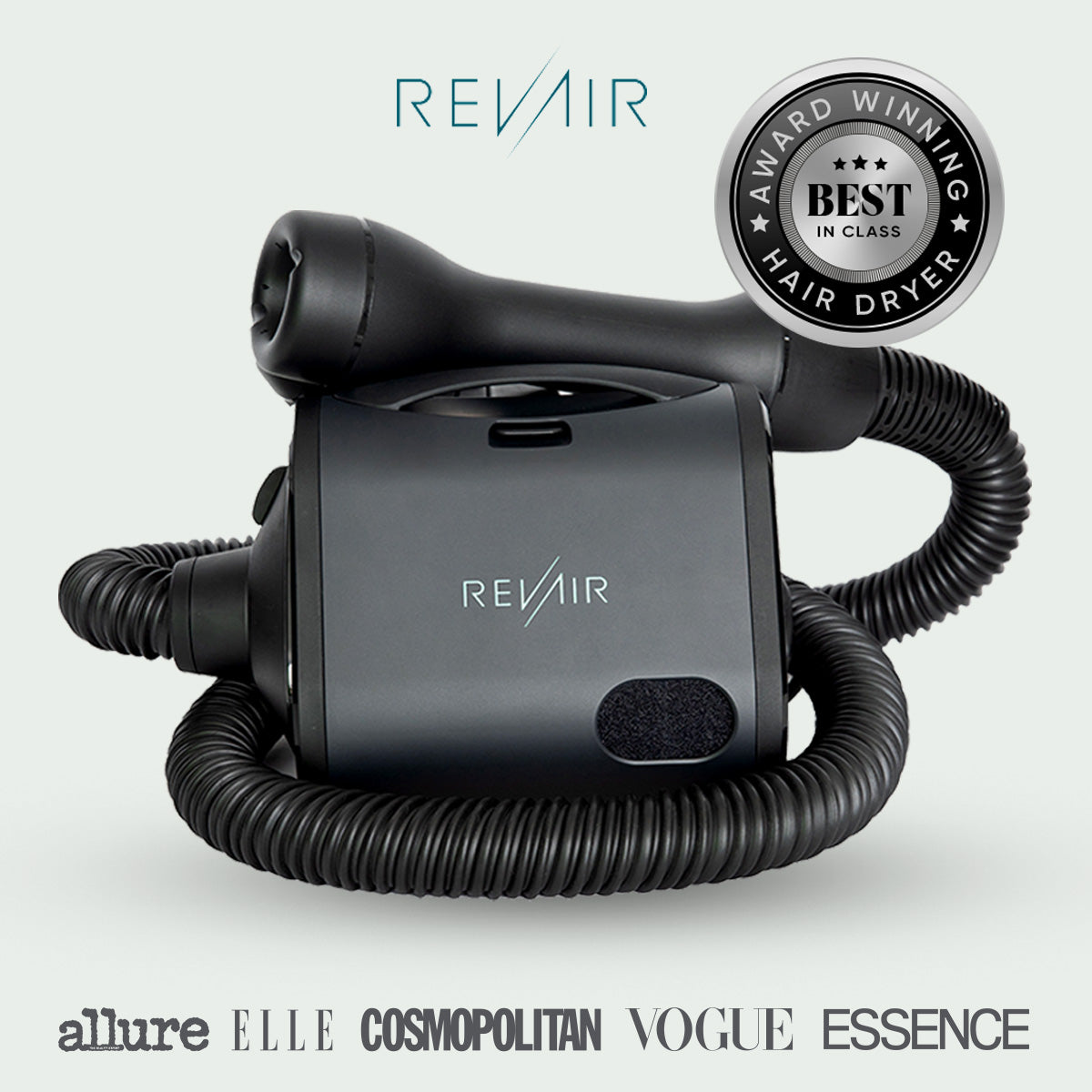
Best for: Natural hair that is regularly stretched, pre-braid or pre-style preparation, substantial elongation, and people who want to reduce the need to coordinate a brush and dryer simultaneously.
RevAir changes the drying process more fundamentally than anything else in this guide.
Instead of pushing air toward the hair, its wand uses reverse airflow to draw a section inward while applying adjustable tension as it dries.
For someone who regularly stretches curly or coily hair, that can simplify a routine that would otherwise involve holding a dryer while simultaneously brushing and maintaining tension.
RevAir provides seven tension settings and three heat options: no heat, approximately 158°F, and approximately 220°F.
Why It Can Simplify Stretching
Its strongest advantage is efficiency within a very specific routine.
Independent testing on Type 4 hair has found RevAir capable of drying and stretching sections quickly while reducing the need to work a separate brush through the hair at the same time.
That can be particularly useful before braiding, twisting, straightening, or other styles that begin with elongated hair.
Technique Still Matters
RevAir is not completely automatic.
The company advises starting with relatively low tension, increasing gradually, and reducing the setting if tangling occurs. Section size should also reflect hair density.
Section size and product choice matter too; formulas that create heavy or sticky buildup are a poor fit for the system.
For the right user, RevAir can dramatically simplify stretching. It is not a shortcut around thoughtful heat, tension, section size, hair condition, or technique.
The Compromises
RevAir requires more upkeep than a conventional handheld dryer and is bulkier and less portable. Its one-year warranty is also relatively short for a $459 system.
Sources: RevAir · Forbes testing · Allure curly-hair testing
Best Dyson Alternative: Shark SpeedStyle Pro Flex
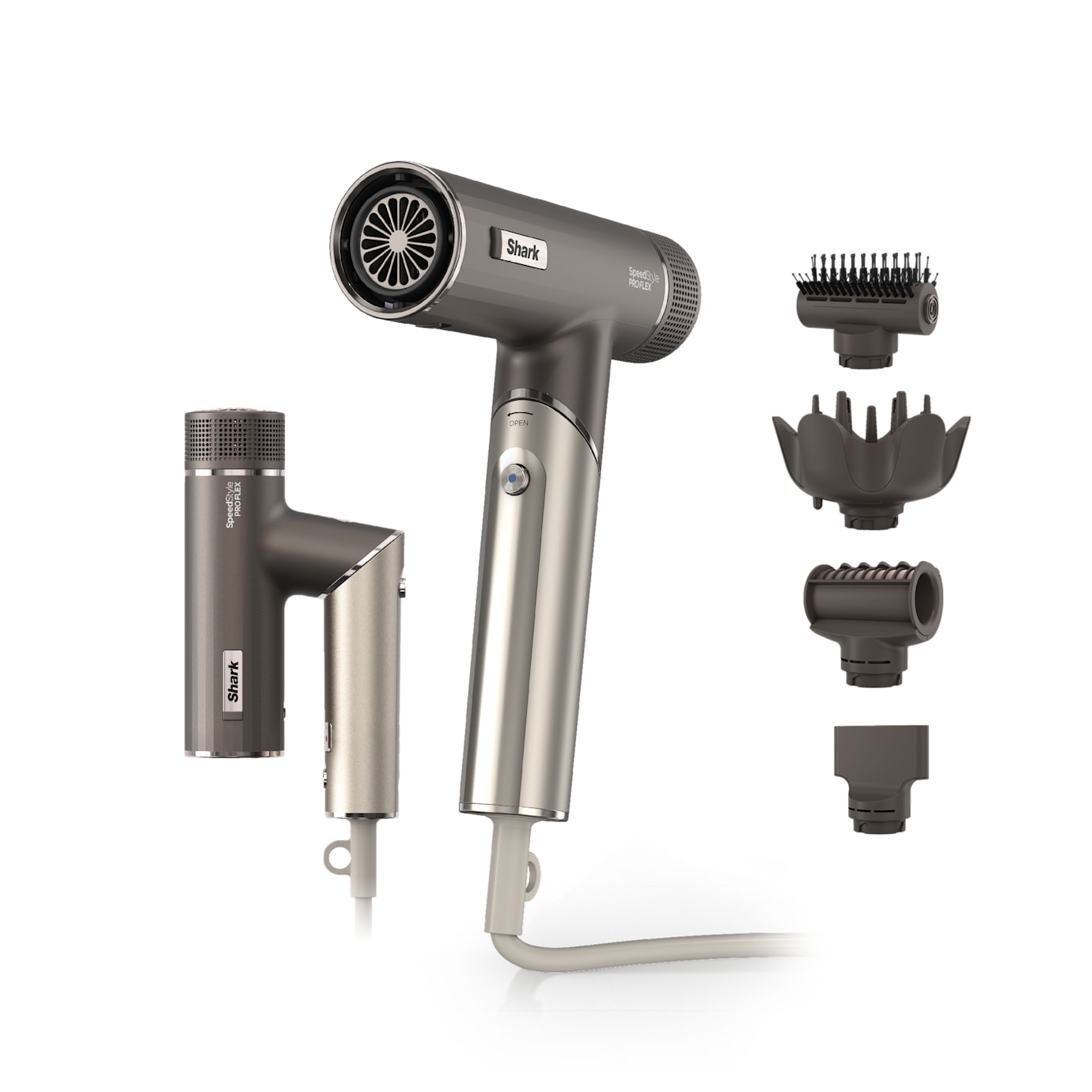
Best for: High-speed drying, multiple styling routines, diffusing, smoothing, scalp-conscious drying, and shoppers who want premium features without Dyson pricing.
The SpeedStyle Pro Flex combines high-speed drying with four heat settings, three airflow levels, a folding body, and a four-attachment system covering diffusing, concentrating, smoothing, and finishing.
Its Scalp Shield mode lowers temperature near the scalp while maintaining airflow, and Shark uses active temperature monitoring to regulate output during use.
Its Strongest Advantage: Versatility
Wavytalk focuses heavily on drying speed and value. Laifen Mini focuses on minimal size and weight. Shark provides more ways to shape the final result.
The attachment system makes it practical for someone who alternates between smoothing, diffusing, directional drying, and finishing without wanting several separate appliances.
Shark or Dyson Nural?
Shark's advantage is styling versatility per dollar.
Dyson Nural's advantage is more sophisticated automatic heat and scalp management.
Choose Shark if versatility and value matter most. Choose Dyson if automatic heat management itself is the feature you want.
The Compromises
Shark's value depends on using that versatility. If your routine is mostly straightforward rough-drying, much of what you are paying for may go unused.
Sources: Shark SpeedStyle Pro Flex · Tom's Guide testing · Allure testing
What Does Spending More Get You?
Good drying performance is no longer exclusive to expensive hair dryers.
Around $100
Wavytalk Turblow Pro and Laifen Mini show that capable airflow and low weight are already available without premium pricing.
Around $180–$250
Money increasingly buys specialization: PATTERN's texture-focused attachments or Shark's broader styling and temperature-management system.
$300+
ghd emphasizes professional blowout control, RevAir changes the stretching process itself, and Dyson Nural adds automatic sensing and attachment intelligence.
The Rule
Once a dryer has enough airflow, higher prices increasingly buy control, specialization, and convenience rather than proportionally faster drying.
Three Comparisons That Clarify the Decision
Wavytalk Turblow Pro vs. ghd Helios
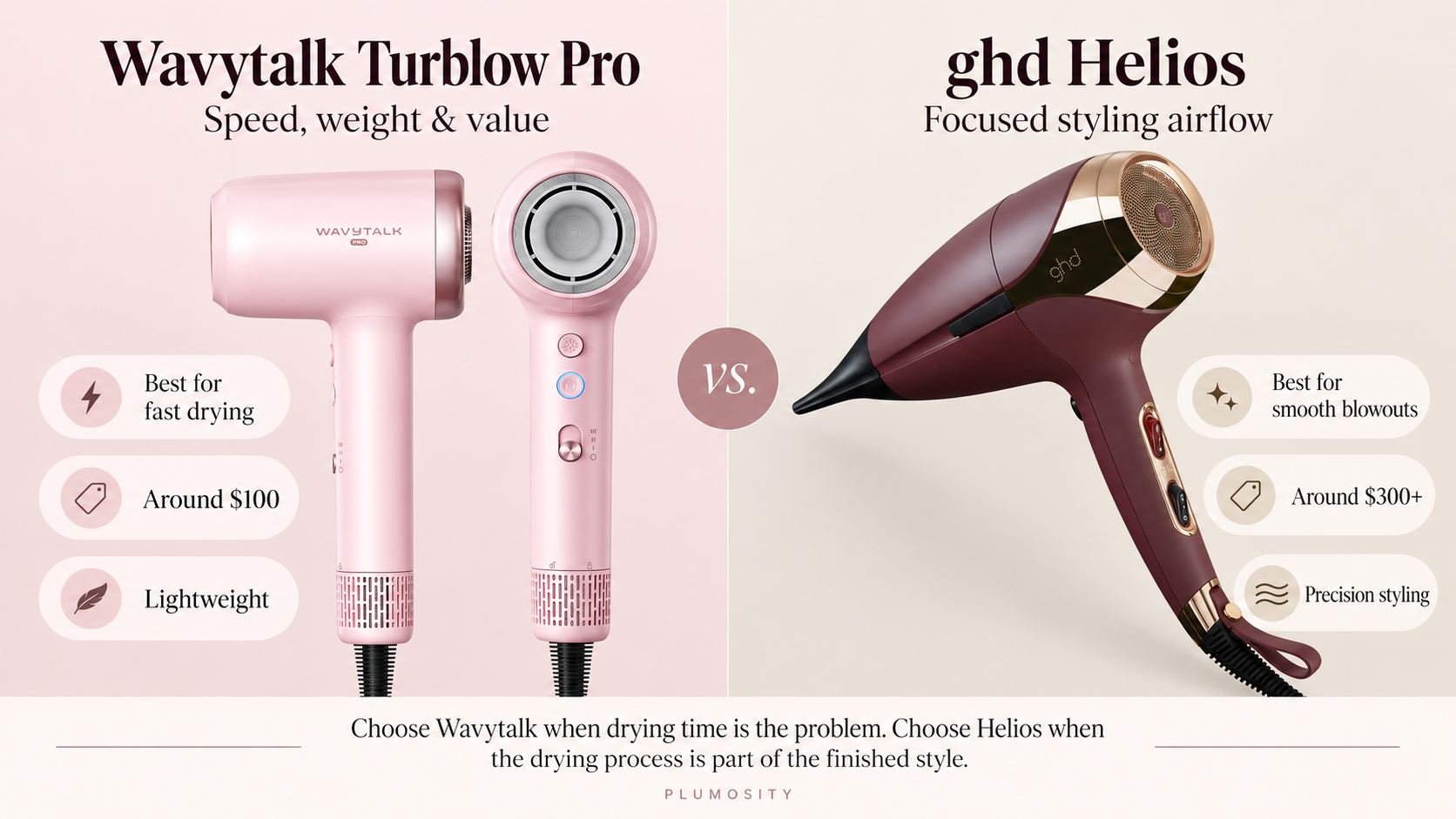
| Wavytalk Turblow Pro | ghd Helios | |
|---|---|---|
| Core strength | Speed, weight, and value | Focused styling airflow |
| Best for | Getting a lot of hair dry quickly | Thick/dense hair styled into a smooth blowout |
| Attachments | Diffuser + concentrator | Precision concentrator |
| Price tier | Around $100 | Around $300+ |
Choose Wavytalk when drying time is the problem. Choose Helios when the drying process is part of the finished style.
Shark SpeedStyle Pro Flex vs. Dyson Supersonic Nural
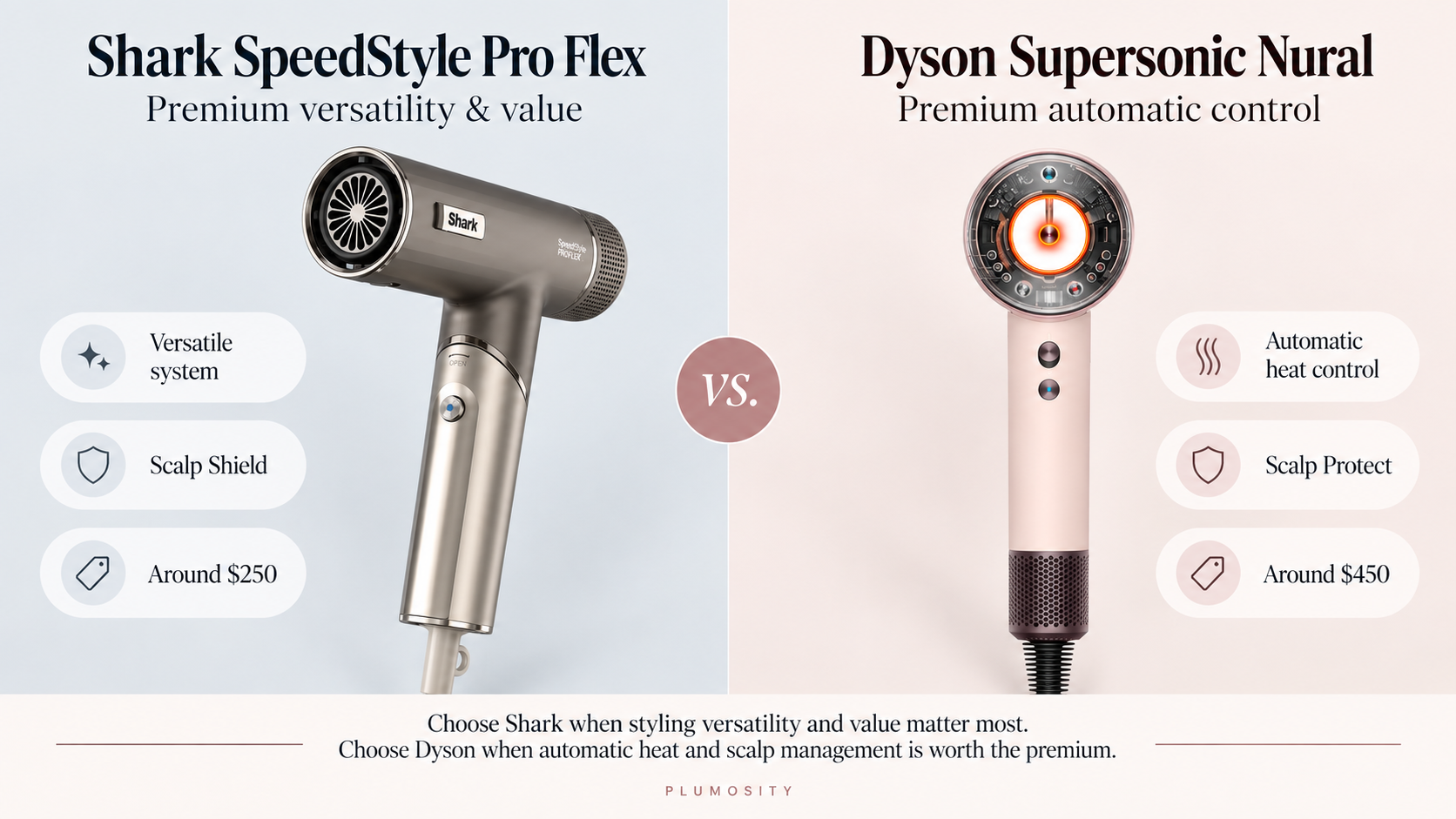
| Shark SpeedStyle Pro Flex | Dyson Supersonic Nural | |
|---|---|---|
| Core advantage | Premium versatility and value | Premium automatic control |
| Heat settings | 4 | 4 |
| Airflow settings | 3 | 3 |
| Scalp feature | Scalp Shield | Distance-responsive Scalp Protect |
| Price tier | Around $250 | Around $450 |
Choose Shark when styling versatility and value matter most. Choose Dyson when automatic heat and scalp management is specifically what you are willing to pay extra for.
PATTERN Blow Dryer vs. RevAir
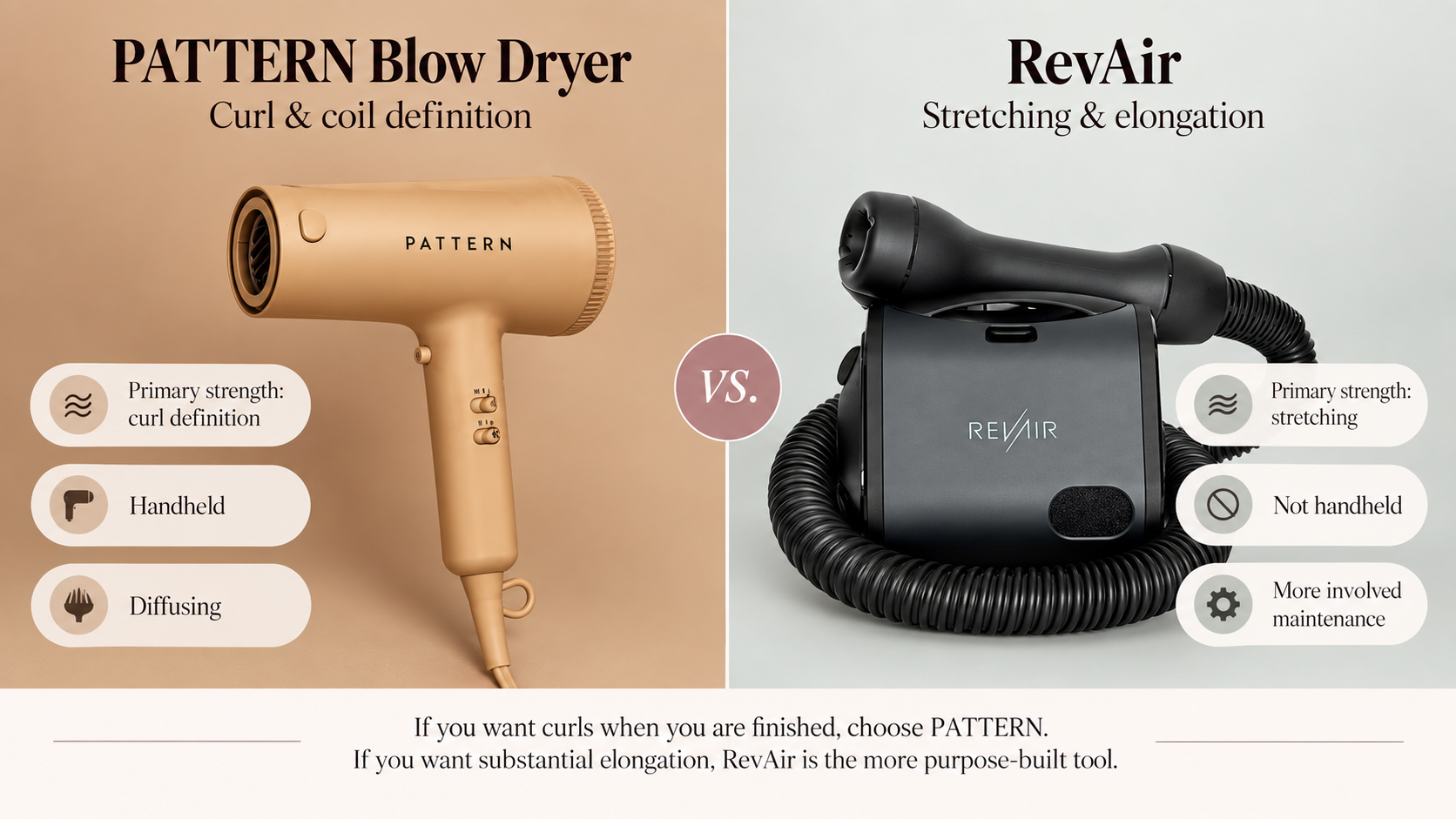
| PATTERN Blow Dryer | RevAir | |
|---|---|---|
| Curl definition | Primary strength | Not the main purpose |
| Diffusing | Yes | No |
| Stretching | Moderate, attachment-based | Primary purpose |
| Handheld | Yes | No |
| Maintenance | Conventional | More involved |
If you want curls when you are finished, start with PATTERN. If you want substantial elongation, RevAir is the more purpose-built tool.
What Actually Matters in a Hair Dryer?
Hair-dryer marketing puts a lot of weight on specifications. The useful question is not which dryer has the biggest number, but whether its airflow, heat, controls, and attachments fit the result you want.
Airflow and Heat Control Matter More Than Maximum Numbers
Strong airflow can shorten drying time, especially with dense hair. But maximum airflow is not always desirable: fine or easily tangled hair may become harder to control, while curls often benefit from gentler or more dispersed air.
The same principle applies to heat. A dryer does not become better because it gets hotter. Controlled hair-shaft research has found greater surface damage as drying temperatures increased.
Practical rule: Look for enough airflow and heat to dry efficiently, plus enough control to back either one down when your hair or styling technique calls for it.
Wattage and Motor RPM Need Context
Wattage describes electrical power use. Motor RPM describes how quickly the motor turns. Neither number, by itself, tells you how quickly your hair will dry.
Fan design, airflow channels, outlet shape, heat, pressure, attachments, and technique all affect real performance. That is why two dryers can advertise similar motor speeds yet feel and perform very differently.
Use wattage and RPM as context—not as a ranking system.
Ionic and Material Claims Are Secondary
Ionic dryers can be useful for smoothing, static control, and flyaways, but a larger advertised ion count is not proof that a dryer is healthier or better. Independent testing has found large differences in ion output without establishing that the highest number produces the best result. Treat ion output as a styling feature rather than a quality score.
Ceramic, titanium, and tourmaline can influence heating characteristics or ion generation, but they should not outweigh practical factors such as airflow control, heat settings, ergonomics, and attachments.
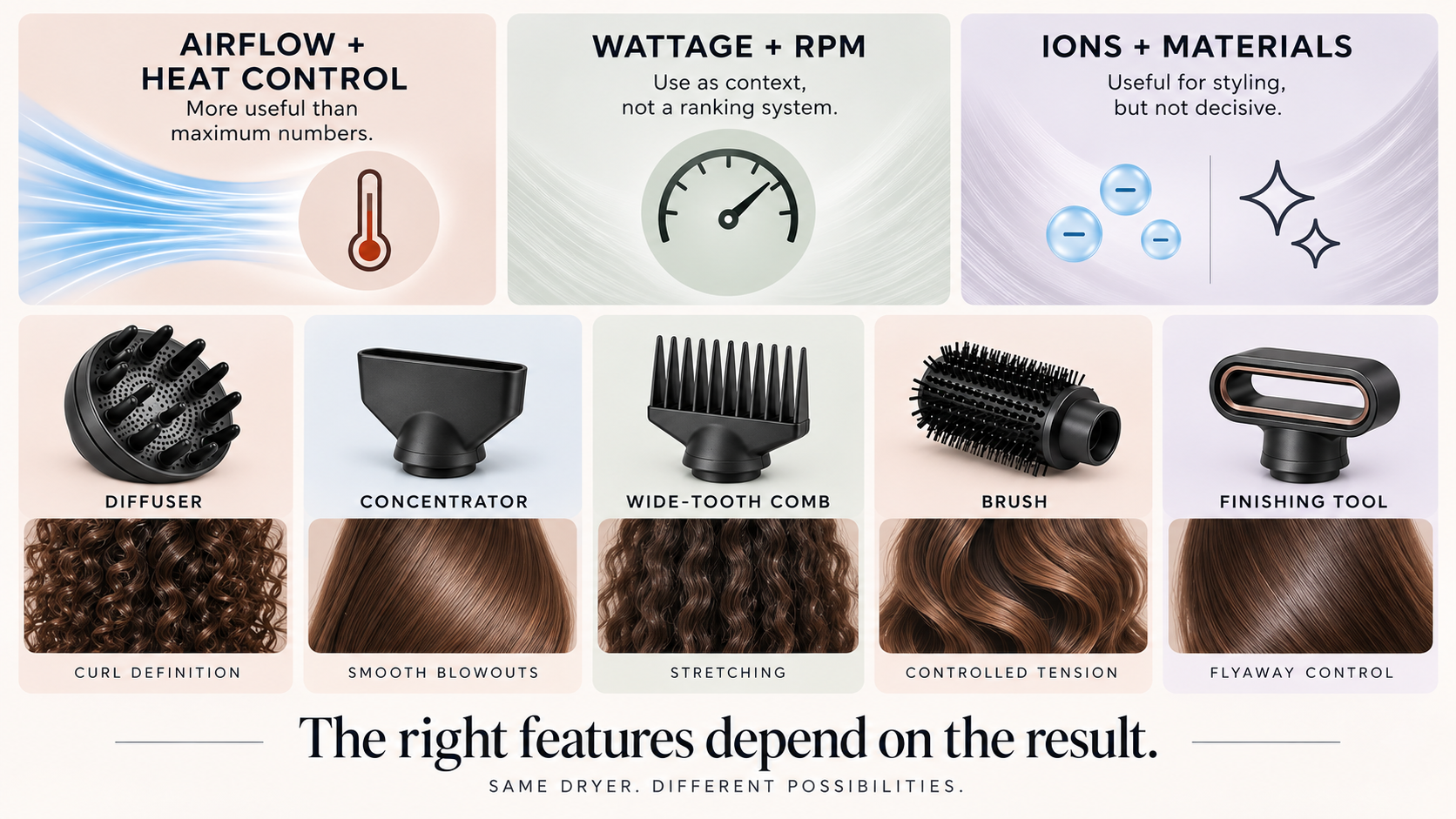
Attachments Can Change the Entire Use Case
| Attachment | Main Purpose |
|---|---|
| Diffuser | Preserve and define waves, curls, and coils |
| Concentrator | Directional smoothing and round-brush styling |
| Wide-tooth comb | Stretch textured hair while directing airflow through it |
| Brush | Add controlled tension and smoothing |
| Finishing/flyaway tool | Refine the outer surface after drying |
Sources: Hair-shaft heat study · Consumer Council hair-dryer testing
Long-Term Ownership: The Part Most Hair Dryer Guides Ignore
Once a hair dryer costs $200, $300, or $450, the ownership details deserve more attention. Warranty coverage, registration requirements, filter maintenance, and support can matter long after the first blowout.
Warranty + Registration
Some brands require registration or authorized-retailer proof before a claim. Complete those steps while the purchase is still easy to document.
Filter Maintenance
Restricted airflow can reduce performance and increase operating temperature. Most handheld dryers need periodic cleaning; RevAir requires substantially more frequent attention.
Support + Accessories
For expensive systems, replacement attachments, accessible support, and clear warranty terms make the purchase easier to justify.
| Product | Warranty | Important Ownership Note |
|---|---|---|
| Dyson Supersonic Nural | 2 years | Regular filter cleaning |
| Wavytalk Turblow Pro | 1 year + registration extension | Register promptly for extended coverage |
| ghd Helios | 2 years consumer | Keep authorized-retailer proof of purchase |
| Laifen Mini | 1 year | One-year standard warranty |
| PATTERN Blow Dryer | 2 years | Registration required for warranty claims |
| RevAir | 1 year | Higher filter-maintenance burden |
| Shark SpeedStyle Pro Flex | 2 years | Replacement styling accessories are available |
Final Verdict: Which Hair Dryer Should You Buy?
There is no single overall winner because these seven dryers solve different problems.
🌡️ Choose Dyson Supersonic Nural if sophisticated heat and scalp management is the feature you specifically want to pay more for.
⚡ Choose Wavytalk Turblow Pro if the priority is getting a lot of hair dry quickly without spending several hundred dollars.
💨 Choose ghd Helios if thick or dense hair is being styled into a smooth, controlled blowout rather than simply rough-dried.
🪶 Choose Laifen Mini if size, weight, storage, or handling comfort is the problem your current dryer fails to solve.
➿ Choose PATTERN Blow Dryer if the goal is defining and styling curls or coils while preserving texture.
↕️ Choose RevAir if substantial stretching and elongation is the specific task you want to simplify.
🧰 Choose Shark SpeedStyle Pro Flex if you want a premium multi-style system with strong heat management without paying Dyson prices.
If two dryers still seem equally appealing, ask: What does the more expensive one actually improve for you? If it does not materially improve drying time, heat control, styling results, comfort, or versatility, you probably do not need to spend more.
Frequently Asked Questions About Hair Dryers
Still have a question? These are the answers most likely to matter before you buy.
Can powerful airflow make hair frizzier or more tangled?
Yes. Very strong airflow can disturb fine, lightweight, easily tangled hair or disrupt curl patterns when used without enough control. Lower airflow settings, concentrators, and diffusers allow the same dryer to behave very differently.
Does a faster hair dryer mean more heat?
No. Drying speed comes from a combination of airflow, heat, dryer design, moisture removal, and technique. Many modern high-speed dryers rely heavily on airflow rather than simply increasing temperature.
How many watts should a good hair dryer have?
There is no universal number. Higher wattage can support powerful motors and heating elements, but wattage describes electrical power consumption rather than actual drying time. Consider airflow, heat control, attachments, and independent performance alongside wattage.
Are ionic hair dryers good for fine hair?
They can be, particularly when smoother hair and less static are priorities. The complication is volume: fine, flat hair may benefit from less aggressive smoothing, which is why adjustable ionization can be useful.
Is Dyson worth it if I mostly rough-dry my hair?
Often, no. If the routine is simply getting hair dry and putting the appliance away, Wavytalk and other less-expensive high-speed dryers may solve the job for far less. Dyson Nural becomes easier to justify when its automatic temperature management, scalp sensing, attachment system, and styling controls will actually be used.
How often should I clean a hair dryer filter?
Follow the manufacturer's instructions. Periodic cleaning helps maintain airflow and keeps debris away from the motor. RevAir requires substantially more frequent filter attention because its reverse-air system depends heavily on unrestricted airflow.
Source approach: Where a claim materially affects a recommendation, this guide links to relevant manufacturer documentation, peer-reviewed research, independent hands-on testing, or owner feedback. Manufacturer performance and hair-health claims are treated as manufacturer claims unless independent evidence supports the same conclusion.
Note: Prices, warranties, product specifications, and purchase terms were checked in September 2026 and may change. Always review current manufacturer documentation and purchase terms before buying.
Some links in this article may be affiliate links, which means Plumosity may earn a commission—at no extra cost to you—if you make a purchase through them. Affiliate availability does not determine whether a product earns a recommendation.