Introduction
This article explains how the RevAir Dryer 2.0 operates, how the drying process is performed, and what distinguishes its workflow from conventional hair-drying tools. The goal is to make the mechanism and workflow constraints explicit so you can judge fit before you buy.
At a glance: RevAir Dryer 2.0
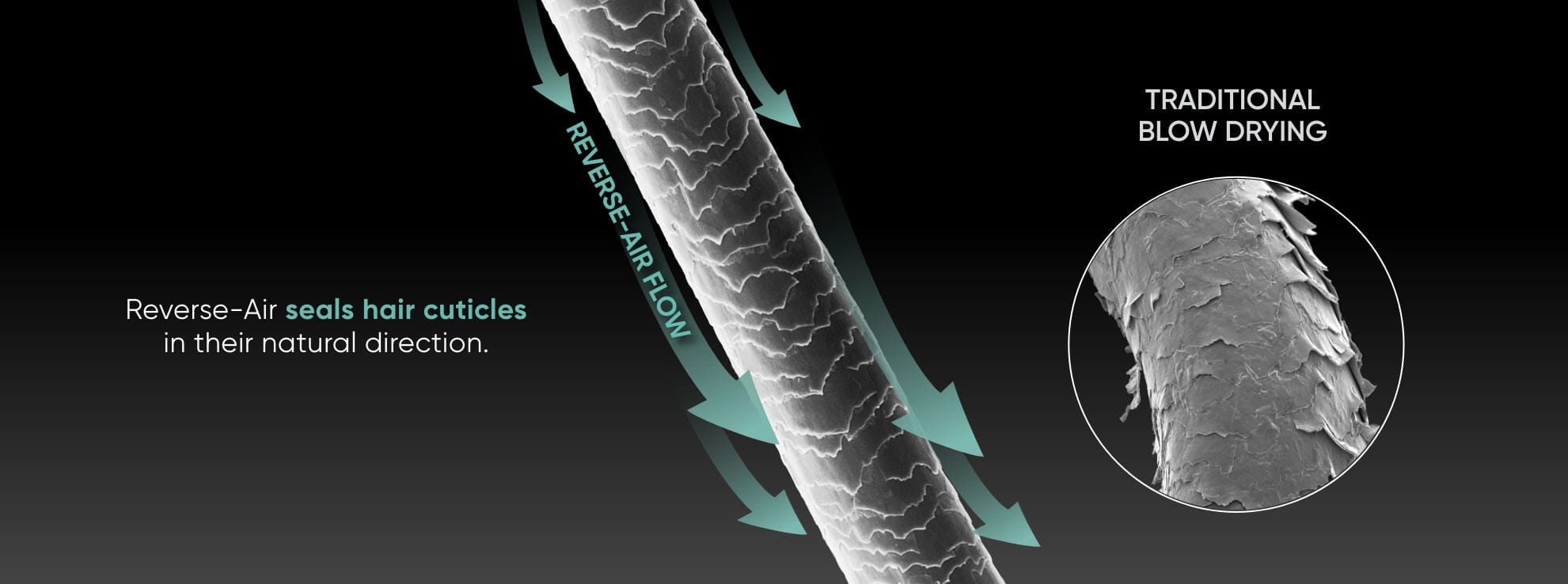
RevAir Dryer 2.0 is a stationary reverse-air hair-drying system that uses suction to draw hair into a wand chamber, applying controlled airflow (with optional heat) to dry and stretch hair section by section.

- ✔️ What it is: A reverse-air dryer (base unit + hose + wand) that dries and stretches by suction-driven airflow.
- ⚙️ How it works: Hair is fed into a chamber; airflow/tension and heat selection are adjusted; the process repeats across sections.
- 🧾 Workflow reality: Stationary, section-based operation with continuous motor noise during use.
- ⚠️ Boundaries: The system imposes a slower, structured workflow in exchange for airflow-generated tension and controlled heat exposure.
Sources: RevAir product and support documentation; independent reviewer observations.
Quick purchase (for readers who already know they want it)

Price: $459
Promo code: PLUMOSITY10
Plumosity may earn a commission if you purchase through this link. Promo code provided by the brand and intended to be evergreen at time of publication.
Brand and product context
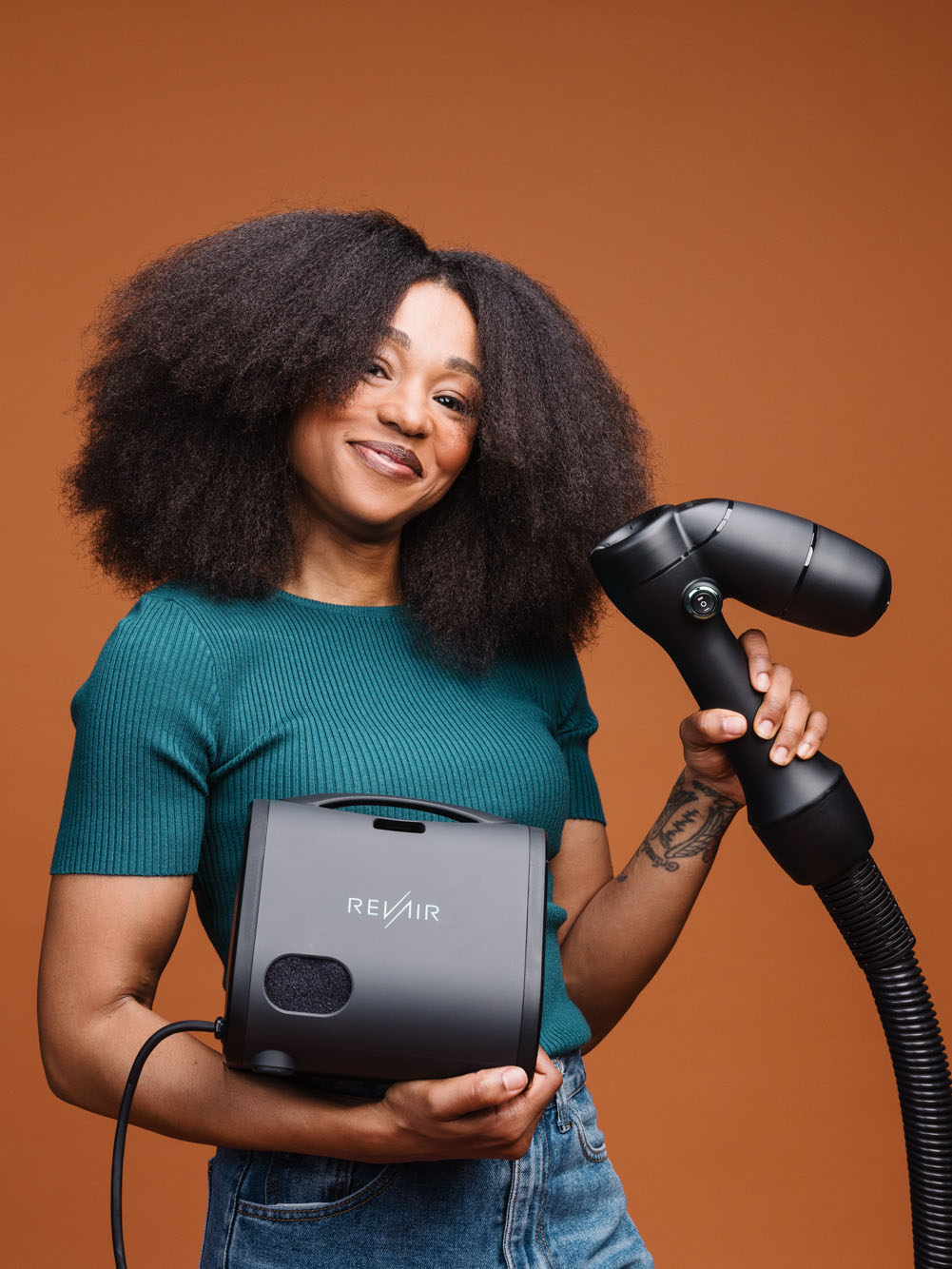
RevAir markets Dryer 2.0 as a reverse-air hair-drying system designed to dry and stretch hair using suction-driven airflow, with a stationary base unit and a handheld wand connected by a hose.
The system is positioned around a repeatable, section-based workflow rather than freehand blow-drying or multi-styler variation.
Basis: RevAir product page and FAQ language. myrevair.com/pages/faqs
What it is
RevAir Dryer 2.0 is a reverse-air hair-drying system that uses suction to draw a hair section into a wand chamber, drying and stretching it through airflow while the user works section by section. (RevAir FAQ)
The user workflow is structured: hair is divided into sections, the section is placed into the wand opening, and airflow/tension and heat selections are adjusted based on comfort, section size, and results. (RevAir FAQ)
The inherent constraint is a fixed, stationary process: RevAir prioritizes controlled tension and reduced direct heat exposure over mobility and speed-per-section variability. (Fit logic derived from the mechanism described by RevAir; see Trilemma.)
Basis: RevAir FAQ/product descriptions and support documentation for operation constraints. myrevair.com/pages/faqs
The hair-drying trilemma
Hair drying tends to live inside a stable set of competing constraints. Changing one variable usually forces a trade somewhere else:
- Heat exposure: higher heat can shorten drying time but can raise sensitivity for some users.
- Tension / stretch control: stretch can be created mechanically (brush tension, tools, airflow-driven tension), but it typically requires method and time.
- Speed & mobility: handheld tools can move quickly and adapt to styling needs, but outcomes vary with technique and section consistency.
Systems like RevAir do not remove these trade-offs; they rearrange them. RevAir is built for users who want to rebalance heat exposure and stretch consistency, accepting a slower, stationary, section-based workflow as the cost of that configuration.
Physical design & components
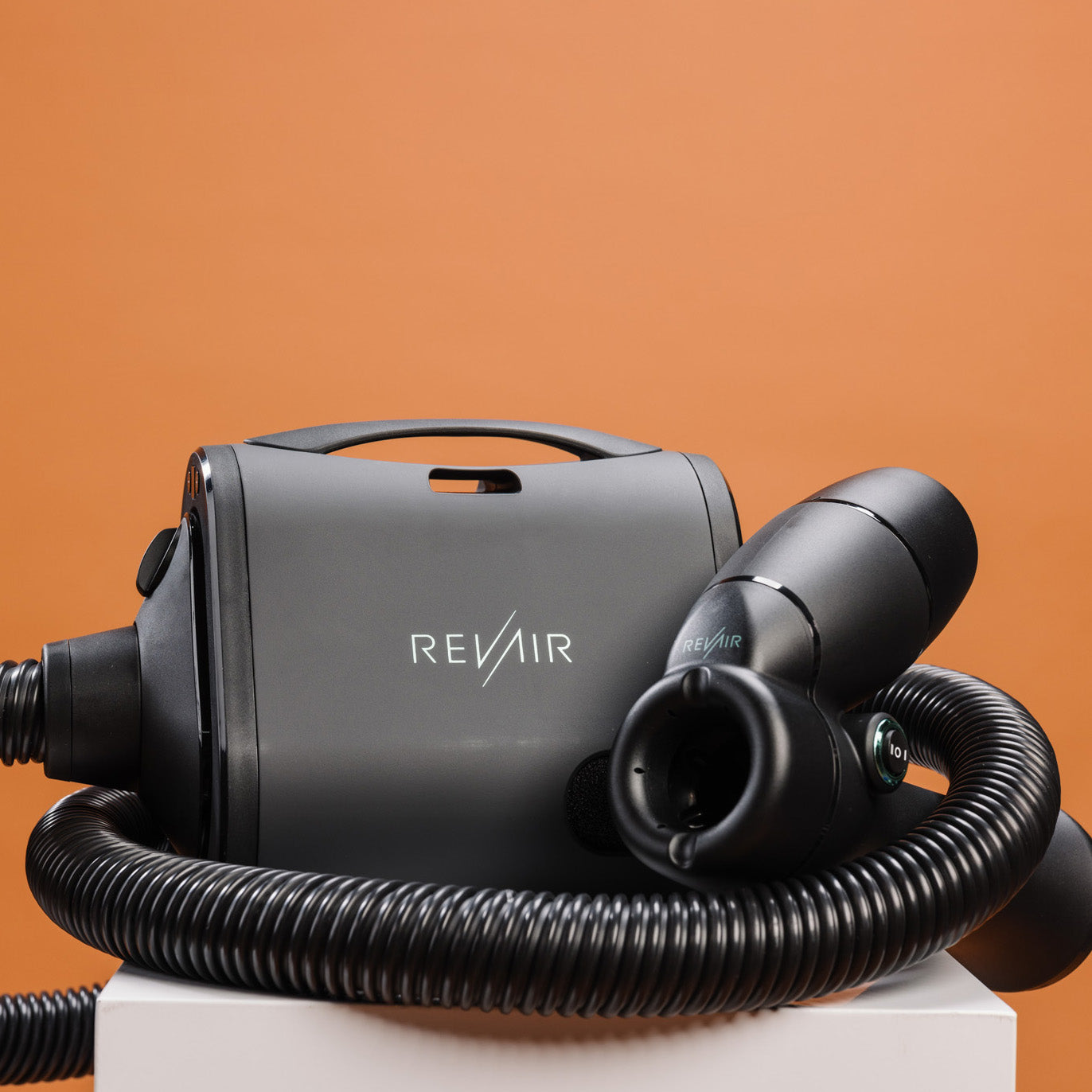
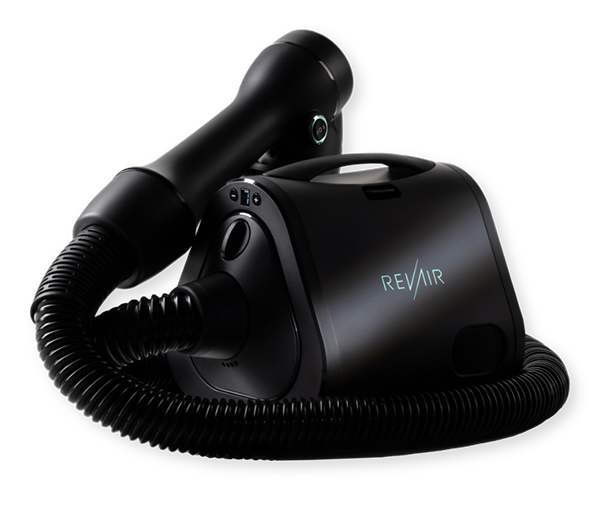
RevAir’s physical design reflects its reverse-air drying method. Instead of a handheld motor pushing air outward, the system separates the motor and controls into a stationary base unit, routing airflow through a hose to a wand with a sealed chamber opening. This layout supports suction-driven airflow and consistent section handling, but it also dictates how and where the device is used.
Core components:
- • Stationary base unit (motor + controls)
- • Flexible hose
- • Handheld wand with chamber opening
- • 3 Heat selection options (including no-heat airflow)
- • Adjustable suction/tension levels
How it works
Mechanism snapshot:
- 1) Input: A single hair section presented to the wand opening.
- 2) Process: Suction draws the section into the chamber; airflow dries while maintaining tension inside the wand.
- 3) Controls: Users select heat (including a no-heat option) and adjust suction/tension levels. Tension is adjustable from 1–7; RevAir recommends starting at level 3 with heat setting II and testing a wet section for 10 seconds, increasing tension gradually as needed. (RevAir FAQ)
- 4) Output: A dried, stretched section; results depend on section size, hair characteristics, and settings.
- 5) Workflow requirement: Repeat section by section; the tool is stationary and designed around a consistent routine.
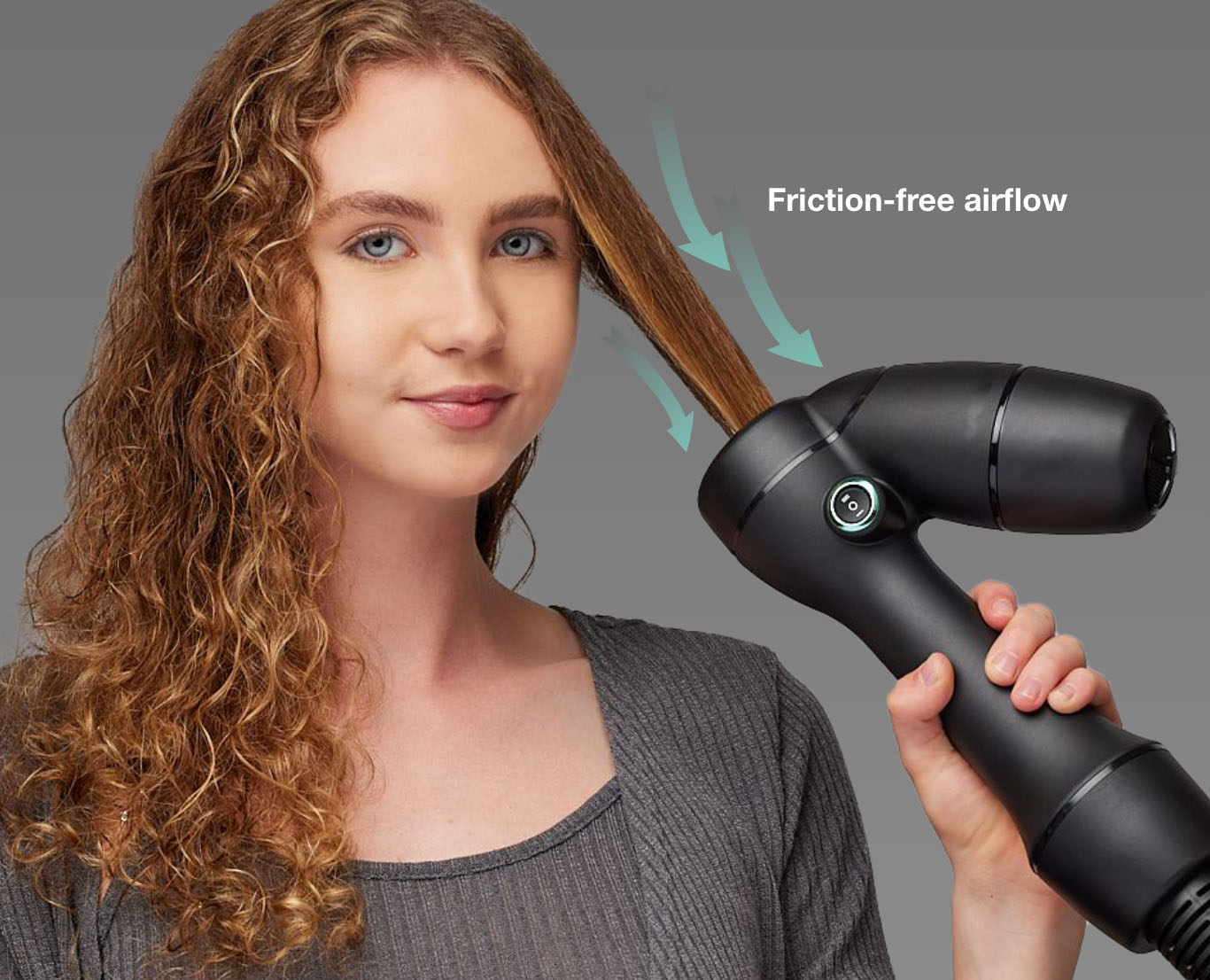
Heat and suction controls (brand-stated):
- • Heat options include a low setting (~158°F), a high setting (~220°F), and a no-heat airflow option. (RevAir FAQ)
- • Suction/tension is adjustable across multiple levels; the practical workflow is to begin lower and increase as comfort and section size allow. (Support: Lessons by Ladosha)
Basis: RevAir FAQ and support articles describing the operational workflow and settings. myrevair.com/pages/faqs
In-use behavior
In use, RevAir changes the way tension is generated. Instead of creating tension primarily through brushing motion and hand technique, tension is produced inside the chamber through suction-driven airflow while the user holds the wand steady and feeds consistent sections.
This doesn’t remove the need for sectioning or routine discipline; it relocates the “work” into section sizing, settings selection, and repeating the same operation across the full head.
Basis: Mechanism described by RevAir; workflow reinforced by RevAir support guidance on section sizing and tension selection. Support: Pro Tips (section sizing)
Who this is for / not for
Tends to fit when:
- ✔︎ Hair routines involve regular stretching of dense, thick, or highly textured hair.
- ✔︎ You can tolerate a stationary, section-by-section workflow.
- ✔︎ You want controlled tension with optional heat rather than freehand technique variability.
- ✔︎ You have enough space to store and operate a base unit + hose + wand system.
Tends to be a poor fit when:
- ✘ You prioritize speed, mobility, or one-handed “move fast” drying.
- ✘ You need varied styling outcomes from a single tool.
- ✘ You are noise-sensitive; some independent reviewers have described the unit as noisy, though the 2.0 is quieter than previous models.
- ✘ You have limited space; some independent reviewers have described the unit as bulky, though the 2.0 is smaller than previous models.
- ✘ You plan to use the device outside the United States or Canada, or with voltage converters/adaptors/transformers — RevAir states international use is not advised and can void warranty and support.

Reviews & real-world feedback
Independent reviews of the RevAir Dryer 2.0 are generally consistent in how they describe both its strengths and its constraints. Across editorial reviews, creator demos, and aggregated customer feedback, the system is most often evaluated through the lenses of time savings, stretch quality, heat exposure, and physical practicality.
What reviewers tend to agree on
- • Time reduction, but not the full 70% claim: Multiple reviewers report meaningful time savings—often closer to 40–55% rather than the advertised 70%, particularly on dense 3c–4c textures. Editorial testers and customers commonly describe cutting drying sessions roughly in half once sectioning and settings are dialed in.
- • Effective stretch with lower perceived heat exposure: Reviews consistently note that RevAir produces stretched sections without relying on high direct heat. Many users describe hair feeling less dry or stressed post-use compared to traditional blow-drying, especially when using lower heat settings.
- • Sectioning skill matters: Nearly all detailed reviews emphasize a learning curve. Results and speed depend heavily on section size, airflow restriction, and tension selection. Users who start with smaller, consistent sections tend to report better outcomes and faster sessions over time.
Commonly cited drawbacks
- • Noise: The RevAir 2.0 is frequently described as loud during operation, often compared to a vacuum. Several reviewers note that the 2.0 is quieter than the original model, but still not a quiet appliance.
- • Physical size and storage: Despite being more compact than earlier versions, the system is still described as bulky by many reviewers. The stationary base unit, hose, and wand require dedicated space for use and storage.
- • Price sensitivity: The cost (typically $400+) is a recurring friction point. Even among positive reviews, the value proposition is usually framed around long-term time savings and hair health rather than convenience or versatility.
Where reviews diverge
Review differences tend to map to expectations rather than performance failures. Some users frame RevAir as a “game-changer” once the workflow is learned, citing consistent time savings and reduced heat reliance. Others—particularly those prioritizing portability, quiet operation, or one-handed speed—view the same constraints as disqualifying. A small minority of users express dissatisfaction rooted in longevity or value concerns, but these views are less common than critiques centered on noise, size, and cost.
Evidence basis: Synthesis of editorial reviews (TechRadar, SheKnows), creator demos on YouTube (4c natural hair focus), aggregated Best Buy customer reviews for RevAir Dryer 2.0, and isolated negative user commentary noting durability or value concerns.
Comparisons
RevAir vs traditional blow dryer + brush tension
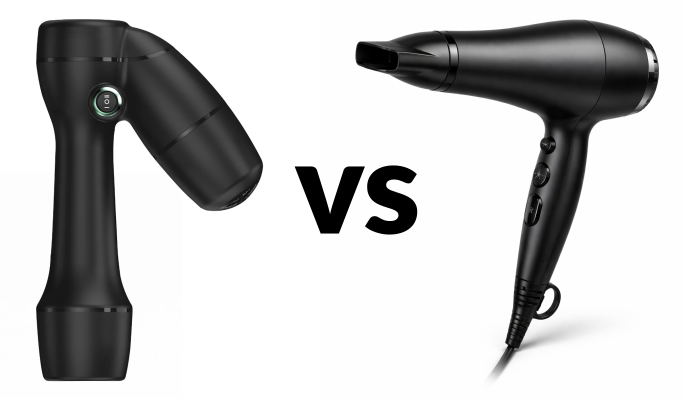
A traditional blow dryer setup optimizes for mobility and variable technique: you can move quickly, change angles, and switch outcomes based on brushes, tension, and attachments. The trade is that tension and heat exposure are more directly governed by the user’s technique and section discipline.
RevAir maps to a different configuration: repeatable, chamber-driven tension and controlled airflow, with a stationary, section-based workflow as the operating cost.
RevAir vs multi-styler tools
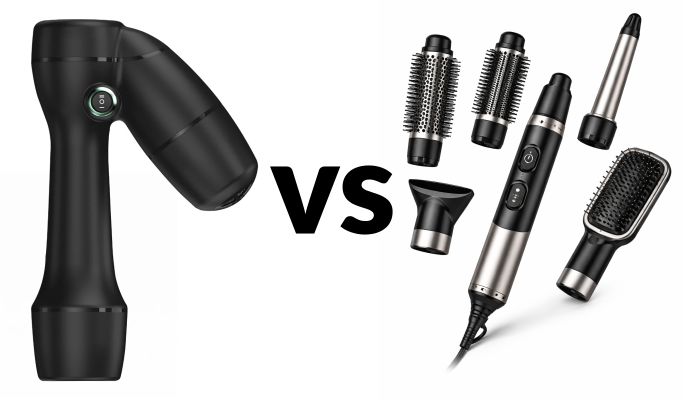
Multi-stylers optimize for styling versatility: one platform supports different attachments and outcomes (smoothing, curling, volumizing), often trading consistency of any single outcome for flexibility.
RevAir maps to a single primary outcome—drying and stretching through suction-driven airflow—with variety remaining a separate tool/step decision.
RevAir vs flat ironing (finish-first styling)
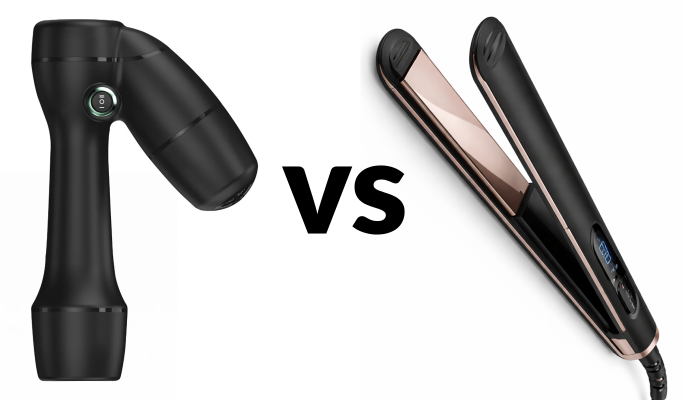
Flat irons optimize for a finish-first result (shape and smoothness), but they are not a drying tool; they assume hair is already dry and introduce direct heat contact as part of the styling step.
RevAir is a drying workflow that produces stretched sections; any finish styling remains a separate step and separate constraint set.
Note: These are constraint maps (what each tool optimizes for and what it accepts), not winner declarations.
Ownership, warranty & returns
RevAir positions ownership terms as part of the decision. Warranty coverage, return conditions, and regional constraints materially affect whether the system is a good long-term fit.
Returns (“Own It, Love It” Guarantee)
- • RevAir describes a 30-day return window from receipt for new purchases.
- • A $20 handling fee is deducted from the refund amount.
- • RevAir describes refund processing of 10–14 business days after the return is received.
- • Returns are initiated through RevAir’s return portal (linked from the policy flow).
Warranty coverage (by product type)
- • New RevAir Dryer 2.0: RevAir states new devices purchased through authorized retailers include a 1-year “Never Be Without” warranty for manufacturer defects, with repair or replacement at no cost during coverage.
- • Extended warranty (optional): RevAir states 2-year or 3-year extended coverage is available through XCover for $39 / $49, addable within 90 days of receipt after device registration.
- • Haircare products & accessories: RevAir states these do not come with a formal warranty (but directs customers to contact support for packaging/product issues).
- • Refurbished devices: RevAir states refurbished units include a 90-day limited warranty, are final sale (no returns), and are not eligible for XCover extended warranty plans.
RevAir customer support is available 7 days a week via email, live chat, text, or phone.
Electrical / regional constraint: RevAir states the device is currently only available and legally approved for use in the United States & Canada, and that it will not operate with a converter/adaptor/transformer; using the device internationally is not advised and can void warranty and support.
Common evaluation questions
What hair length is required?
Hair must be long enough to be drawn into the wand chamber consistently. RevAir’s FAQ states a minimum of about 3 inches. (RevAir FAQ)
What heat settings does RevAir use?
RevAir lists three heat options: a low setting (~158°F), a high setting (~220°F), and a no-heat airflow option. (RevAir FAQ)
How should suction/tension be approached in practice?
Start on lower tension and adjust based on section size and comfort. RevAir educator guidance suggests mid-range tension as a common starting point for coily/coarse textures; smaller sections reduce the need for higher suction. (Support: Lessons by Ladosha)
Is it quiet?
Independent reviewers commonly describe the unit as noisy during operation, though the 2.0 is quieter than previous models. (See Reviews & real-world feedback for details.)
How long does a drying session take?
RevAir notes that drying time varies by hair type and section size. In the FAQ, RevAir states most sections commonly take 30–90+ seconds. For full-session ranges, RevAir publishes time estimates by hair type, length, and porosity (including section transitions). (RevAir FAQ; RevAir time estimates)
What is the return policy for new devices?
RevAir describes a 30-day return window from receipt for new purchases, with a $20 handling fee deducted from the refund and processing time of about 10–14 business days after the returned unit is received. (Return policy flow)
What warranty applies to new vs refurbished?
RevAir states new devices purchased via authorized retailers include a 1-year warranty, while refurbished units carry a 90-day limited warranty and are final sale (no returns). RevAir also states extended warranty plans are available for new devices through XCover (2 or 3 years) within 90 days after receipt (not available for refurbished). (Warranty flow)
Verdict
If you are reconfiguring the hair-drying trilemma toward controlled tension and reduced direct heat exposure, and you accept a stationary, section-based workflow, the RevAir 2.0 is a good fit. Independent reviews commonly report meaningful time savings and reduced reliance on high direct heat.
If you are optimizing for speed, mobility, and varied styling outcomes from a single tool, it likely doesn’t.
As a system, RevAir reconfigures hair-drying trade-offs through a stationary, suction-driven workflow, with fit determined entirely by the user’s willingness to adopt its operational constraints.
Purchase: RevAir Dryer 2.0
What you’re buying:
- • RevAir Dryer 2.0 reverse-air system (base + hose + wand)
- • Adjustable suction/tension levels (1–7)
- • Heat options including no-heat airflow
Ownership terms to notice:
- • 30-day return window (new devices)
- • $20 handling fee on returns
- • 1-year warranty (new devices) / 90-day (refurbished)
- • US/Canada-only usage constraint (no converters/adaptors/transformers)
Price: $459
Promo code: PLUMOSITY10
Plumosity may earn a commission if you purchase through this link. Promo code provided by RevAir and intended to be evergreen at time of publication.
Sources Used:
- RevAir FAQ — heat settings, minimum hair length, operation, section sizing, and time-per-section references
- RevAir “Own It, Love It” Return Policy — 30-day window, $20 handling fee, 10–14 business-day processing, return portal requirements
- RevAir Warranty, Coverage & Regional Use Documentation — 1-year new device warranty, XCover extended plans, refurbished limitations, US/Canada-only usage, voltage restrictions, support channels
- RevAir Educator Guidance (Lessons by Ladosha) — tension practices and texture-specific workflow considerations
- RevAir Pro Tips: Section Sizing — airflow restriction handling and section sizing guidance
- TechRadar review (RevAir 2.0) — hands-on test notes on time savings, learning curve, noise, and storage footprint
- SheKnows review (RevAir 2.0) — user testing notes on speed, results, and constraints (noise/size)
- Best Buy customer reviews (RevAir Reverse Air Hair Dryer) — aggregated owner feedback on drying time, noise, and storage/handling
- YouTube review: “Thee ONLY HAIR DRYER FOR NATURAL HAIR! RevAir 2.0 New & Improved Version!” — creator demo focused on 4c hair; workflow and perceived performance notes
- YouTube Short: “Honest RevAir Review Using Level 3 + Heat 2” — short-form demo using specified settings; quick outcome notes
Testing note: Plumosity did not perform laboratory validation for this sponsored feature. Mechanism and policy details are summarized from RevAir’s published documentation and cited independent observations.
Sponsored Disclosure:
This article is a paid Plumosity Services editorial feature. Plumosity is paid to create reference assets that explain how a product works, its inherent constraints, who it is designed for, and who it is not.