Introduction
This article explains what hDrop Gen 2 is, how it works, and who it's for.
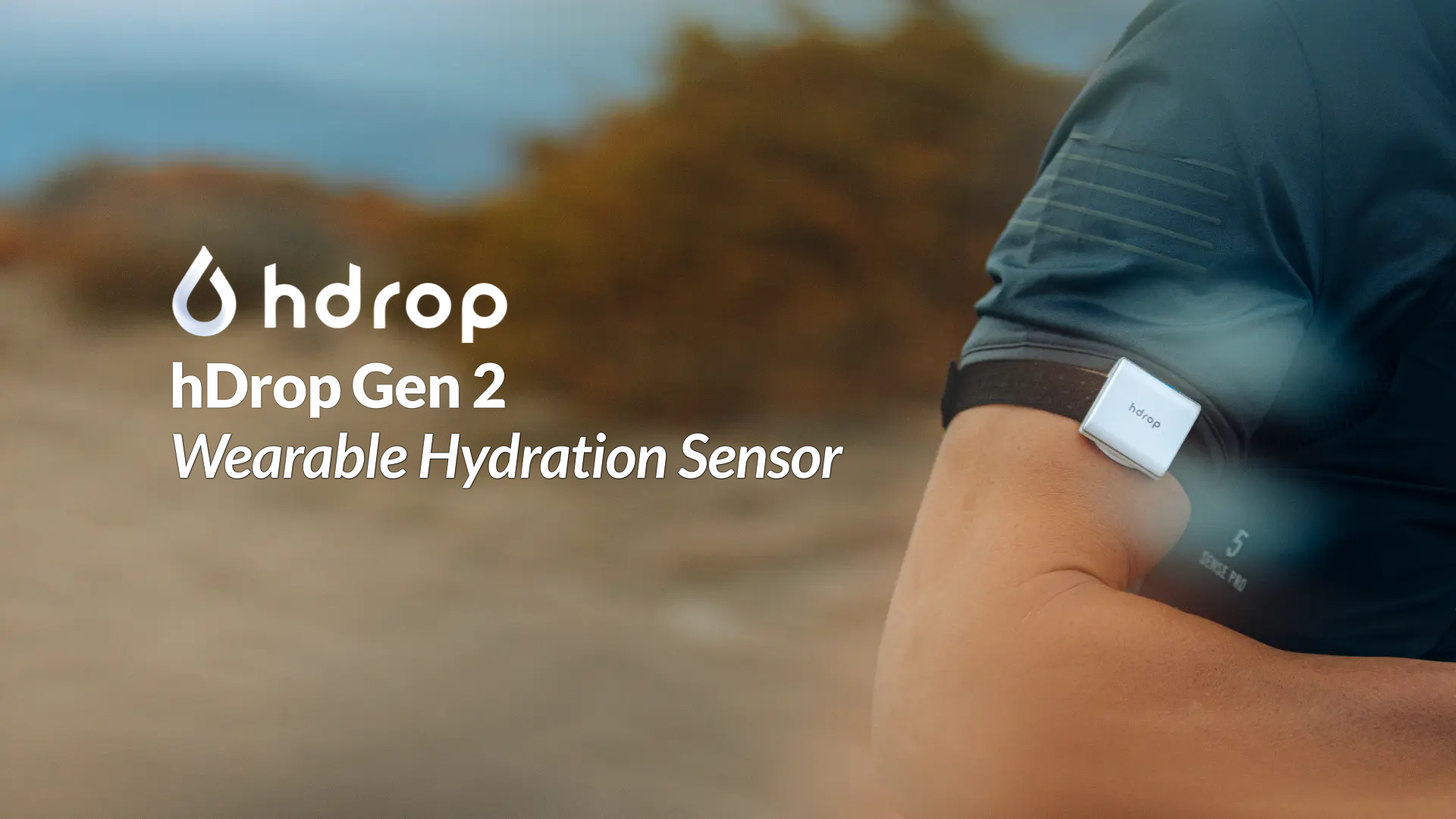
hDrop Gen 2 is a reusable wearable sweat sensor that estimates sweat loss, sweat rate, and electrolyte losses (sodium and potassium) during training, with reporting delivered through a phone app and supported integrations. It is typically used by endurance athletes and coaches to build a personal sweat profile across multiple training sessions.
At a glance: hDrop Gen 2
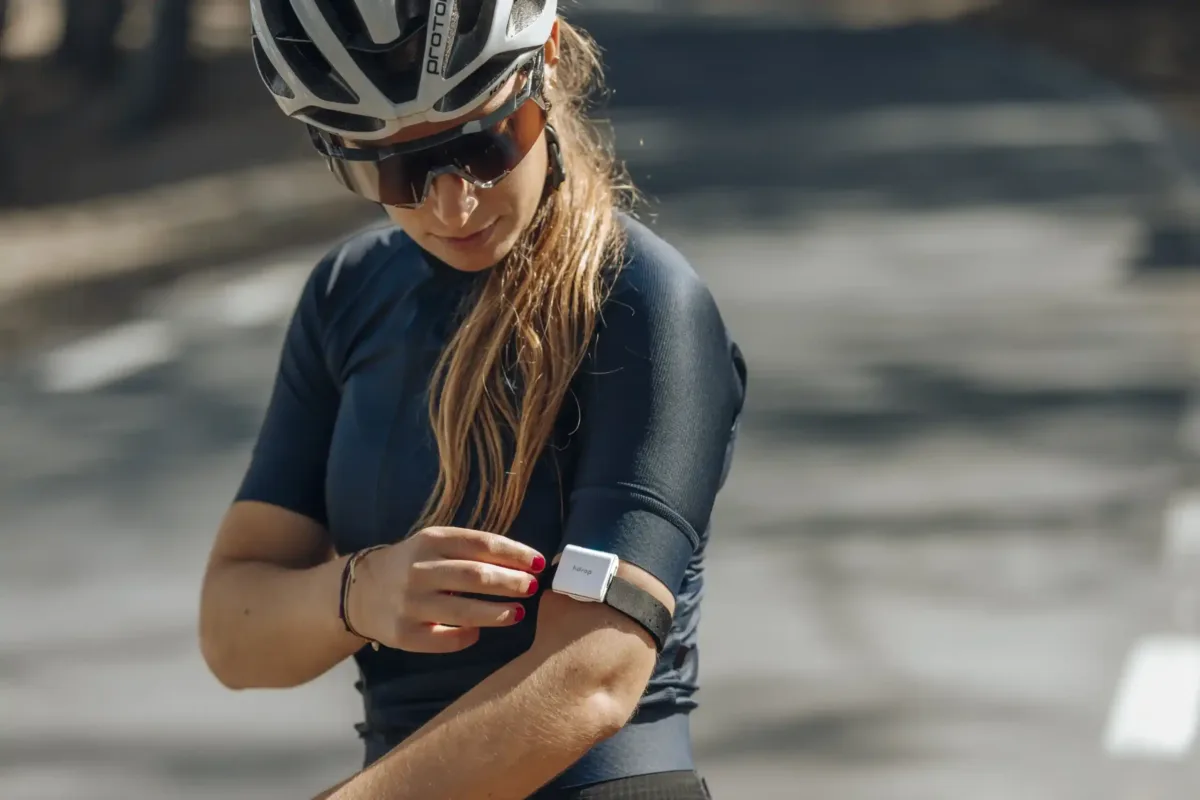
hDrop Gen 2 is a rechargeable sweat sensor used during training to estimate sweat loss, sweat rate, and electrolyte losses (sodium and potassium). In practice, its strongest use is repeat sampling across many sessions to build a personal baseline; independent third-party testing suggests sodium concentration can be directionally useful, while sweat rate estimates can under-report for some heavy sweaters.
- ✔️ What it is: A reusable sweat sensor + app that produces hydration and electrolyte estimates during activity.
- ⚙️ How it works: Sweat contacts electrodes; algorithms estimate electrolyte concentration and losses; the app aggregates sessions into a baseline profile.
- 📦 What’s included / offered: Gen 2 sensor, charging, app analytics; integrations vary by platform.
- ⚠️ Boundaries: Not a medical device; sweat rate is estimated (not directly measured); not intended for swimming.
- 🧾 Considerations: Best treated as trend/profile data; validate sweat rate with body mass change when precision matters.
Quick purchase (for readers who already know they want it)
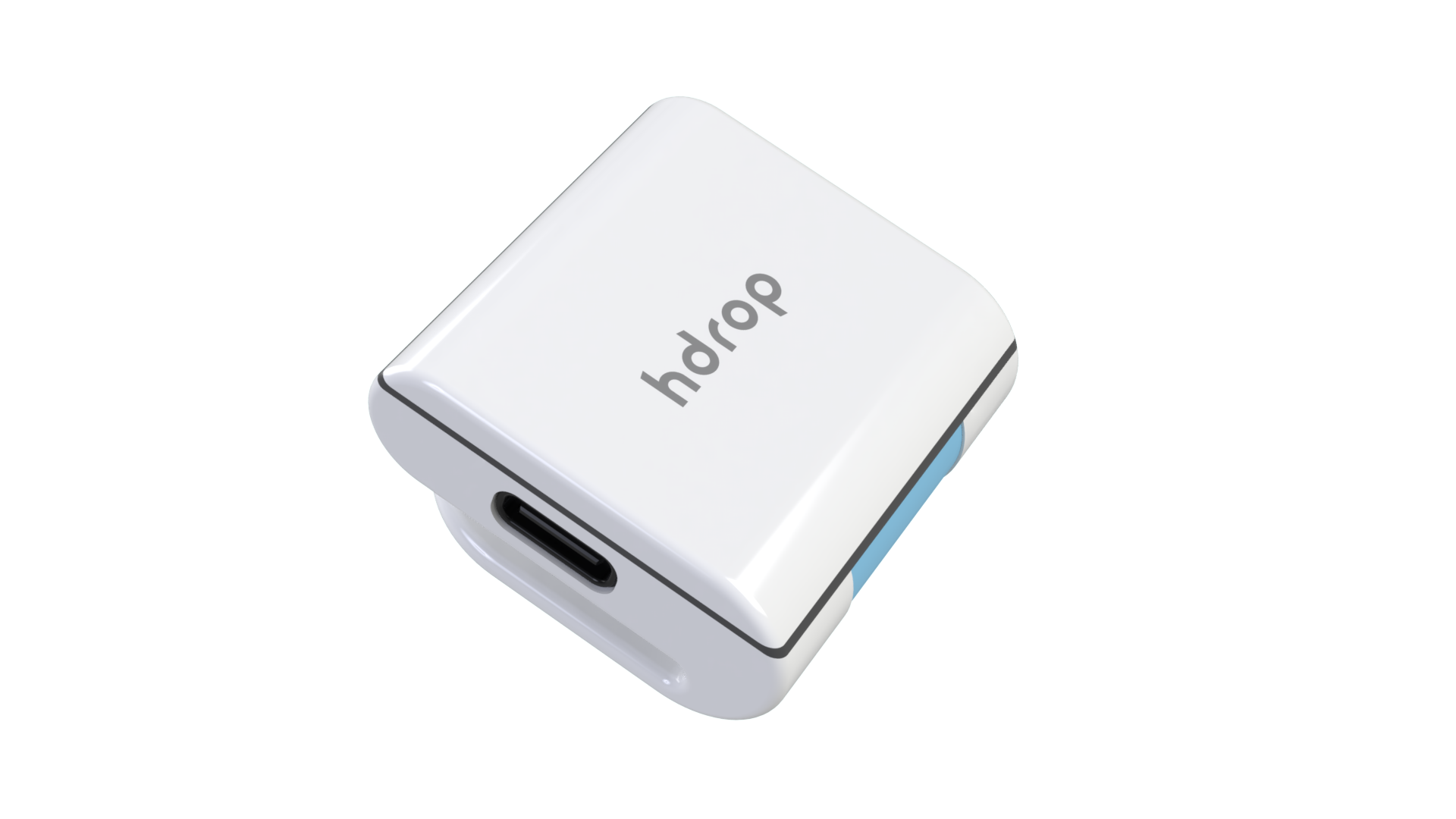
Price: $249.99
Promo code: PLUMOSITY10 (10% off at checkout)
Plumosity may earn a commission if you purchase through this link. Promo code provided by hDrop and intended to be evergreen at time of publication.
Brand and product context
hDrop Gen 2 is produced by hDrop Technologies, a U.S.-based sports technology company founded in 2019. The company focuses on sweat-based hydration monitoring for endurance and professional sport, with the stated aim of providing repeatable, field-usable hydration data without disposable test strips or lab-only workflows.
The Gen 2 device represents hDrop’s current consumer-facing hardware. It's intended to be worn during normal training sessions and reused across many workouts, allowing the system to aggregate data over time rather than treating hydration assessment as a one-off test.
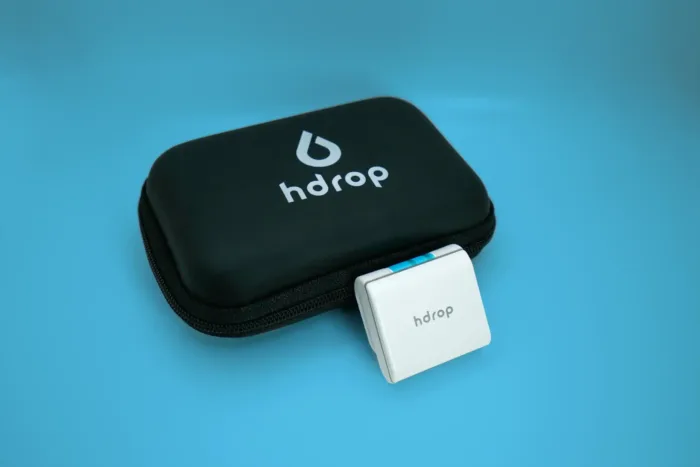
What it is
hDrop Gen 2 is a reusable electronic sweat sensor intended to contact sweat during exercise and transmit readings to a companion app. It mounts to an arm band or chest strap-style placement and reports estimates of sweat loss, sweat rate, sodium loss, potassium loss, and near-skin temperature during activity, plus post-session summaries.
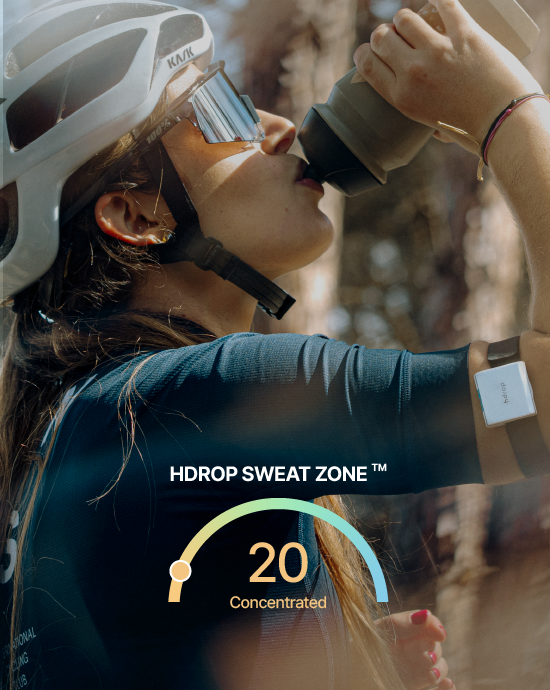
The operational premise is repeat sampling: use the device over multiple sessions so the system can build a baseline (“normal for you”) and then score and classify later sessions relative to that baseline. Reviewers frequently describe this baseline output using the app’s “zone” framing (e.g., concentrated/target/diluted relative to baseline), which functions as interpretation scaffolding rather than a clinical diagnosis.

Key facts
| Overview | |
|---|---|
| Category | Hydration wearable / sweat testing sensor |
| Primary object | hDrop Gen 2 Hydration Wearable Sensor |
| Core inputs | Sweat at sensor surface; session context via app (and optionally linked platforms) |
| Primary outputs | Estimated total sweat loss + sweat rate (L/h); sodium/potassium losses; baseline/zones interpretation; post-session reports |
| Typical buyer | Endurance athletes, coaches, heat-sensitive athletes, “salty sweaters,” data-driven trainers |
| Price band | $249.99 (Gen 2) |
| Availability | Direct (hDrop site) + specialty retailers |
How it works
Mechanism snapshot:
- 1) Inputs: Sweat contacting the sensing surface; ambient conditions; session context from the phone/app (and optionally linked fitness platforms).
- 2) Process: Electrodes detect electrical changes associated with sweat electrolyte concentration; algorithms estimate sodium/potassium concentration and translate this (with other signals) into total sweat loss and sweat rate (L/h) estimates.
- 3) Outputs: Real-time and post-session estimates: total sweat loss, sweat rate (L/h), sodium loss, potassium loss, near-skin temperature; baseline/zones built over repeated sessions.
- 4) What the user actually does: Charge device, mount to arm/chest placement, pair with app, start session, review real-time metrics and post-session reports; repeat across sessions to build a profile.
- 5) What the system tolerates / doesn’t: Sweat-based activities; IP66 sweat resistance (per retailer/spec descriptions); not intended for swimming; estimate stability can vary under extreme sweat rates and may change with firmware/calibration updates.
Terminology note (used throughout this article):
- • Total sweat loss: the estimated total volume of fluid lost over the full session.
- • Sweat rate (L/h): the estimated rate of fluid loss per hour, derived from total sweat loss and session duration.
These are related but distinct outputs. References to “sweat rate” always mean L/h; references to “sweat loss” mean total session loss unless otherwise stated.
Brand-described operation
hDrop describes the Gen 2 workflow as a skin-contact sweat sensor that infers electrolyte concentration from sweat at the sensing surface, then applies an algorithm to estimate sweat loss, sweat rate, and sodium/potassium loss during the session, with summaries delivered through the companion app.
Basis: hDrop “Science Behind” / FAQ language (brand-stated description).
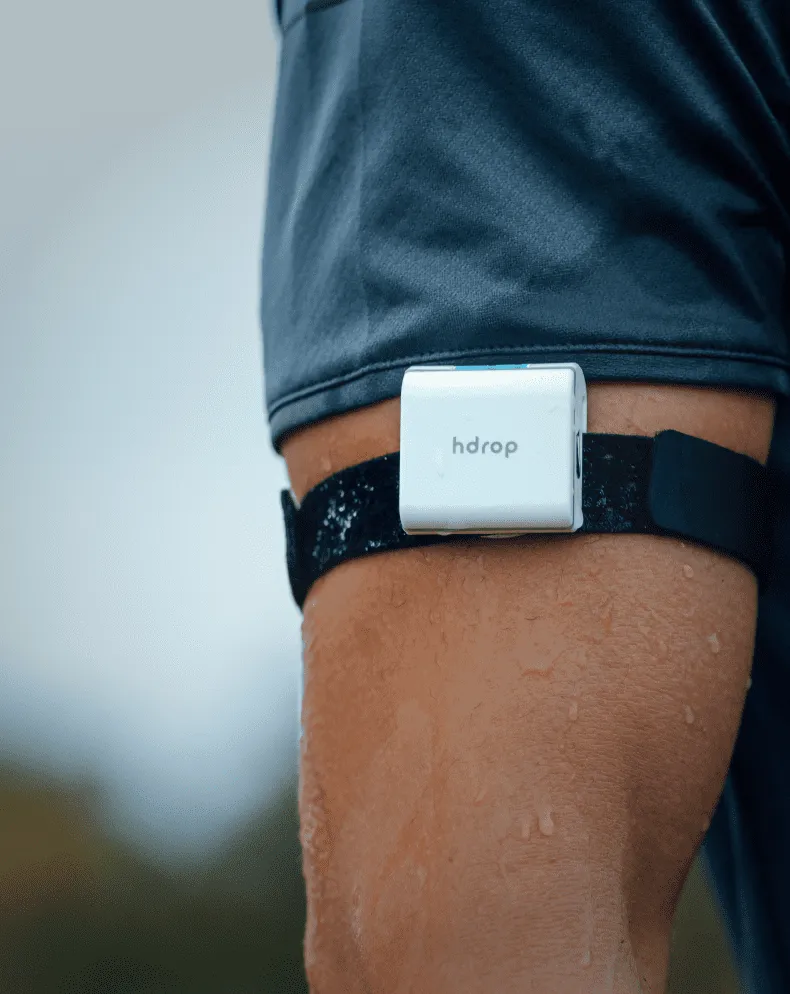
Mechanically, hDrop’s day-to-day usefulness depends on repeatability: consistent placement, reliable sweat contact, and enough sessions for baseline formation. Multiple reviewer accounts (including Six Minute Mile) note that the baseline/zones layer becomes more informative after several workouts, because it provides a stable internal comparator rather than a single isolated data point.
The system’s most contested output is sweat rate. Precision Fuel & Hydration’s evaluation noted that hDrop does not directly measure sweat rate as a primary variable and instead provides estimates derived from real-time sweat signals and contextual inputs. This aligns with their observed error pattern, where underestimation increased at very high sweat rates.
In response, hDrop has stated that no current field-wearable directly measures sweat rate, and that Gen 2 estimates are produced by combining sweat electrolyte signals with temperature, duration, and individual profile data across sessions. The company frames sweat rate as a longitudinal, in-session estimate rather than a replacement for scale-based testing, and reports introducing adaptive algorithm updates intended to improve performance for higher sweat-rate users. Within this framing, sweat rate outputs are positioned as part of a broader profiling system, not a standalone prescription metric.
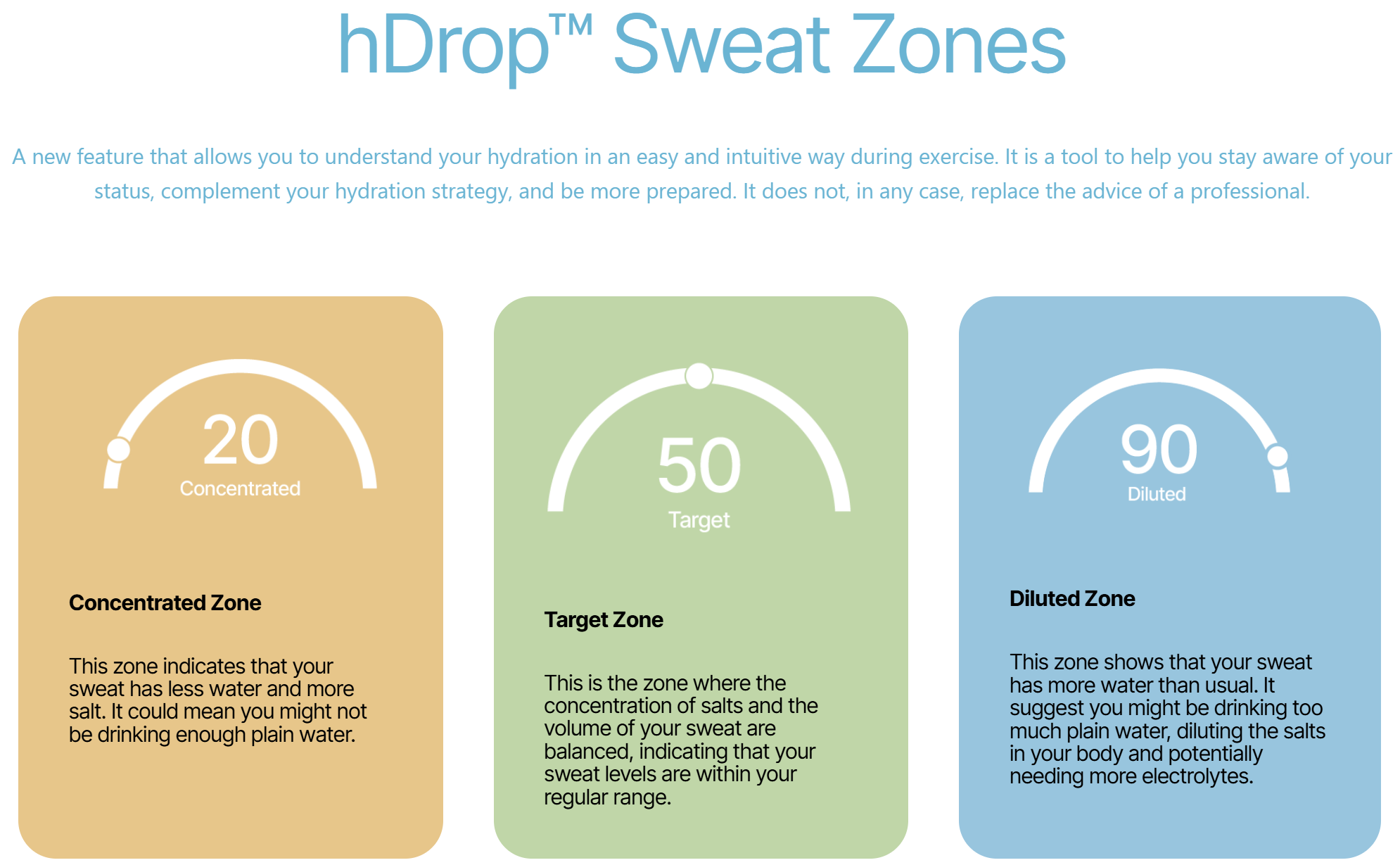
Workflow reality: hDrop’s outputs stabilize through repeat use. Single-session readings are less informative than patterns built across consistent placement and multiple sessions.
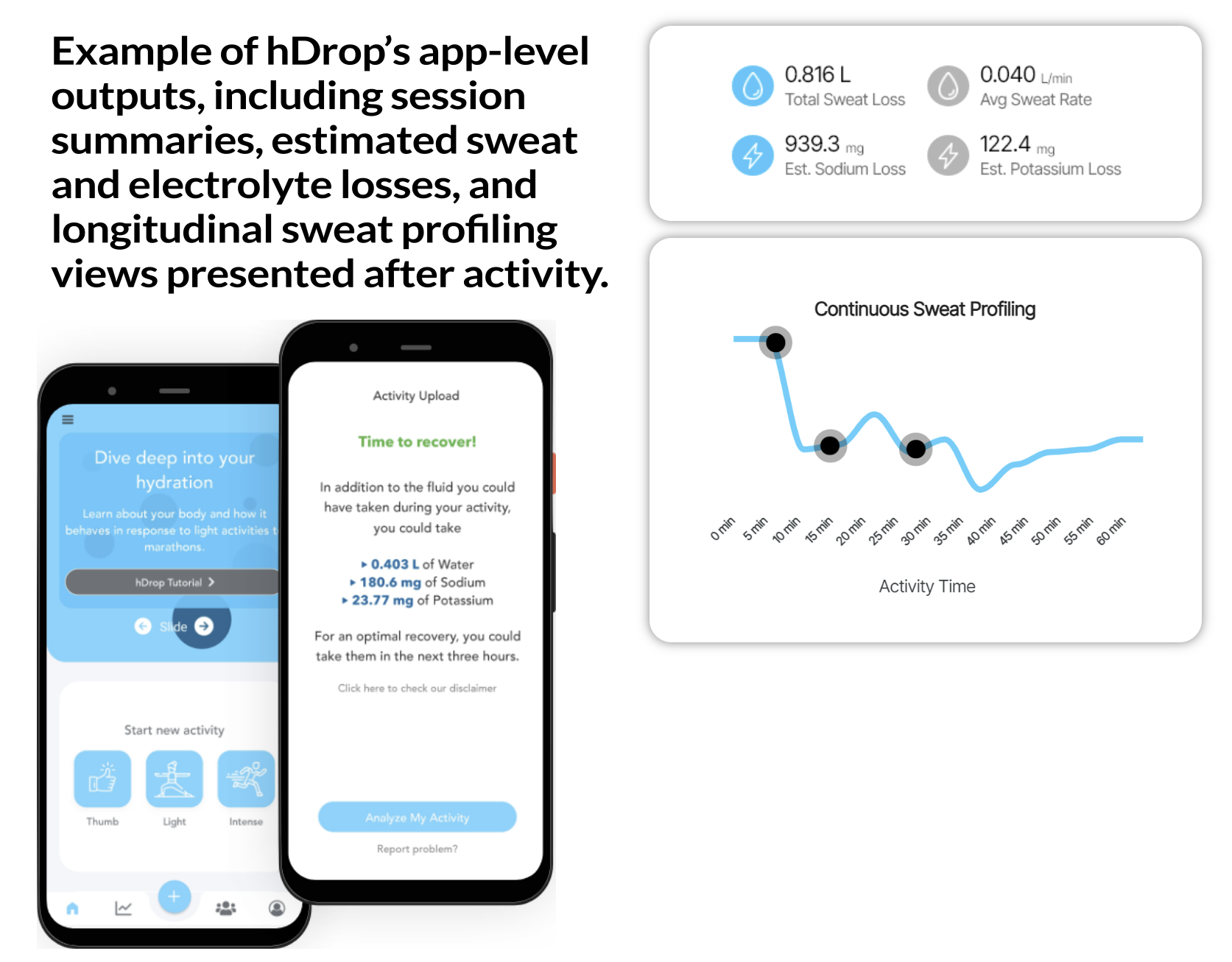
App & interface
hDrop Gen 2’s “product” is the combination of sensor + app. The sensor supplies the sweat-contact signal; the app is where the system turns that signal into session estimates, longitudinal baselines, and the zone-style interpretation layer. Practically: if the app workflow doesn’t fit your training habits, the hardware alone won’t feel complete.
Baseline/zones: the app’s method of classifying a session’s sweat concentration relative to your own accumulated history (your personal “normal”), rather than treating each workout as a standalone measurement.
The most useful way to think about the interface is in two modes: in-session visibility (a live readout you can glance at) and post-session interpretation (where you review estimates and compare the session against your baseline). The baseline/zones layer becomes the “comparator” that makes repeated sessions meaningful—because the app can frame a given workout as a deviation from your own history rather than a standalone number.
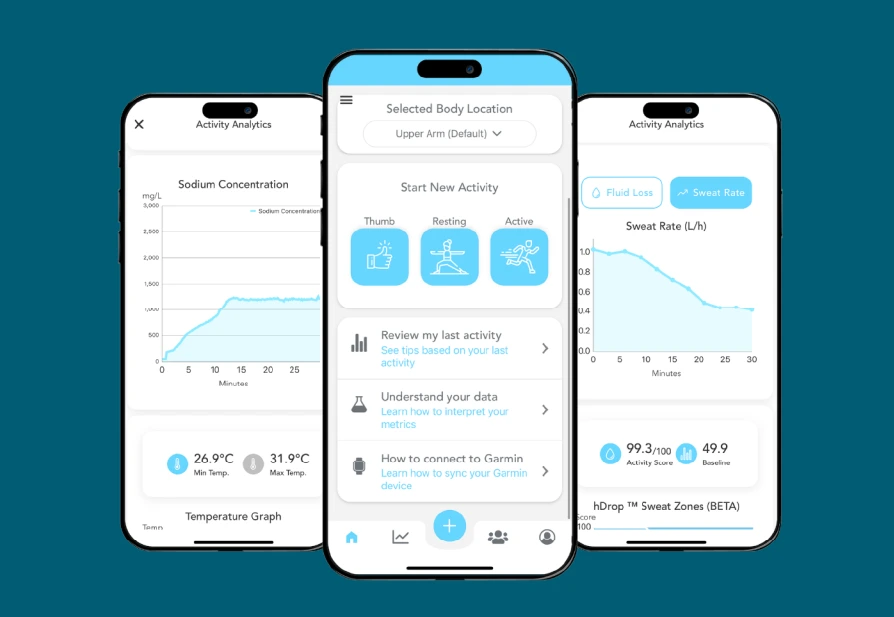
What the app is doing (mechanically):
- • Session context: Applies duration/temperature/activity context to the sensor signal to generate estimates for sweat loss/rate and electrolyte losses.
- • Interpretation layer: Uses baseline + zones to label a session relative to your typical concentration pattern (useful as a “directional” read).
- • Longitudinal memory: Aggregates multiple sessions so later outputs function as trend data instead of one-off event data.
Evaluator note: Treat the app as the primary interface and the sensor as the input device. Most of the perceived “accuracy” and usefulness happens at the interpretation layer.
Two practical implications follow from this design: (1) consistency matters (placement + sweat contact + repeat sessions), because the app’s baseline is only as stable as the input routine, and (2) versioning matters—firmware/app updates can shift behavior over time, which is why outputs should be read as evolving estimates rather than fixed instrumentation.
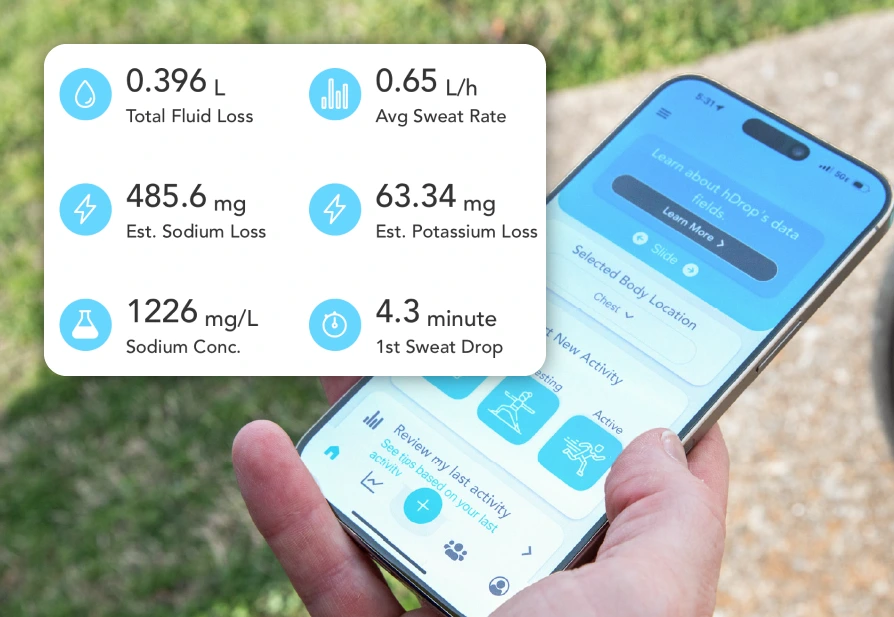
Workflow boundary: hDrop outputs are best treated as profile/trend data. When you need a hard sweat-rate number for event fueling targets, validate with body-mass change (pre/post weigh-in) and use the app’s estimates as a comparator rather than the sole reference.
Category anchoring
hDrop Gen 2 is not a general fitness wearable and it is not lab sweat testing. It sits in the middle: field-use sweat profiling layer that’s meant to be repeated across normal training sessions to build a personal baseline.
Category map (what you’re really choosing between):
- • Training wearables (watch/head unit): strong on pace/power/HR; do not quantify sweat sodium or session sweat loss.
- • Lab / clinic sweat testing: controlled sampling; typically treated as a one-off test with higher certainty.
- • Disposable patch systems: per-session protocols + ongoing consumables; often used as discrete spot-checks.
- • hDrop (reusable sensor + app): repeat sessions → baseline/zones; value increases with frequency and consistency.
The anchor mechanic is reusability: value comes from repeat sampling and stable placement, not a single test day result.
Accuracy & validation notes
Independent evaluation: Precision Fuel & Hydration (PF&H)
Precision Fuel & Hydration evaluated hDrop over a six-month period using 10 team members across 57 cycling and running sessions. Their methodology compared hDrop outputs against pre- and post-exercise body mass change to assess sweat loss and sweat rate.
Evaluator note: PF&H measured error on concentration; hDrop derives sweat and electrolyte “loss” metrics downstream in the app from concentration plus session and context inputs.
- Sodium concentration: Average overestimation of approximately 177 mg/L (about +15%). PF&H described sodium concentration estimates as directionally useful for informing electrolyte strategy.
- Sweat rate (L/h): Average underestimation of approximately 0.58 L/h (about –36%), with extreme underestimation reported up to roughly 1.76 L/h. PF&H noted this level of error could meaningfully affect hydration planning if used without validation.
- High-sweat outlier: One individual accounted for 22% of trials and exhibited particularly high sweat rates. When this outlier was excluded, the average discrepancy narrowed (measured 1.35 L/h versus hDrop 1.02 L/h).
Evidence basis: Precision Fuel & Hydration field evaluation (57 sessions; cycling and running).
Brand-stated accuracy and validation status
hDrop states that preliminary results from an “independent validation study” show approximately 92.5% accuracy for sweat loss and 87% accuracy for sweat sodium loss, and that publication was expected in late 2025 (publication status not independently verified by Plumosity as of Feb 2026). The company also states that much of its testing to date has been conducted internally and that it plans additional public validation work.
Basis: hDrop “Science Behind” / FAQ language (brand-stated; publication status not verifiable here).
Brand response and iteration
Following the PF&H evaluation, hDrop reported implementing adaptive calibration updates (described as introduced in July 2025) intended to improve performance for higher sweat-rate users. The company has also indicated that additional independent validation work is under peer review.
Evidence basis: hDrop responses summarized in PF&H coverage and subsequent brand communications.
Key takeaway (PF&H): In independent testing, sodium concentration estimates were generally directionally useful, while sweat rate (L/h) estimates under-reported in high-sweat scenarios.
Interpretation boundary: hDrop outputs are most defensible for trend and pattern formation across repeated sessions. When setting hard fluid targets for long events, scale-based body mass change remains the direct reference method used by evaluators such as Precision Fuel & Hydration.
Offerings overview
- hDrop Gen 2 sensor: Rechargeable reusable sweat sensor used during activity for real-time and post-session analytics.
- hDrop app (iOS/Android): Session recording, baseline/zones interpretation, trend views, and supported integration workflows.
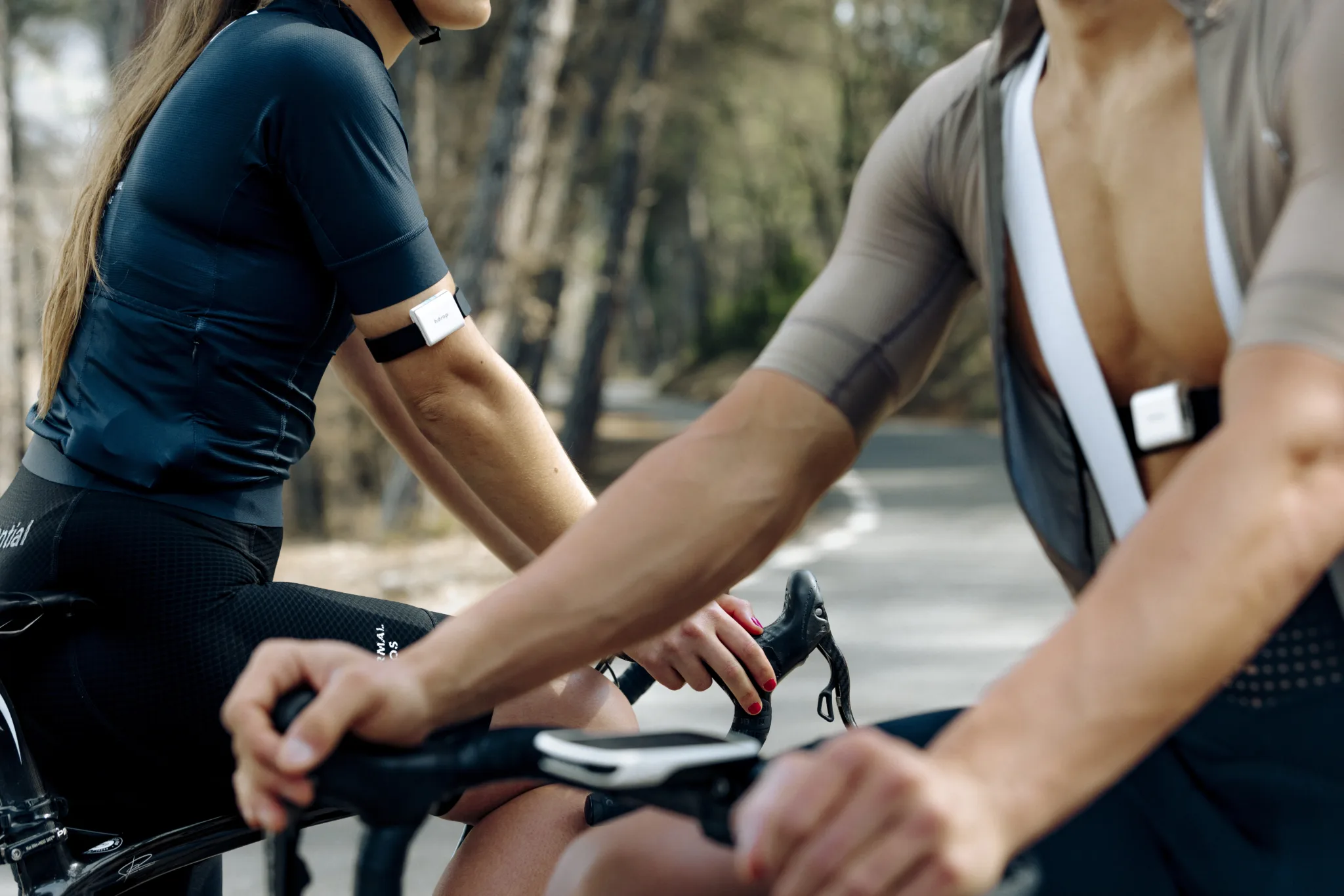
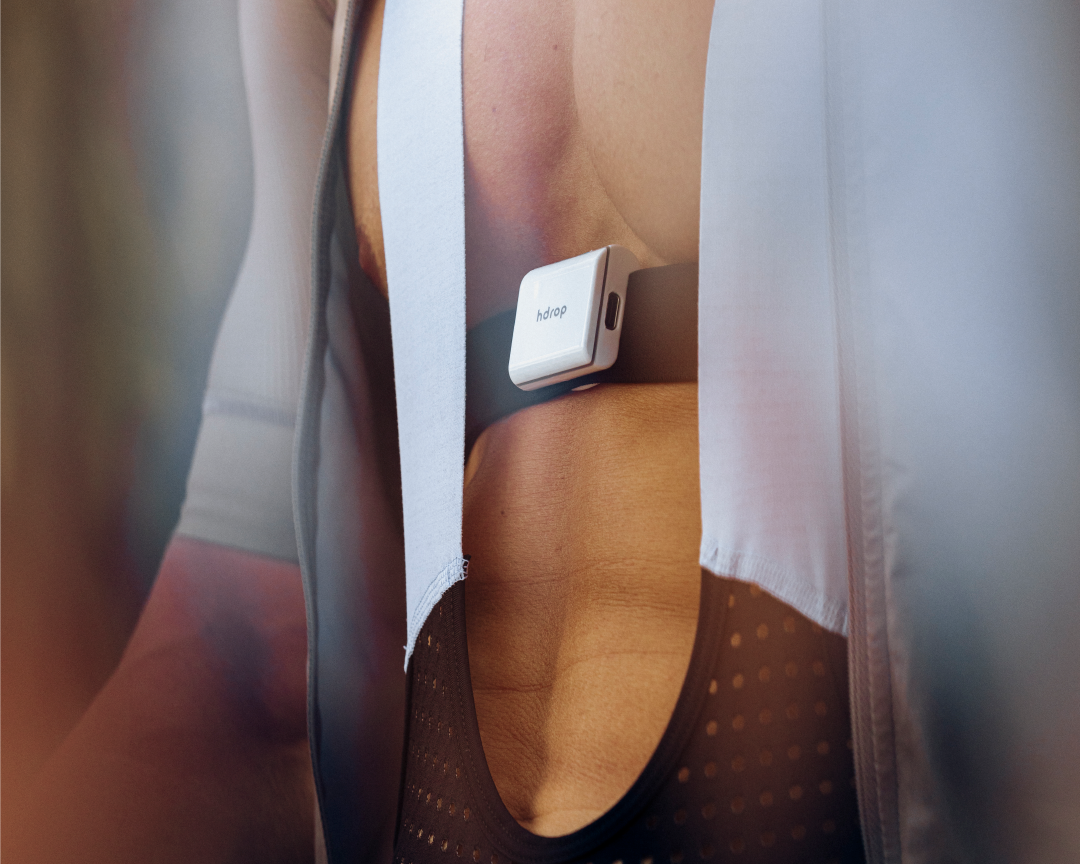
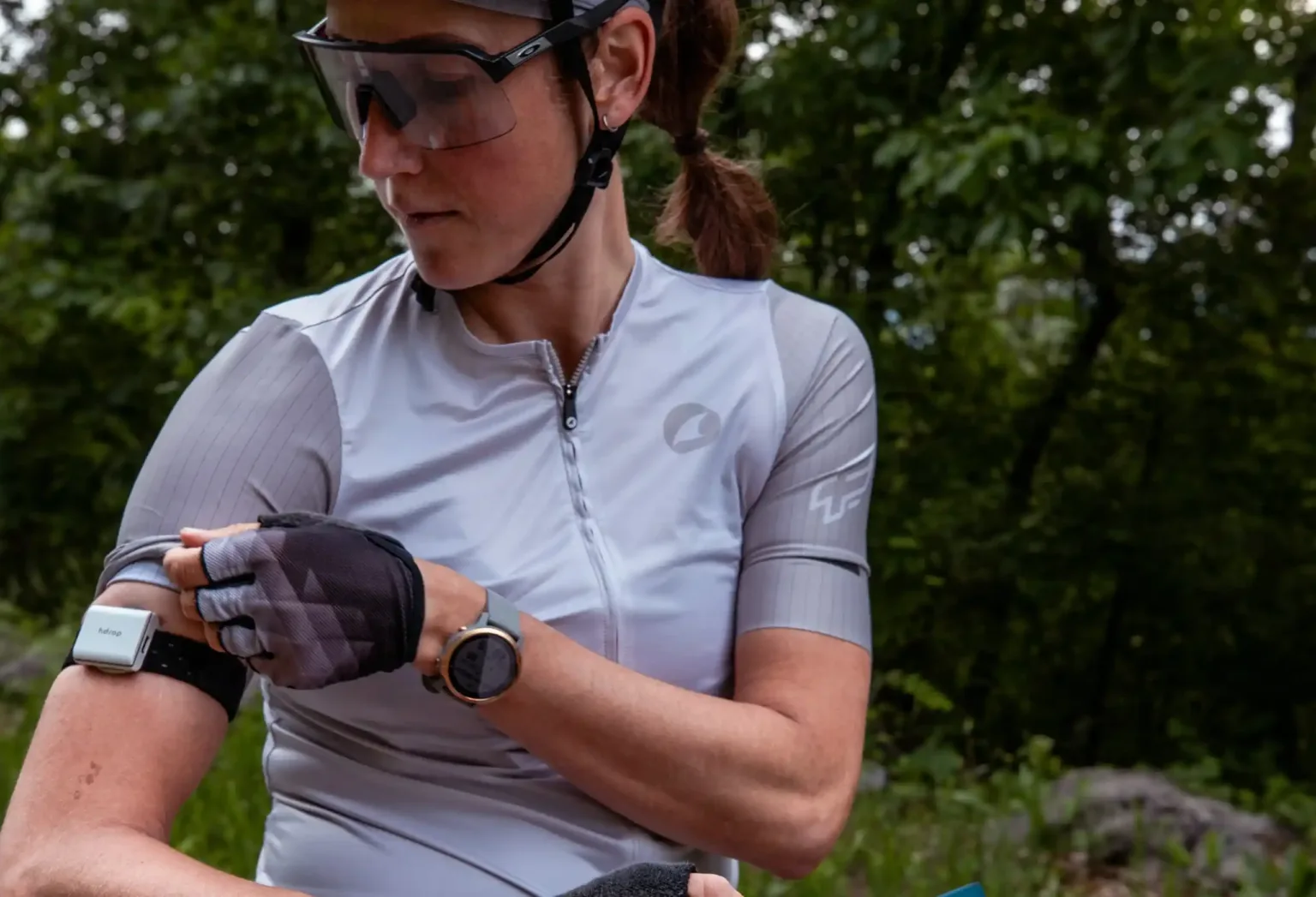
- Mounting options: Arm placement or chest strap placement depending on sport and comfort preferences.
- Integrations: Garmin ecosystem support; cycling head unit support via extensions (integration depth varies by platform).
| Option | What it includes | Who it tends to fit | Constraints |
|---|---|---|---|
| Gen 2 + app (standard) | Sensor + phone app analytics | Users building a repeat sweat profile across training | Requires pairing and repeat use to stabilize baseline |
| Arm mount workflow | Sensor on an arm band | Runners and athletes who prefer arm wear | Comfort varies; some reviews note friction |
| Chest strap workflow | Sensor mounted near a chest strap system | Cyclists and users already chest-mounted | Placement must maintain sweat contact; not swim-safe |
Boundaries
Fits best when:
- ✔︎ You will use it across many sessions to build a baseline profile.
- ✔︎ Heat blocks, long sessions, or endurance events make hydration strategy consequential.
- ✔︎ You want better resolution on salt loss patterns (sodium/potassium) than generic guidance provides.
- ✔︎ You accept that sweat rate is an estimate and validate where needed.
Skip if:
- ✘ You need lab-grade certainty from the device outputs.
- ✘ Your sessions are short enough that sweat profiling rarely changes decisions.
- ✘ You have low tolerance for pairing, updates, and troubleshooting.
- ✘ Swimming is your primary training mode.
The boundary logic is mechanical: the sensor reads sweat signals and the system estimates downstream quantities. As discussed in Accuracy & validation notes, independent testing shows that sweat rate estimation can under-report in some scenarios. As a result, the most stable fit is baseline and trend building, while the least stable fit is relying on a single session’s sweat rate estimate to set hard fluid targets without validation.
hDrop states it offers a refund policy for customers who are not satisfied with results, subject to its Terms and Conditions.
Basis: hDrop FAQ language; Terms referenced by the brand.
Use-case mapping
Common placements:
- Higher signal when: You have a few sessions where you also track weight change and intake, so you have an external reference point.
- Pairs cleanly with: Garmin/Wahoo training ecosystems, consistent fueling routines, and electrolyte products you already tolerate.
- Functions as: A repeat sweat-profile builder (baseline + relative session scoring) and a field signal layer for electrolyte patterns.
- Not intended to replace: Lab sweat testing for clinical-style sodium concentration; scale-based sweat-rate measurement for precision fluid targets.
In pro sport settings, hDrop has been described as a profiling layer used by sports science staff to monitor athlete sweat patterns and tailor electrolyte replacement protocols (for example, RCD Espanyol’s integration as described in public materials). For individual users, the analog is building a stable baseline and comparing sessions—especially across changes in heat, duration, and intensity.
PF&H’s review suggests a cautious placement: use hDrop to inform electrolyte strategy and pattern recognition, and treat sweat rate estimates as a prompt to validate rather than a final number—particularly for heavy sweaters or extreme heat sessions.
Constraints & tradeoffs
- Constraint: Sweat rate is estimated, not directly measured — PF&H explicitly noted this structural limitation in interpreting their findings.
- Constraint: Output stability varies by user and conditions — PF&H observed larger sweat-rate underestimation for high-sweat scenarios; some reviewers report session-to-session variability.
- Constraint: App + connectivity dependence — device value is mediated by pairing and app workflow; some Android users report intermittent connectivity issues depending on OS/device combinations.
- Tradeoff: Reusable design vs disposable patches — reusability removes consumables but increases dependence on long-term workflow reliability and firmware updates.
- Tradeoff: Trend profiling vs lab certainty — you gain real-world repeat sessions; you lose the lab’s controlled sampling and measurement chain.
- Brand claim: hDrop states there is no user-performed calibration step required; however, the company also describes ongoing algorithm/firmware iteration, which can change behavior across versions.
Basis: hDrop FAQ language; brand iteration notes referenced in third-party coverage.
Battery life: what’s claimed vs what’s reported
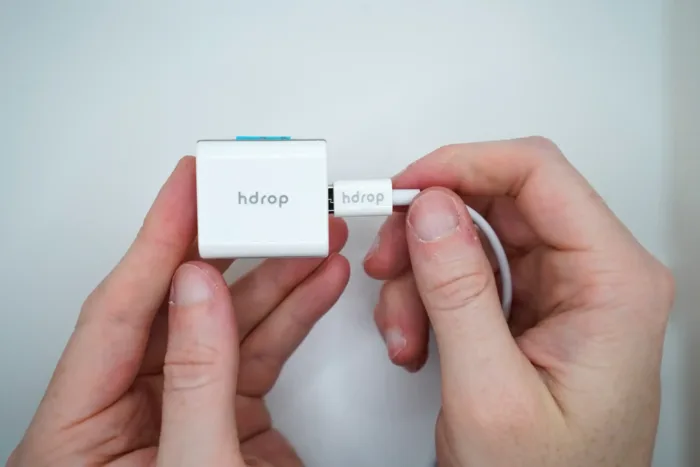
hDrop describes Gen 2 as a reusable device with a rechargeable battery. On the official product page, the brand references both “120 hours of active use per charge” and “more than 60-hour battery life” in different sections.
The company does not publicly reconcile these figures or define the conditions under which each applies. As presented, both statements describe a multi-session, rechargeable device rather than a single-use or disposable workflow.
Reviewer reports generally describe multi-session use between charges, with battery performance varying by session length, idle time, and whether the device stays paired/active between sessions.
hDrop vs disposable sweat patches (Nix / Flowbio)
The main differentiator is consumables. Disposable patch systems typically trade per-session simplicity for ongoing patch cost and waste. hDrop’s reusable design trades patch replenishment for a device-based workflow (pairing, maintenance, firmware) and pushes value toward running many sessions to build a stable baseline.
As an example of a patch-based workflow, Nix states its patches should be used for workouts of 45 minutes or longer, and a Wired review reported Nix literature indicating sweat data can take up to about 25 minutes to begin appearing. This is a workflow difference (session length and consumables), not a quality ranking.
Basis: Nix patch guidance; Wired review of Nix.
In terms of measurement reality, both classes are constrained by field conditions: sweat sampling and interpretation are sensitive to placement, contact, environment, and physiology. The PF&H evaluation provides a concrete caution for hDrop specifically: sweat rate underestimation can be meaningful for heavy sweaters. That kind of constraint tends to matter most when the device is used to set hard fluid targets rather than to build patterns.
| Dimension | hDrop Gen 2 (reusable wearable) | Disposable sweat patches (e.g., Nix / Flowbio) | Why it matters (workflow) |
|---|---|---|---|
| Consumables | Reusable hardware; recharge + reuse | Requires patch refills per use | Total cost and friction often depend on how many sessions you run. |
| Setup each session | Pair device + start session in app / integrations | Apply patch + follow patch workflow | Both require consistency; the “work” just shows up in different steps. |
| Time-to-signal | Designed for in-session estimates during activity | Some patch workflows require sustained duration before data appears | Short workouts can be a poor fit for patch-style sampling windows. |
| Best use pattern | Repeat sessions → baseline / trends | Often used as discrete tests (session-by-session) | Reusable systems tend to reward longitudinal use; patches often map to spot-checks. |
| Data framing | Zone / baseline interpretation across sessions | Protocol-dependent reporting (varies by brand) | Interpretation depends on each system’s model and assumptions. |
| Primary constraints | Sweat rate is estimated; performance can vary at very high sweat rates | Placement/contact + protocol sensitivity; limited by sampling conditions | Both are field sampling systems; placement and physiology drive variability. |
| Waste profile | Lower ongoing disposable waste | Single-use components per session | Relevant for athletes doing frequent testing blocks. |
Notes: Patch workflows and claims vary by brand. Duration/time-to-signal guidance is shown here as an example of published patch usage constraints (not a universal rule).
Common evaluation questions
Is hDrop Gen 2 “accurate”?
Third-party testing reported mixed results: sodium concentration estimates averaged about a +15% overestimate (~177 mg/L), while sweat rate (L/h) estimates averaged about a –36% underestimate versus pre/post body mass change.
Basis: Precision Fuel & Hydration field evaluation.
Can it replace a lab sweat test?
No. It is positioned as a training wearable that produces estimates; it can help refine strategy but does not replace controlled lab testing.
Basis: Precision Fuel & Hydration review framing and methodology notes.
Does it measure potassium as well as sodium?
The Gen 2 feature set is described as including both sodium and potassium loss estimates in product documentation and in third-party writeups.
Basis: hDrop product documentation; third-party reviews.
Who is it mainly for?
Endurance athletes and coaches running frequent sessions (multiple per week), especially during heat blocks or long-duration training, who want repeat-session pattern data rather than a one-off sweat test.
Basis: Reviewer workflow notes; PF&H emphasis on repeat-session value.
What is the biggest constraint to understand?
Sweat rate is estimated rather than directly measured. Independent testing shows underestimation can occur at high sweat rates (see Accuracy & validation notes), so outputs are best treated as prompts to validate rather than final numbers for hard fluid targets.
Basis: Precision Fuel & Hydration findings on sweat rate error.
Where it fits
hDrop Gen 2 sits as a reusable sweat-profiling layer for endurance training systems: it is designed for repeated sessions, baseline formation, and relative interpretation of sweat concentration and estimated losses. It tends to fit users who manage training data and will run repeat sessions, and it tends to be a poor fit for users who require lab-grade certainty or low-friction setup. Its most stable role is trend and pattern building, with direct measurement methods used when precision is required.

Purchase: hDrop Gen 2
Best suited to repeat-session use (baseline building). If you’re setting hard fluid targets for long events, validate sweat rate with body-mass change.
What you’re buying:
- • Gen 2 reusable sweat sensor (rechargeable)
- • App-based session reporting + baseline profiling
- • Sodium + potassium loss estimates (as reported)
Use it like this:
- • Run 3–6 consistent sessions to establish baseline
- • Compare patterns across heat, duration, intensity
- • Validate sweat rate when precision matters
Price: $249.99
Promo code: PLUMOSITY10 (10% off at checkout)
Plumosity may earn a commission if you purchase through this link. Promo code provided by hDrop and intended to be evergreen at time of publication.
Sources Used:
- Official product page/specification reference: hdroptech.com/product/hdrop-gen-2-wearable-hydration
- Independent evaluation (core third-party evidence): Precision Fuel & Hydration review
- Reviewer workflow notes and comfort/variability caveats: RunToTheFinish hDrop review
- Reviewer workflow notes and baseline/zones emphasis (complimentary unit disclosed): Six Minute Mile review
- Retail listing context and usage constraints (availability/positioning): The Feed listing
- Academic category context (wearable hydration monitoring scoping review, June 2025): JMIR mHealth and uHealth scoping review listings and citations.
- hDrop “Science Behind” / FAQ language (brand): hDrop FAQ / Science Behind page
- Nix patch guidance (workout duration guidance): Nix sweat patch refills product page (states “workouts of 45 minutes or longer”)
- Wired review of Nix (timing reference): WIRED review: Nix Hydration Biosensor (notes Nix literature says ~25 minutes for data to begin appearing)
Testing note: Plumosity did not perform laboratory validation for this sponsored feature. Accuracy and limitation statements are summarized from the PF&H evaluation and published reviews/documentation. Where brand-stated accuracy claims differ from third-party findings, both are presented as claims vs observations.
Sponsored Disclosure:
This article is a paid Plumosity Services editorial feature. Plumosity’s role is to describe what hDrop Gen 2 is, how it works, and who it's for using a definition-first structure, including explicit boundaries and constraints.