The Problem Usually Isn’t the Juice
Most juicer reviews focus almost entirely on juice quality.
But juice quality is usually not the reason people stop using a juicer.
The problems are usually around the machine: cutting produce, washing parts, clearing pulp, finding counter space, and dealing with the noise.
This guide looks at six juicers that handle those problems in different ways.
Quick Decision Table
| If Your Priority Is… | Best Choice | Why It Wins |
|---|---|---|
| Best overall balance | Nama J2 | Lets you load produce and step away instead of feeding continuously |
| Fastest low-prep workflow | Kuvings REVO830 | Large chute cuts down produce prep significantly |
| Easiest cleanup routine | Hurom H400 | Cleanup is shorter and less irritating than most cold press machines |
| Strongest long-term reliability reputation | Omega NC900 | Easy-to-find replacement parts and long ownership history |
| Best for frequent celery & greens juicing | Sana 727 | Handles fibrous greens and celery extremely well |
| Best value pick | Puraflows Auramist | Wide chute, quiet operation, and lower pricing than most premium cold press juicers |
Why Most People Stop Using Juicers
Prep, cleanup and storage are where a lot of juicers start losing people.
Cutting apples into chunks every morning gets old fast. Celery strings wrap around parts. Carrots jam if you rush them.
Strainers fill with wet pulp. Parts pile up beside the sink. Some machines leave enough cleanup afterward that people stop using them.
Storage matters too. Machines left on the counter usually get used. Machines pushed into a cabinet after every use usually do not.
How These Were Chosen
Most modern cold press juicers make good juice. That alone was not enough to make this list.
The machines that made this list each stood out for a different reason.
- ✅ Less produce prep
- ✅ Easier cleanup
- ✅ Better celery and greens handling
- ✅ Stronger long-term durability reputation
- ✅ Easier to keep using regularly
- ✅ Better value for newer juicing buyers
No machine does everything well. The picks below solve different problems.
The Six Juicer Picks
Start with the machine that solves the problem you are most likely to resent.


Best Overall Balance: Nama J2
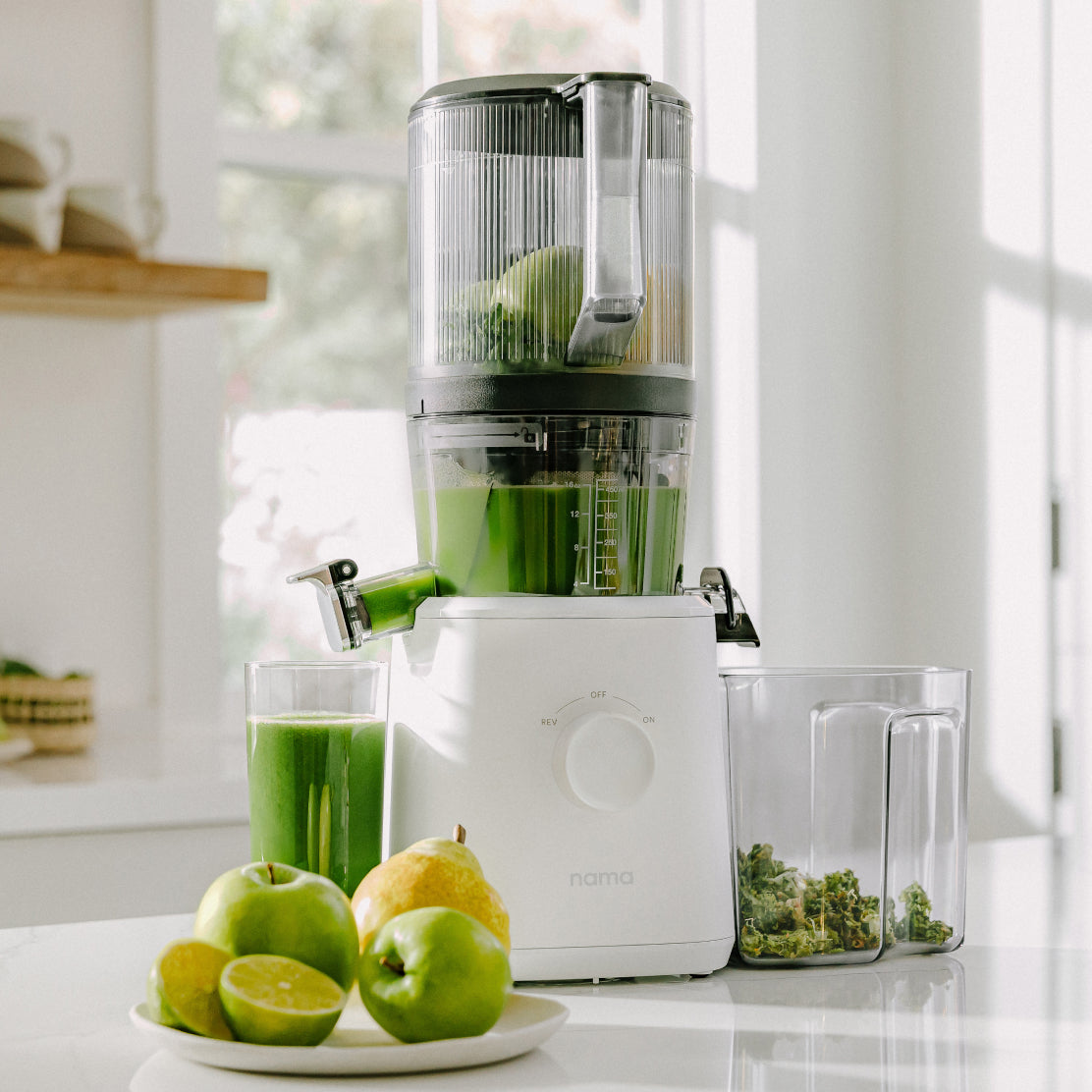
The Nama J2 earns the top spot because its self-feeding hopper removes the most annoying part of many cold press juicers: standing over the chute and feeding produce piece by piece.
You still need to cut larger produce, but the work is less fussy. Load the hopper, close the lid, and the machine pulls ingredients down on its own.
It is not the smallest or cheapest juicer here, and cleanup is still hand-wash only. But for regular use, the J2 has the best mix of lower active effort, strong juice quality, quiet operation, and long-term support.
What It Does Well
- Self-feeding hopper reduces constant produce feeding
- Good choice for larger batches and regular juicing
- Handles mixed produce without much babysitting
- Quiet enough for normal kitchen use
- 15-year warranty listed by Nama
Tradeoffs
- Hand-wash only
- Screen still needs brushing
- Large for small kitchens: 9.8"W × 9"D × 17.7"H
- Premium price at $599
- Not worth it for occasional juicing
What It’s Like To Use
The J2 is easiest to justify if you juice often enough to care about the process, not just the final glass.
The hopper changes the rhythm. You prep the produce, load the chamber, and stay nearby while the machine does the feeding.
Cleanup is the main tradeoff. The parts need hand washing, the screen needs attention, and everything needs space to dry. The difference is that the juicing itself asks less from you before cleanup starts.
Who should skip this: buyers with tight counter space, occasional juicers, or anyone unwilling to hand-wash parts after each use.
Fastest Low-Prep Workflow: Kuvings REVO830
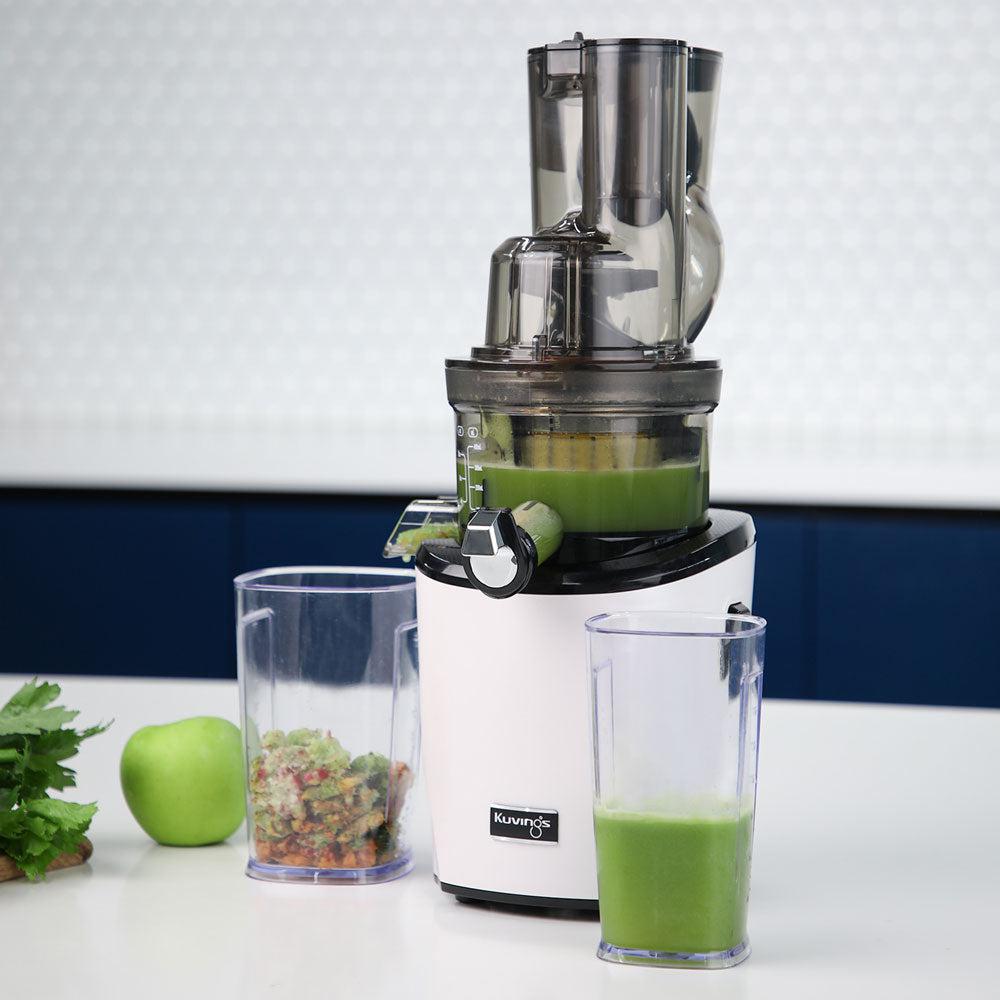
The REVO830 is designed to reduce produce prep time.
The dual-feed chute system changes the workflow immediately. Long ingredients like carrots and celery feed through the narrow auto-cut chute, while apples and larger produce go through the wider flip gate.
That means less time standing at the cutting board before the machine is even on.
What It Does Well
- Greatly reduces produce prep
- Auto-cut chute handles carrots and celery unusually well
- Wide feed chute accepts larger produce pieces
- Strong juice yield with fibrous ingredients
- Quiet for a large cold press juicer
Tradeoffs
- Still requires hand washing
- Large and heavy at roughly 16 lb
- Takes up noticeable counter space
- Premium price at $699.99
- Cleanup is slower than easy-clean systems like the Hurom H400
What It’s Like To Use
The REVO830 removes a surprising amount of friction before juicing starts.
You spend less time slicing carrots, chopping apples, and trimming produce into smaller pieces just to fit the machine.
The tradeoff comes afterward. Cleanup still involves a strainer, multiple parts, and hand washing. Buyers who hate prep work more than cleanup usually end up liking the REVO830 a lot.
Who should skip this: buyers whose main frustration is cleanup rather than prep work, or anyone short on counter space.
Easiest Cleanup Routine: Hurom H400
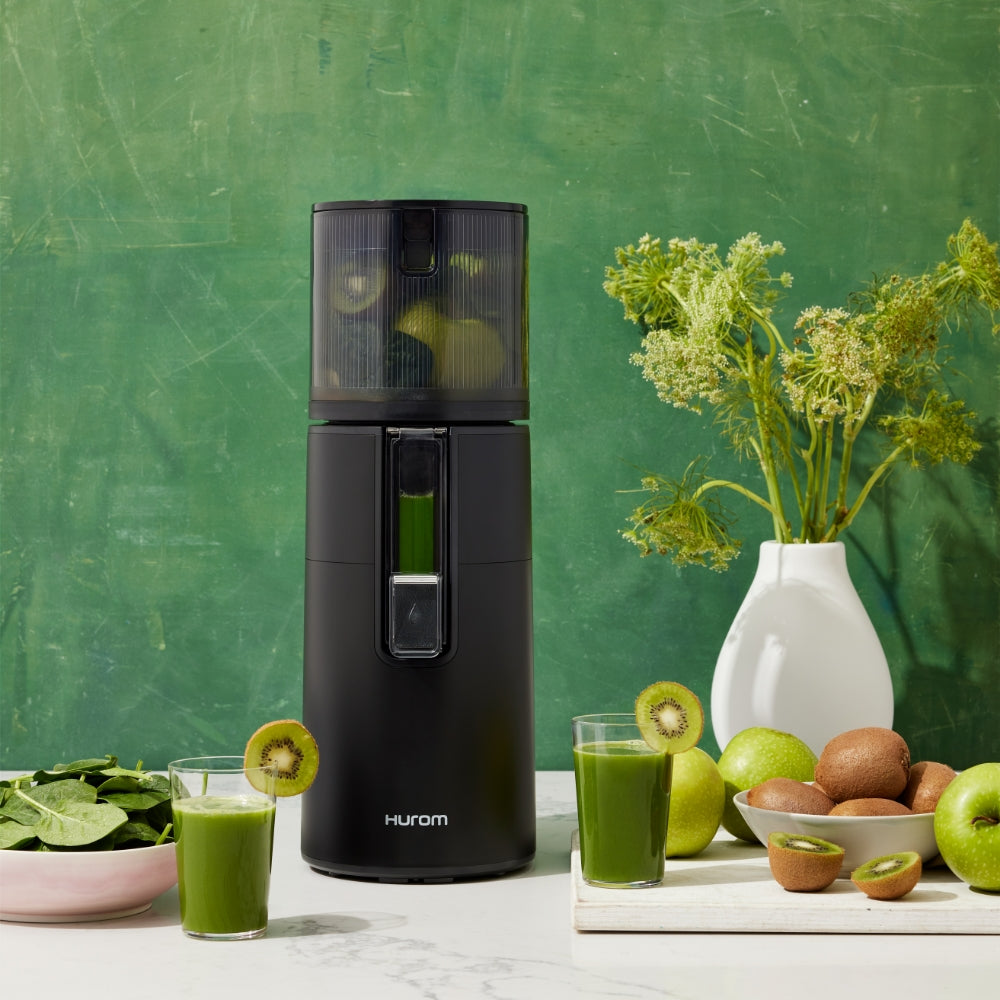
The H400 is the easiest juicer here to clean regularly.
Instead of a traditional fine mesh strainer, the H400 uses Hurom’s Easy Clean auger system. That removes most of the screen scrubbing that makes many cold press juicers irritating to wash after repeated use.
It still needs hand washing, but the cleanup process is shorter, simpler, and easier to repeat consistently.
What It Does Well
- Much easier cleanup than traditional fine-screen juicers
- Self-feeding hopper reduces active feeding
- Quiet enough for normal morning use
- Good fit for regular batch juicing
- 15-year motor and parts warranty
Tradeoffs
- Juice contains slightly more pulp than fine-screen systems
- Still requires moderate produce prep
- Large footprint for smaller kitchens
- Premium price at $749
- Less specialized for greens than machines like the Sana 727
What It’s Like To Use
The H400 changes the part of juicing that usually kills consistency: the sink afterward.
The parts rinse faster, there is less scrubbing, and the machine feels less annoying to clean repeatedly during the week.
The tradeoff is texture. The H400 produces slightly pulpier juice than traditional fine-screen cold press machines. Many buyers accept that trade because the machine is easier to keep using regularly.
Who should skip this: buyers who care more about the absolute smoothest juice texture than cleanup convenience.
Strongest Long-Term Reliability Reputation: Omega NC900
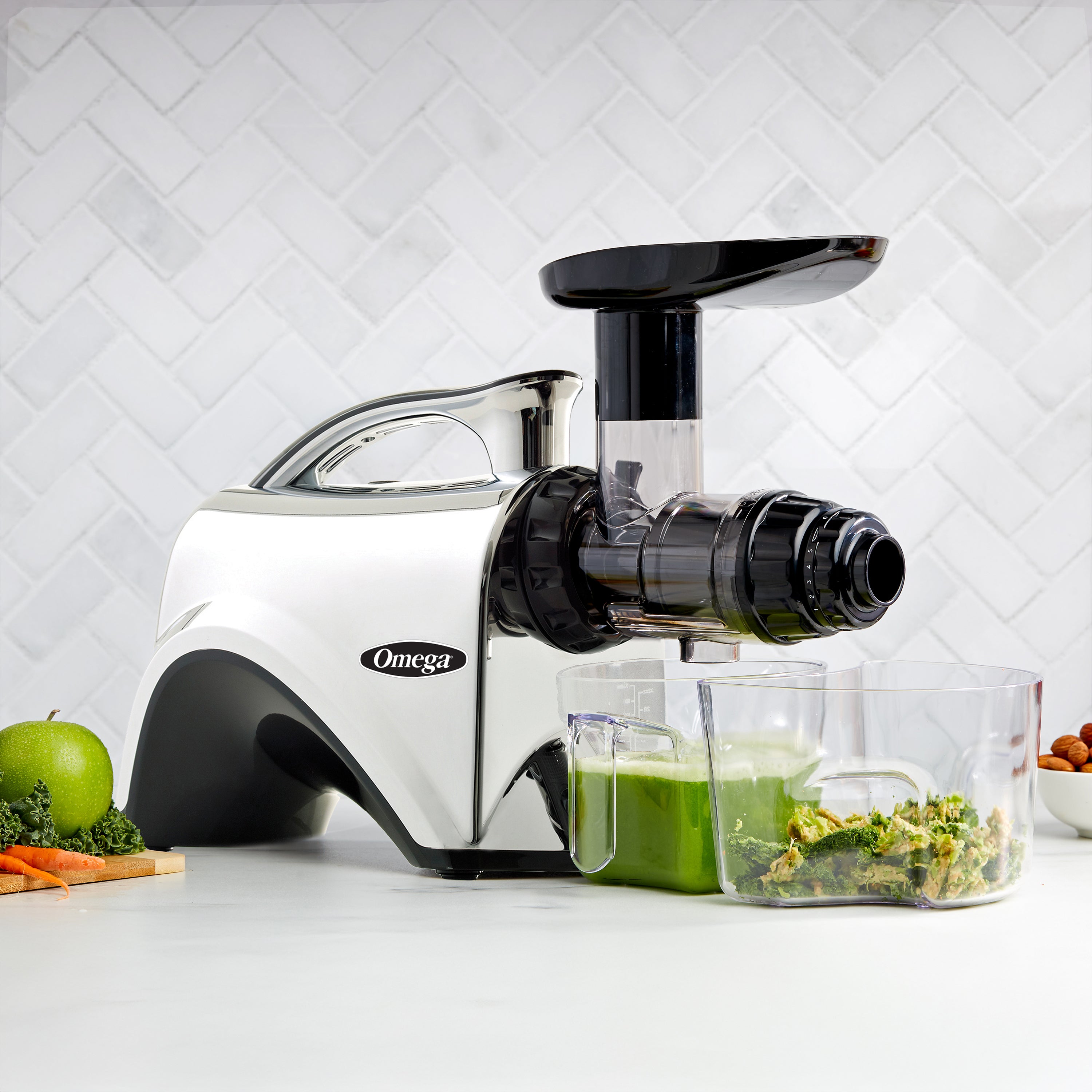
The NC900 is the long-haul ownership pick.
It feels older-school compared to modern self-feeding juicers. You feed produce continuously, prep work is heavier, and the routine is slower overall.
What keeps the NC900 relevant is reliability. The machine has been around for years, replacement parts are easy to find, and many owners keep them running long after newer juicers disappear from the market.
What It Does Well
- Excellent long-term durability reputation
- Strong celery and greens performance
- Easy-to-find replacement parts
- 15-year warranty
- Can also handle nut milks, nut butters, and pasta attachments
Tradeoffs
- Requires more produce prep than hopper systems
- Requires continuous feeding during use
- Long horizontal footprint
- Slower overall workflow than newer self-feeding designs
- Not the best fit for buyers chasing convenience
What It’s Like To Use
The NC900 feels mechanical in a way many newer juicers do not.
You prep produce, feed it steadily, and work with the machine the entire time. There is no hopper system reducing the workload for you.
What you get in return is predictability. The NC900 has one of the longest ownership histories in the category, and buyers who prioritize repairability and long-term support still trust it for a reason.
Who should skip this: buyers looking for low-prep convenience, self-feeding operation, or the fastest daily workflow.
Best for Frequent Celery & Greens Juicing: Sana 727

The Sana 727 is the specialist pick in this guide.
It is designed for buyers who juice celery, wheatgrass, herbs, and leafy greens regularly enough to care about extraction quality, dry pulp, and how the machine handles fibrous produce over time.
This is not the easiest or fastest juicer here. It is the one most focused on greens-heavy performance.
What It Does Well
- Excellent celery and greens performance
- Handles fibrous produce with fewer clogs and interruptions
- Produces very dry pulp with greens-heavy recipes
- Quiet brushless motor
- Strong fit for committed daily juicing routines
Tradeoffs
- Requires significant produce prep
- No self-feeding hopper
- Slower workflow than newer convenience-focused systems
- Cleanup still requires attention after greens-heavy sessions
- Less compelling for casual mixed-fruit juicing
What It’s Like To Use
The Sana 727 feels more deliberate than modern hopper-style juicers.
You prep produce carefully, feed ingredients continuously, and work with the machine throughout the session.
That slower workflow makes more sense once greens and celery become the main reason you own a juicer. The Sana 727 is strongest when efficiency and consistency with fibrous produce matter more than convenience.
Who should skip this: buyers looking for low-prep convenience, self-feeding operation, or an easier all-purpose juicer.
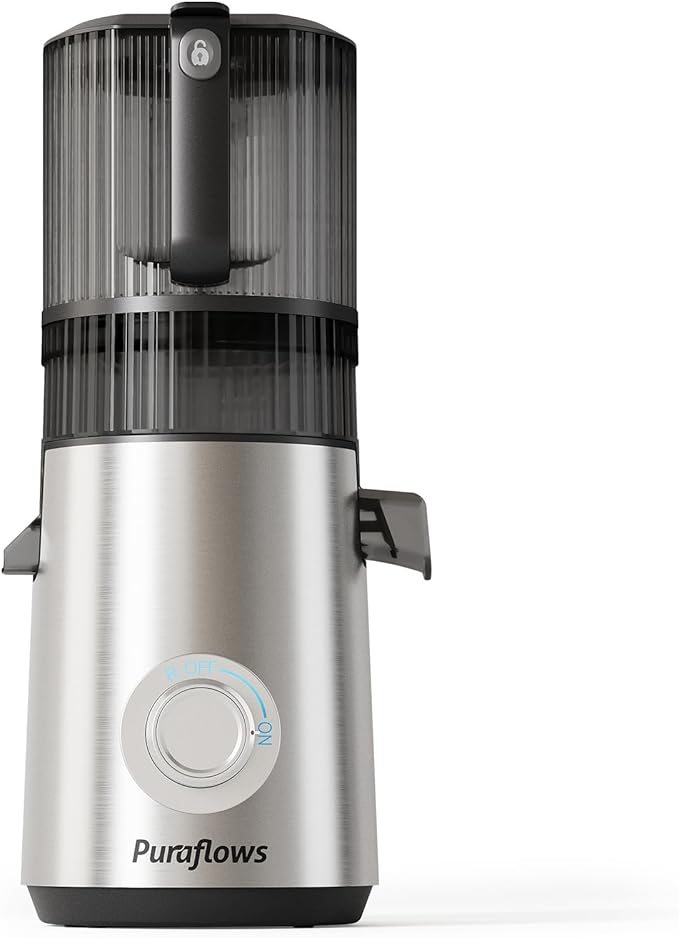
Best Value Pick: Puraflows Auramist
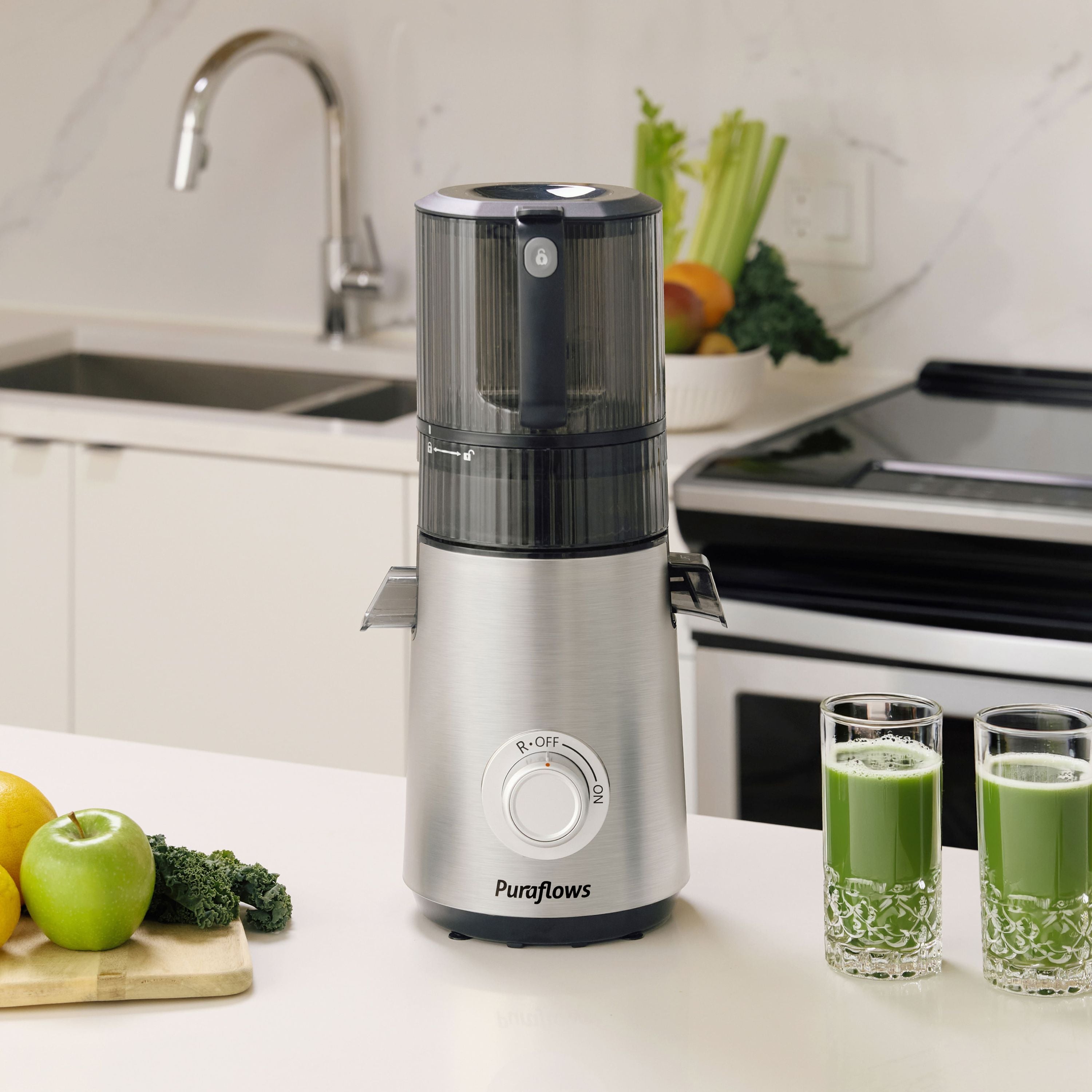
The Puraflows Auramist is one of the newer machines in this guide, which also explains why long-term ownership data is still limited.
The Auramist stands out because it tries to simplify the daily routine without pushing into the pricing territory of premium brands like Nama or Hurom.
The machine is smaller, quieter, and less intimidating than many large cold press systems. Early feedback around cleanup and general ease of use has also been encouraging.
Plumosity also conducted a full hands-on review of the Puraflows Auramist, based on three months of testing covering prep work, cleanup, juice quality, pulp ejection, noise, storage, and produce handling.
What It Does Well
- More affordable than many premium cold press juicers
- Smaller footprint than many hopper-style systems
- Quiet operation
- Straightforward daily workflow
- Approachable for newer juicing buyers
Tradeoffs
- Limited long-term ownership history
- Replacement-part ecosystem is still unclear
- Support reputation is less established
- Less proven durability than Omega, Nama, or Hurom
- Smaller user base means fewer long-term reliability patterns
What It’s Like To Use
The Auramist feels more manageable than many oversized cold press juicers.
It takes up less visual space in the kitchen, the workflow is simpler, and the machine feels aimed at buyers who want fewer barriers to regular use.
The uncertainty is long-term ownership. Right now, the Auramist makes more sense as a promising value-oriented pick than a fully proven long-haul recommendation.
Who should skip this: buyers who prioritize proven long-term reliability, broad replacement-part availability, or an established service history.
Match the Juicer to the Problem You Want Solved
| Juicer | Prep Work | Cleanup | Counter Space | Best Fit |
|---|---|---|---|---|
| Nama J2 | Moderate | Moderate | Large | Best overall balance |
| Kuvings REVO830 | Low | Moderate-high | Large | People who hate chopping produce |
| Hurom H400 | Moderate | Low | Moderate | People who hate cleanup |
| Omega NC900 | High | Moderate | Long horizontal footprint | Long-term durability buyers |
| Sana 727 | High | Moderate-high | Moderate | Frequent greens and celery juicing |
| Puraflows Auramist | Low | Moderate | Moderate | Value-focused buyers |
Final Thoughts
If prep work is the part you already know you will resent, start with the Kuvings REVO830 .
If cleanup is what killed juicing for you before, the Hurom H400 makes the strongest case for daily use.
If you want the strongest overall balance of convenience, juice quality, and long-term usability, the Nama J2 is still the safest place to start.
If price is the reason you keep hesitating, the Puraflows Auramist is the value pick. Just know it has less long-term history than the established brands above.
The difference between using a juicer for two weeks or two years usually starts at the cutting board or in the sink.