Not all "cooling" sheets solve the same problem
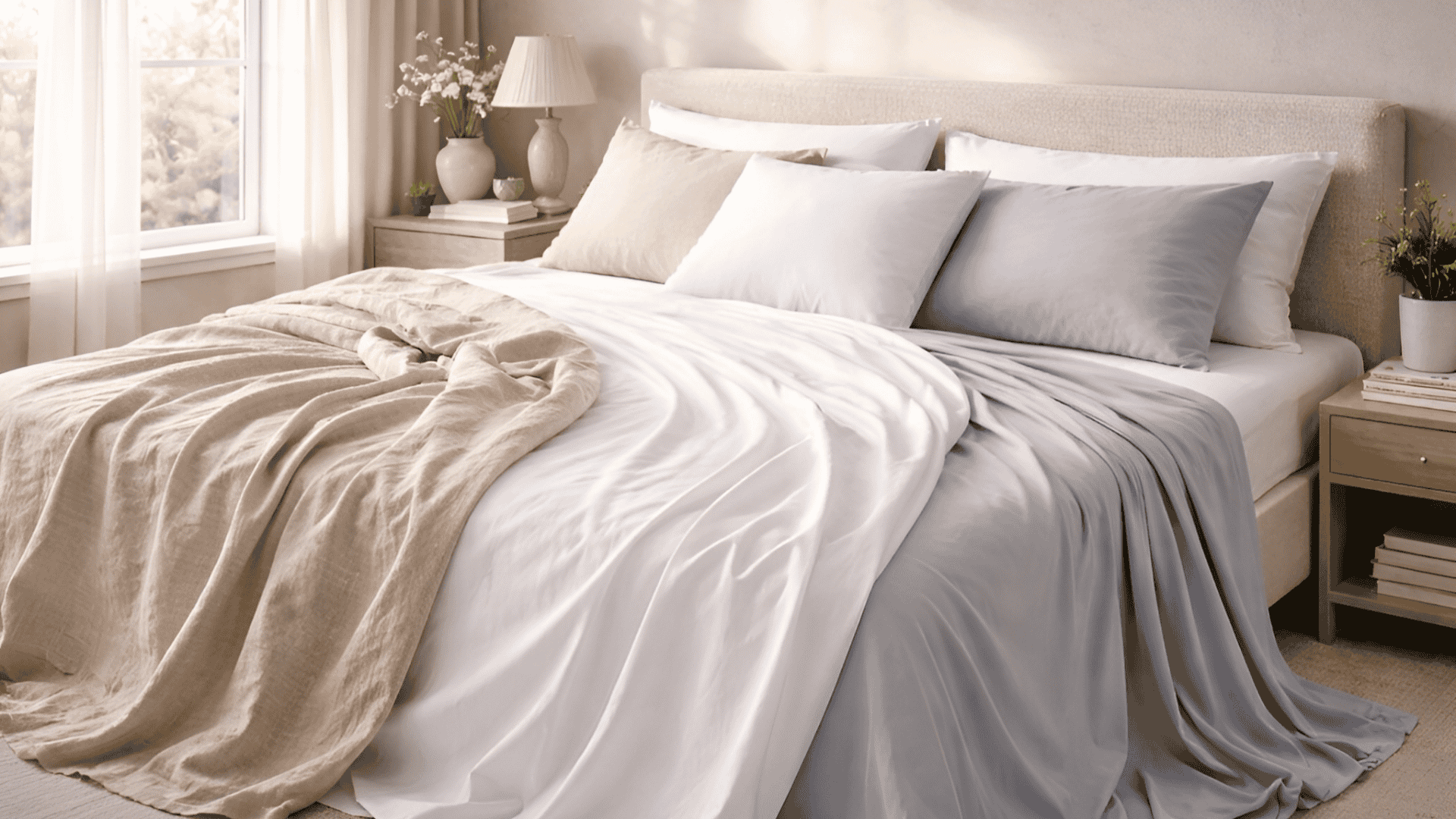
Overheating at night has different causes — and the cause determines the fix. Some sleepers trap heat and need more airflow. Others sweat and need a fabric that can absorb and release moisture before the bed becomes damp.
Linen, percale cotton, and TENCEL can all work well, but they solve different versions of the problem. The right choice depends less on the word “cooling” and more on whether your main issue is trapped heat, humidity, or both.
Which sheets should you choose?
🌡️ Dry Heat Buildup
Hot, dry sleepers
Choose Linen
🛏️ General Overheating
Most hot sleepers
Choose Percale Cotton
💧 Sweat / Humidity
Night sweats, clammy sleep
Choose TENCEL™ (Lyocell)
Featured Linen pick

Riley Home Linen Sheet Set
Price: $280 / Queen
Euroflax linen with a garment-washed finish that reduces the rougher starting feel typical of linen.
Featured Percale pick

Parachute Percale Sheet Set
Price: $269 / Queen
Long-staple Egyptian cotton percale with a crisp, breathable weave. Designed to stay cool and structured, with a clean, matte finish that softens slightly over time.
Featured TENCEL pick

SIJO AiryWeight Eucalyptus Sheet Set
Price: $185 / Queen
100% TENCEL™ lyocell derived from eucalyptus with a smooth, lightweight weave focused on moisture handling and a cooler surface feel.
How sheets actually keep you cool
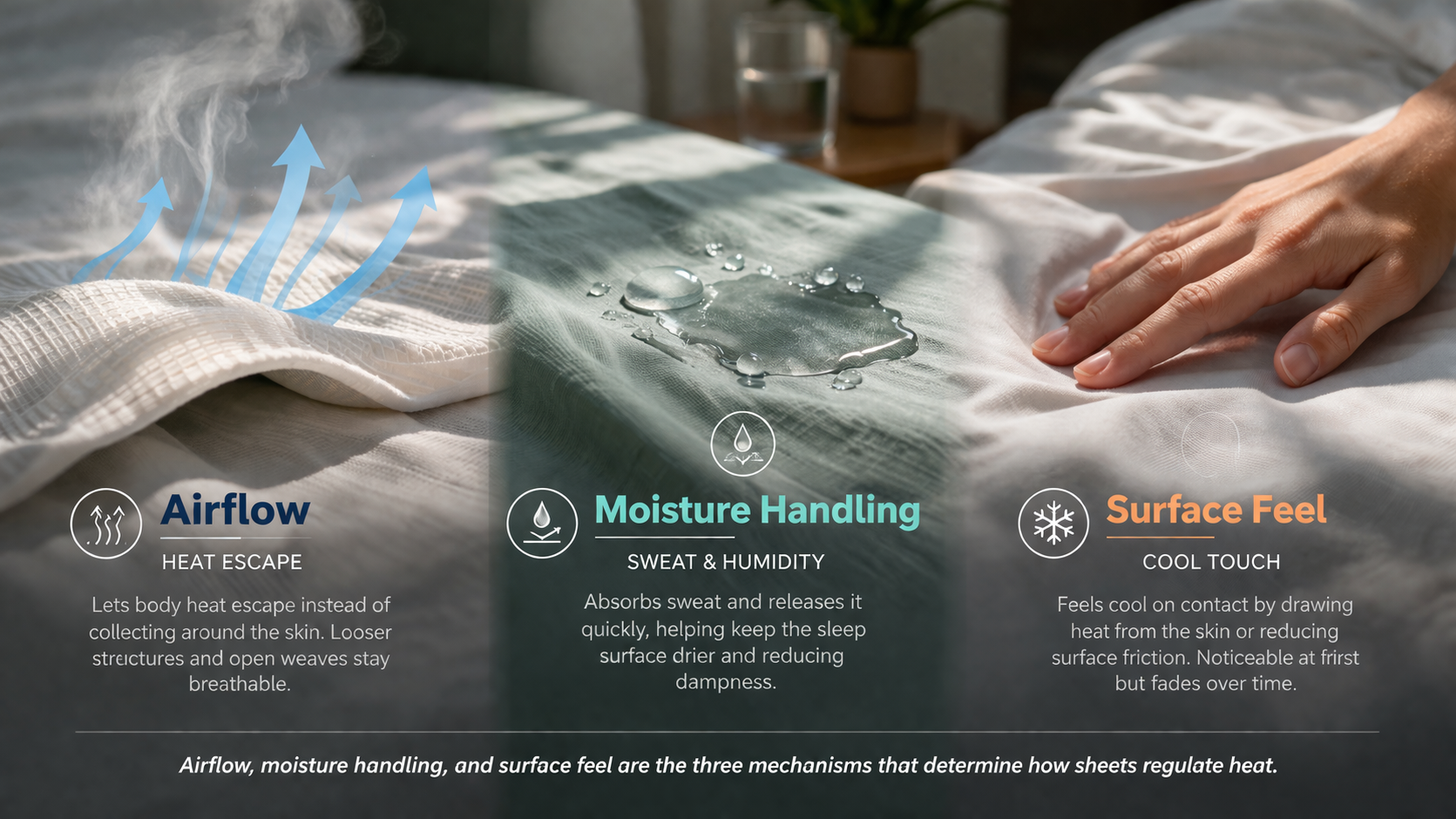
Cooling is not a single property. For bedding, the three mechanisms that matter are airflow, moisture handling, and surface feel.
Think of it this way: linen releases heat, percale balances airflow, and TENCEL manages moisture.
Airflow
Airflow lets body heat escape instead of collecting around the skin. This is where looser structures and more open weaves matter most. Percale is widely favored for hot sleepers because its plain weave stays crisp and breathable, while linen is known for an even more ventilated structure.
Moisture handling
Moisture handling determines how well a fabric absorbs sweat and releases it. A drier sleep surface usually feels cooler, especially in humid rooms or during night sweats. TENCEL™ lyocell is designed to absorb and release moisture efficiently, which helps limit dampness at the surface of the bed.
Surface feel
Some fabrics feel cool on contact because they pull heat from the skin quickly or create less friction at the surface. That can help at first, but it matters less over a full night than airflow or moisture handling.
Material mapping:
- Linen → maximum airflow; best when heat builds up and the bed feels hot but dry
- Percale Cotton → consistent airflow with a structured feel; best for most hot sleepers
- TENCEL™ (Lyocell) → moisture-driven cooling; best when sweat or humidity leads to dampness
Linen vs Percale vs TENCEL: head-to-head
| Material | Best For | Cooling Mechanism | Main Weakness | Feel |
|---|---|---|---|---|
| Linen | Strong airflow, warm sleepers, hot climates | Heat release through a looser fiber structure and more air exchange | Texture, wrinkling, higher cost | Airy, textured |
| Percale Cotton | Most hot sleepers, year-round use, balanced cooling | Consistent airflow from a plain weave | Less moisture handling than TENCEL | Crisp, matte |
| TENCEL | Night sweats, humidity, clammy sleep | Moisture absorption and release | Slightly less ventilated feel than linen or percale | Smooth, soft |
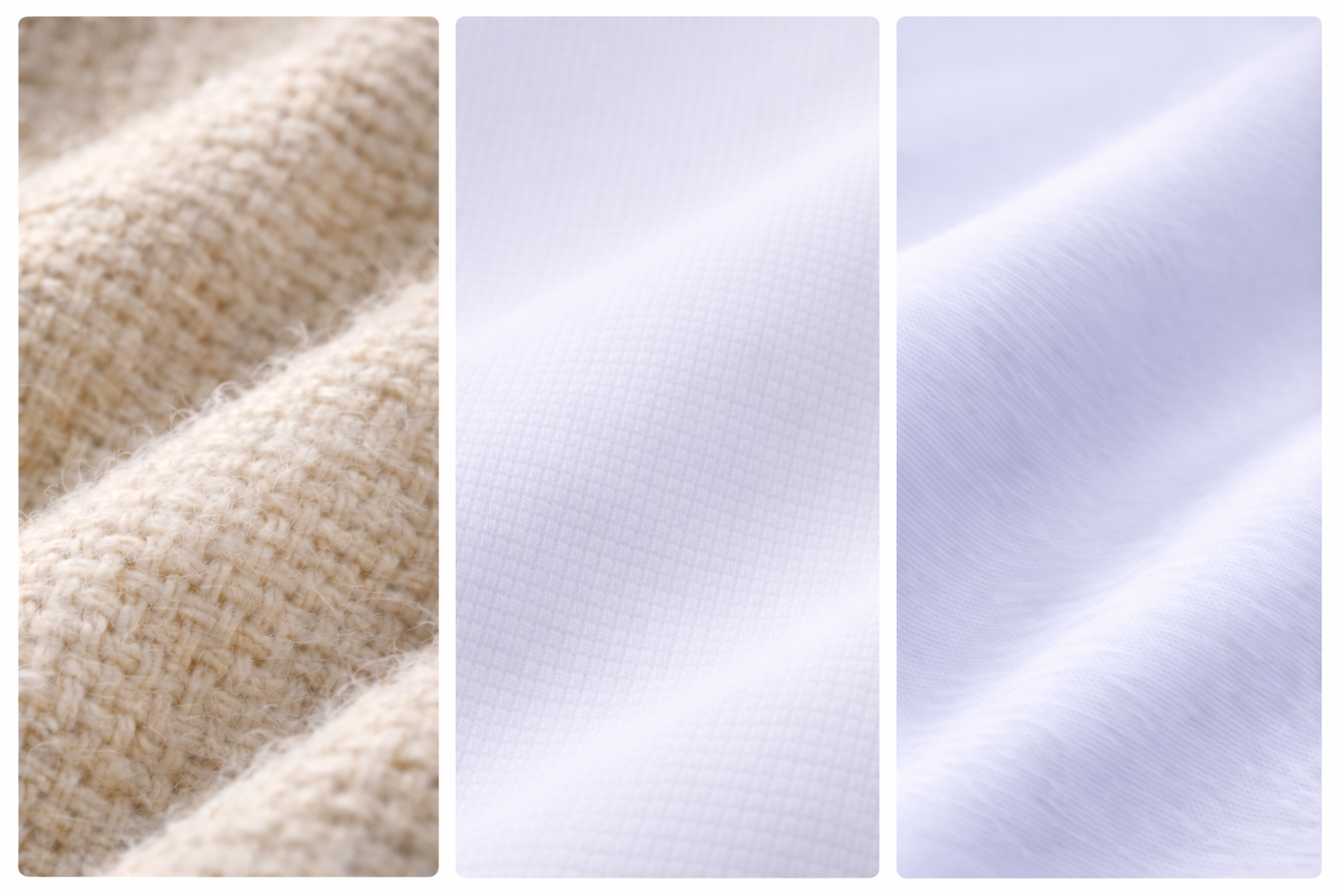
Short read: linen is the airflow specialist, percale is the safest default, and TENCEL is the moisture specialist.
Linen
Linen is made from flax and has a naturally looser, more irregular structure than most cotton fabrics. That structure allows more air to pass through the fabric, helping heat dissipate instead of collecting around the body. High-quality linen also absorbs moisture without immediately feeling wet, which helps it stay comfortable through long warm nights.
Linen sits at the airflow extreme. It releases heat more effectively than percale, which is more balanced, but does less moisture handling than TENCEL, which is designed to manage sweat and humidity.
It works best for people who notice the bed getting warm or stuffy rather than damp.
Best for
- Hot sleepers who feel heat buildup more than sweat
- Warm or dry climates
- People who want maximum breathability
Trade-offs
- Noticeable texture at first
- Wrinkles easily
- Usually costs more than percale
Good linen is typically the most durable fabric in this group. The “maintenance” issue is the wrinkled, lived-in look, not fragility.
Linen Sheets | Plumosity Picks
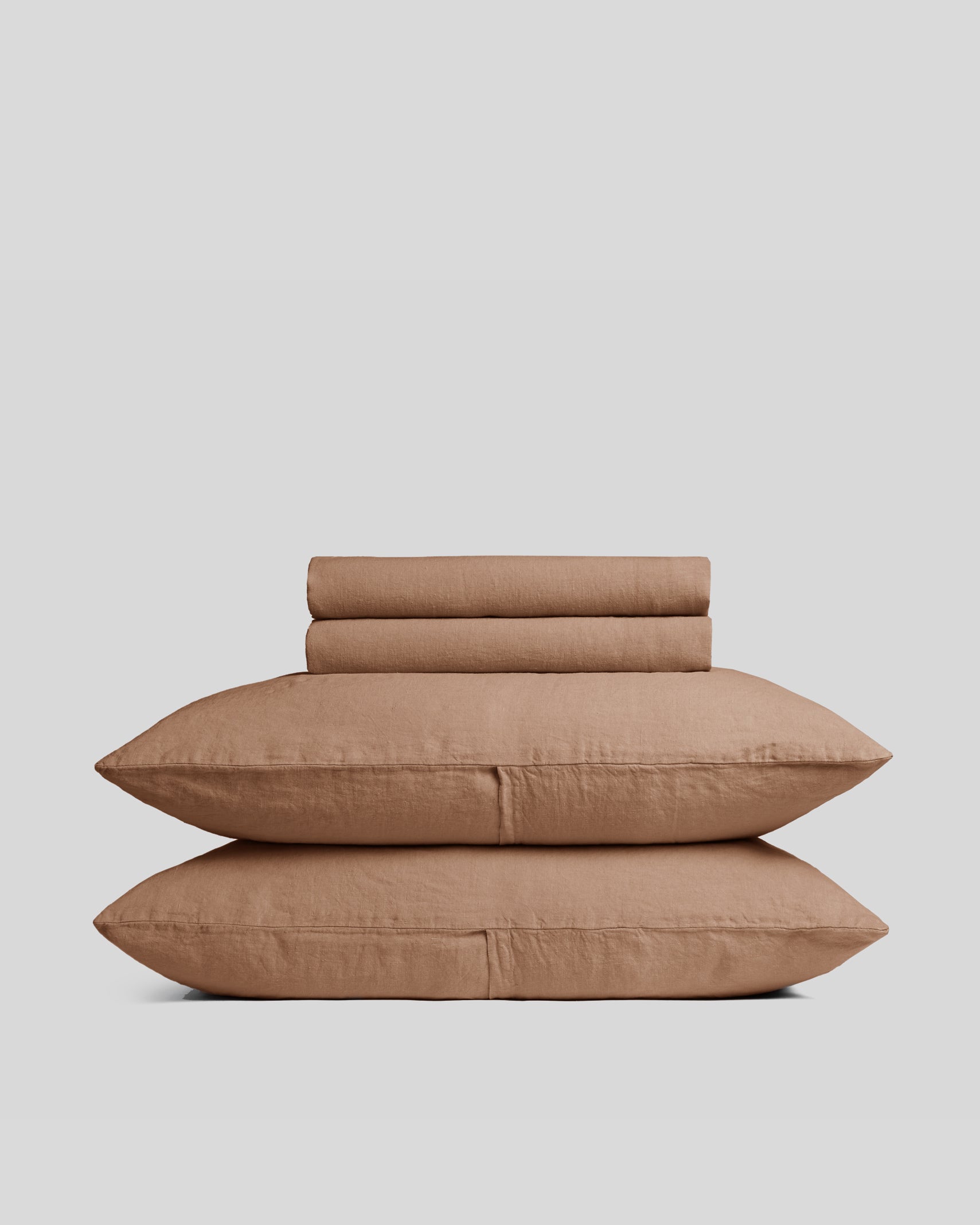
Parachute Linen Sheet Set
Price: $349 / Queen
100% European flax linen, produced in Portugal. The construction sits in the middle of the linen range, keeping airflow high without feeling overly thin.
👉 Best for buyers who want balanced airflow, durability, and consistency.
View ProductCuddledown Airy Washed Linen Sheets
Price: $179 / Queen
Positioned toward a lighter, more breathable construction. Leans more toward airflow than structure compared to mid-weight linen.
👉 Best if you want linen at the lighter end of the range.
View Product
Riley Home Linen Sheet Set
Price: $280 / Queen
Euroflax linen with a garment-washed finish that reduces the rougher starting feel typical of linen.
👉 Best for buyers who want linen airflow without the rougher starting texture.
View ProductPercale Cotton
Percale is a plain-weave cotton fabric, typically woven in a one-over, one-under pattern. This structure keeps the fabric light, crisp, and breathable, allowing steady airflow and helping heat dissipate rather than collect around the body.
Percale sits between linen and TENCEL. It allows more airflow than TENCEL, but does not reach the open, highly ventilated feel of linen.
It works best for people who sleep warm but not damp—those who want steady breathability without maximum airflow or strong moisture control.
Best for
- Most hot sleepers
- People who want a crisp, hotel-style feel
- Buyers who want balanced performance
Trade-offs
- Handles sweat less effectively than TENCEL
- Less smooth than lyocell-based fabrics
- Very high thread counts can reduce airflow
What to look for
- Percale weave
- Roughly 200–400 thread count
- Lighter construction over dense “luxury” builds
Thread count alone is a poor quality signal. Higher counts often mean tighter yarn packing, which can reduce airflow. Hot sleepers typically do better in lower, more breathable ranges.
Percale Cotton Sheets | Plumosity Picks
Parachute Percale Sheet Set
Price: $269 / Queen
Long-staple Egyptian cotton percale with a crisp, breathable weave. Designed to stay cool and structured, with a clean, matte finish that softens slightly over time.
👉 Best for hot sleepers who want a classic, breathable percale with a slightly softer feel over time.
View Product
Riley Home Percale Sheet Set
Price: $260 / Queen
Long-staple cotton percale with a crisp, matte finish. The weave prioritizes airflow and structure, giving it that classic hotel-sheet feel that stays cool through the night.
👉 Best for hot sleepers who want a crisp, breathable sheet with a structured feel.
View Product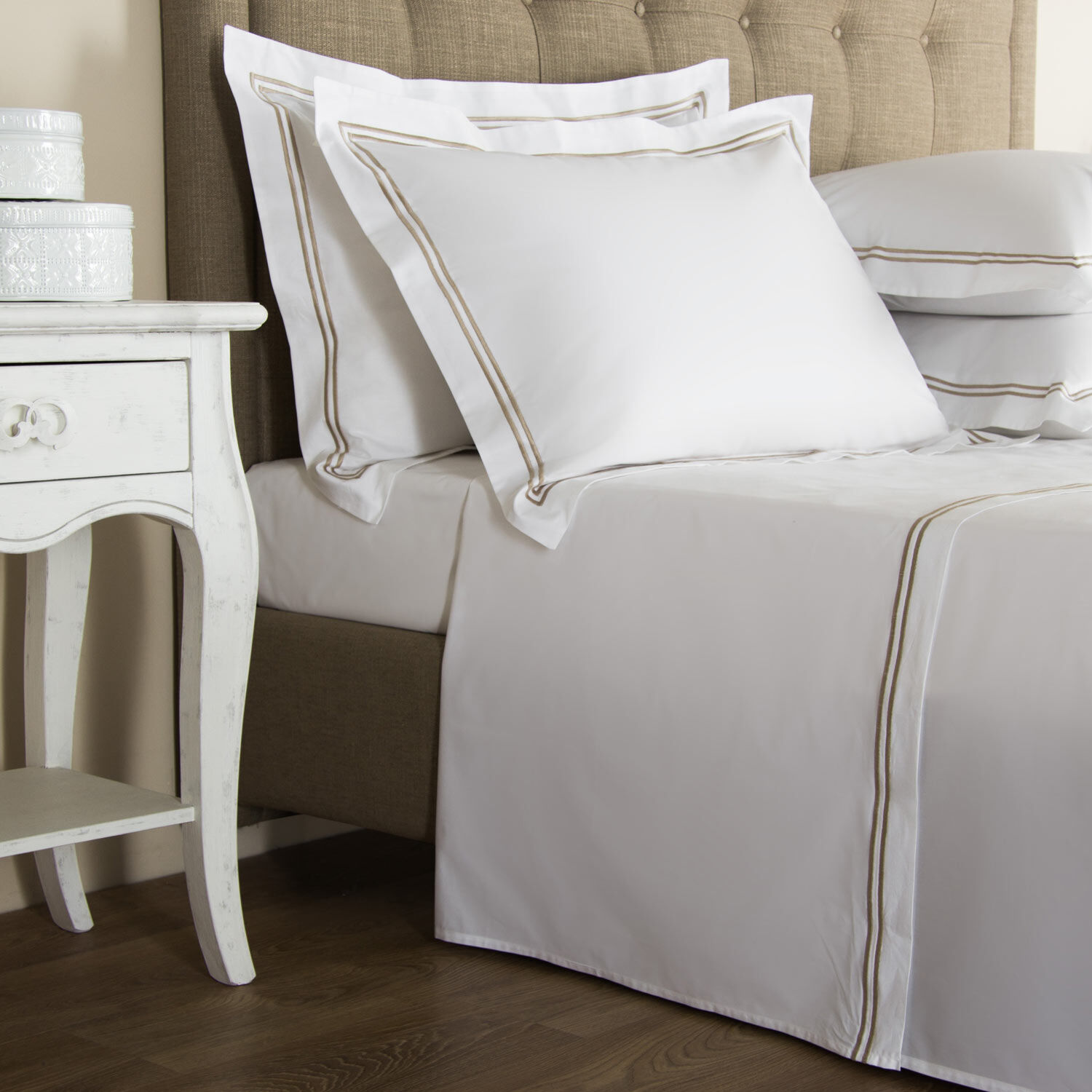
Frette Classic Sheet Set
Price: $650 / Queen
Premium long-staple cotton percale with a refined, hotel-grade finish. The weave is crisp, breathable, and structured, delivering that signature luxury hotel feel.
👉 Best for buyers who want true luxury percale with a crisp, hotel-quality feel.
View ProductTENCEL™ (Lyocell)
TENCEL is a branded lyocell fiber made from wood pulp. Its structure allows it to absorb and release moisture efficiently, reducing humidity near the skin and helping the bed feel less clammy over the course of the night.
TENCEL sits at the moisture-control end of the spectrum. It handles sweat more effectively than percale, which is more balanced, but is less breathable than linen, which is designed for maximum heat release.
It works best for people who wake up feeling damp or clammy rather than just warm—those dealing with sweat, humidity, or moisture buildup at night.
Best for
- Night sweats
- Humid rooms or climates
- Sleepers who prefer a smoother fabric
Trade-offs
- Less airy than linen at the top end
- Less crisp than percale
- Some constructions need gentler care than cotton
Quick check: if you wake up feeling damp rather than just hot, TENCEL moves higher on the list.
TENCEL™ (Lyocell) Sheets | Plumosity Picks
SIJO AiryWeight Eucalyptus Sheet Set
Price: $185 / Queen
100% TENCEL™ lyocell derived from eucalyptus with a smooth, lightweight weave. Focuses on moisture handling and a cooler surface feel compared to most cotton options.
👉 Best for sleepers dealing with sweat or humidity who want a smoother, cooler-feeling fabric.

Buffy Breeze Sheet Set
Price: $199 / Queen
Eucalyptus-derived TENCEL™ lyocell with a smoother, slightly weightier feel than lighter sets. Prioritizes moisture control and drape over the lighter, airier profile of performance-first options.
👉 Best for sleepers who want stronger drape, a smoother feel, and moisture control over a lighter, airier sheet.
View Product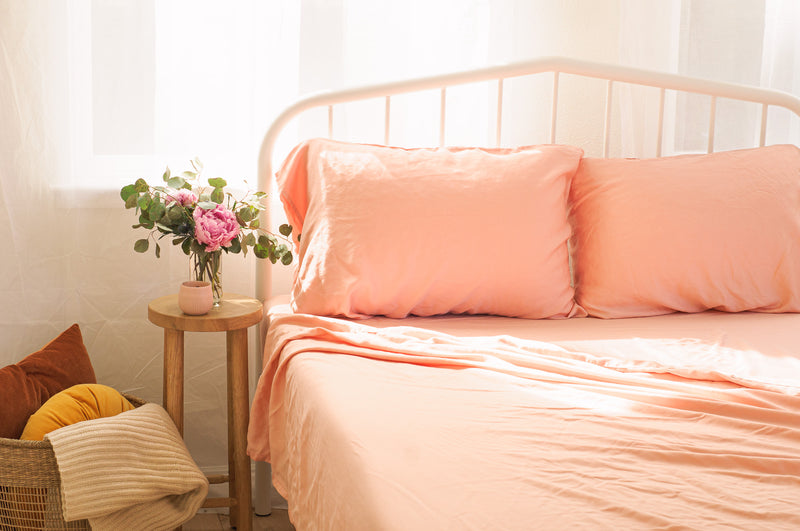
Nest Bedding TENCEL Sheet Set
Price: $162 / Queen
100% TENCEL™ lyocell with a smooth, breathable feel and deep-pocket construction that fits thicker mattresses more securely than many sheet sets. Focuses on moisture handling with a softer, practical everyday feel.
👉 Best for sleepers who want moisture-focused TENCEL performance with better fit for deeper mattresses.
View ProductWhich material fits the way you sleep?
Choose Linen if:
- You feel heat buildup more than sweat
- You want maximum airflow
- You do not mind texture or wrinkling
Choose Percale if:
- You want the best all-around choice
- You sleep warm but not heavily sweaty
- You like a crisp, light sheet
Choose TENCEL if:
- Sweat and humidity are the main issue
- You wake up feeling damp or clammy
- You want a smoother hand-feel without using sateen
If you are not sure where you fall, start with percale. It is the broadest fit of the three and the least likely to feel like the wrong choice unless sweat is clearly the main issue. If both heat buildup and dampness are major problems, TENCEL usually addresses the harder part of the problem more effectively.
Where bamboo sheets fit in
Bamboo sheets are usually made from bamboo that has been processed into either viscose or lyocell. That puts them closer to TENCEL than to linen or percale: smoother fabrics that generally rely more on moisture handling than airflow.
Bamboo lyocell is usually the better version to look for. It tends to behave more like TENCEL, while bamboo viscose varies more in durability, consistency, and overall performance.
For hot sleepers, bamboo fits best as a moisture-focused option rather than an airflow-focused one. It makes the most sense for people dealing with sweat, humidity, or a preference for a smoother fabric.
Practical takeaway
- Bamboo lyocell usually makes more sense than bamboo viscose
- Good bamboo sheets can work well for sweaty sleepers
- If a label says “bamboo” but does not say viscose or lyocell, treat it as an unanswered question, not a quality indicator
Bamboo sheets | Plumosity Picks
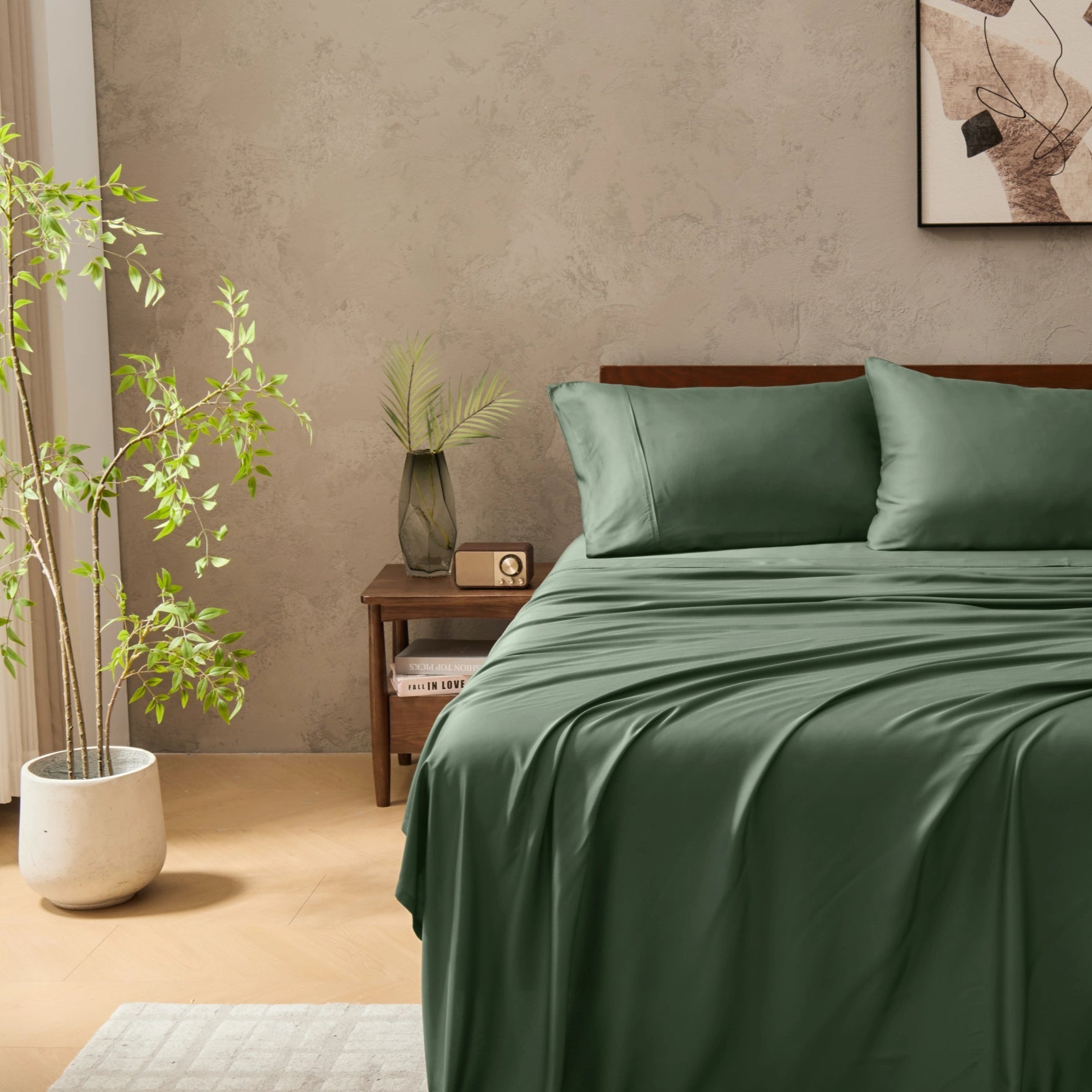
Gökotta ClassicBreeze™ Bamboo Viscose Sheet Set
Price: $120 / Queen
Bamboo-derived viscose in a lighter-weight construction designed for airflow and moisture handling. Sits at the more accessible end of the bamboo range, with corner straps that help keep the fitted sheet in place.
👉 Best for shoppers who want a more affordable bamboo option and do not need the stronger consistency of bamboo lyocell.
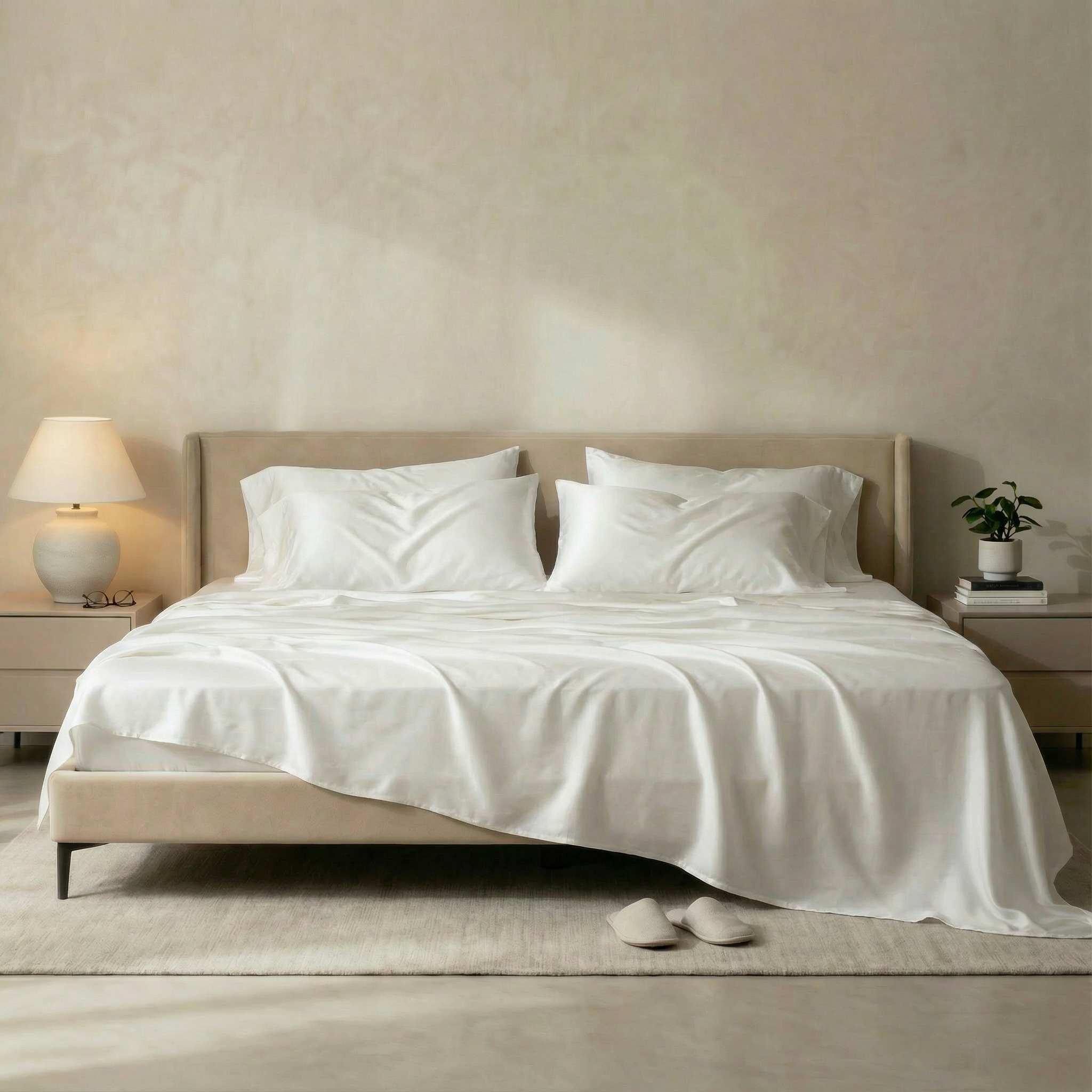
Ettitude Signature Bamboo Sheet Set
Price: $359 / Queen
Bamboo lyocell (CleanBamboo™) in a sateen weave with a very smooth, draped feel. Prioritizes moisture handling and softness over airflow, with a heavier, more fluid construction than lighter bamboo options.
👉 Best for sleepers who want a very smooth, premium-feeling bamboo lyocell sheet with strong moisture control.
View Product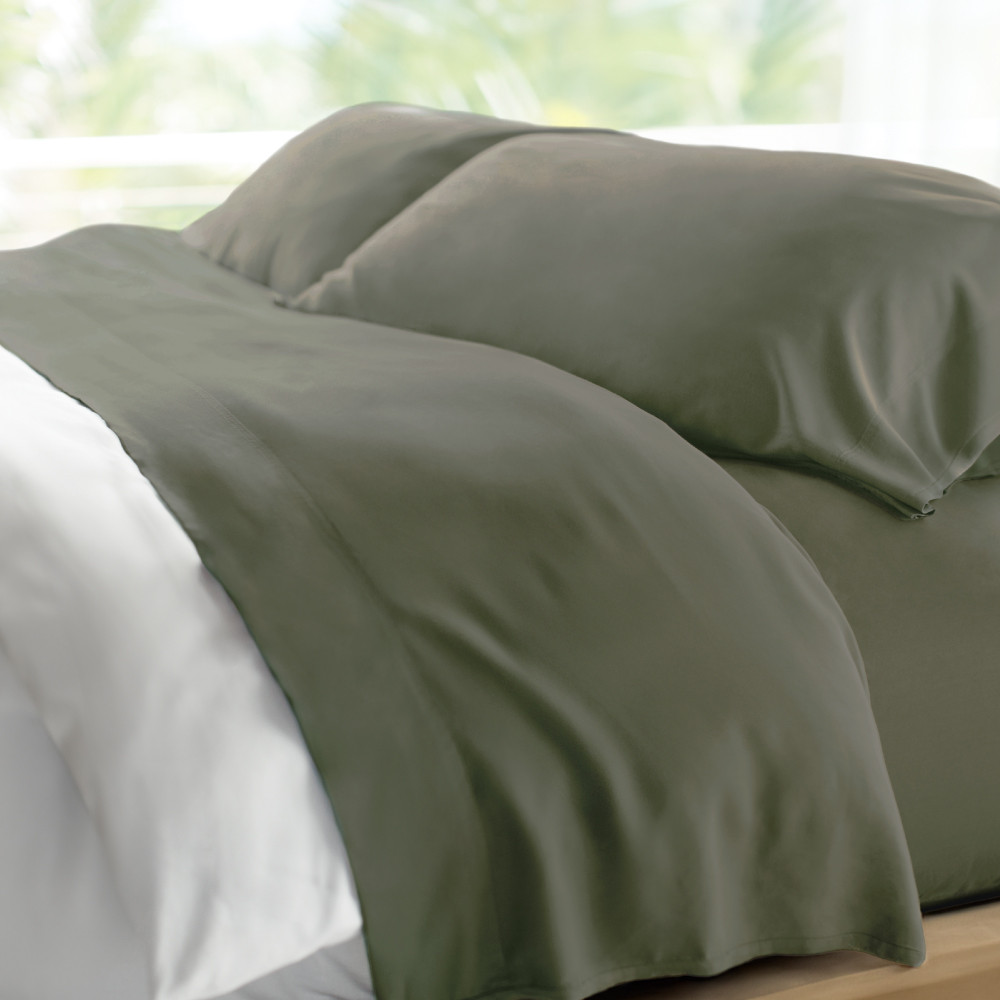
Cariloha Retreat Bamboo Sheets
Price: $339 / Queen
100% bamboo lyocell in a sateen weave with a smoother, more draped feel than lighter bamboo constructions. Prioritizes moisture handling, softness, and fit security with corner straps and orientation labels.
👉 Best for sleepers who want a smoother bamboo lyocell sheet with strong moisture control and a more premium, heavier feel.
View ProductWhat hot sleepers should avoid
Most “hot” bedding problems come down to either restricted airflow or poor moisture handling. The materials below tend to underperform in those areas.
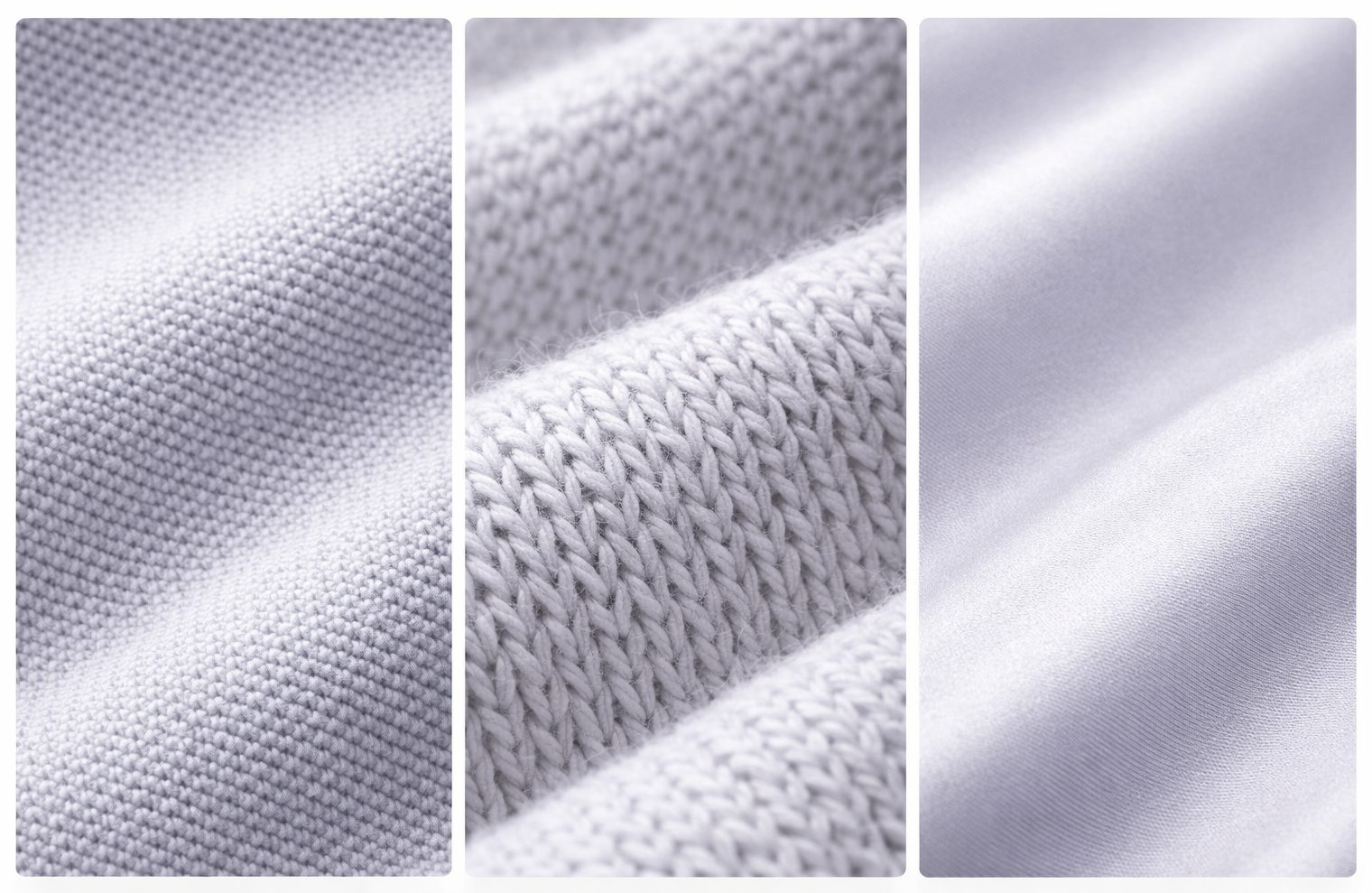
Low airflow
Dense or tightly packed fabrics limit how easily heat can escape. Polyester and microfiber fall into this group, along with very high thread count cotton. Sateen also reduces airflow compared to percale because of its tighter weave.
Heat retention from structure
Knit fabrics like jersey (similar to T-shirt material) use a looped structure that holds more heat than lightweight woven fabrics. They can feel soft at first but tend to run warmer over time.
Surface-heavy cooling claims
Some fabrics feel cool when you first lie down but do not manage airflow or moisture well over a full night. Smooth or coated finishes can create that effect without improving overall temperature regulation.
How Plumosity chooses cooling sheets
“Cooling” is often used as a label without differentiating between airflow or moisture handling.
The filters:
- Material accuracy: the fiber and weave support the claimed behavior
- Construction: the structure allows airflow, moisture handling, or both
- In-use behavior: the fabric performs the same way over a full night, not just on contact
- Wash durability: performance holds after repeated washing
- Independent validation: expert testing and user feedback align
This separates materials that feel cool at first from those that regulate heat over time.
Final take
The right sheet depends on whether your body traps heat or moisture. Once you identify that, the right material becomes obvious.
The decision is not which fabric sounds coolest, but which one matches how your body overheats.
If you are still deciding, start with the Quick Guide above and match the fabric to the way you sleep.
Common questions about cooling sheets
Which sheets are coolest for hot sleepers?
Linen for airflow, percale for balanced cooling, and TENCEL for moisture control. The best choice depends on whether you trap heat or sweat.
Is TENCEL cooler than cotton?
TENCEL handles moisture better, while cotton percale allows more airflow. “Cooler” depends on whether heat or sweat is the main issue.
Are bamboo sheets good for hot sleepers?
Bamboo sheets can work well for sweaty sleepers, especially in lyocell form, but they are less breathable than linen or percale.